
Medical equipment servicing support reduces downtime risk when it is designed as an operational capability, not treated as an optional after-sales promise after procurement.
For healthcare leaders, the key question is not whether equipment will require service, but whether a service failure can interrupt clinical activity, revenue, safety, or compliance.
Strong support becomes most valuable when equipment is clinically critical, technically complex, heavily used, dependent on consumables, or difficult to replace during an outage.
Why Service Support Becomes a Business-Critical Procurement Factor
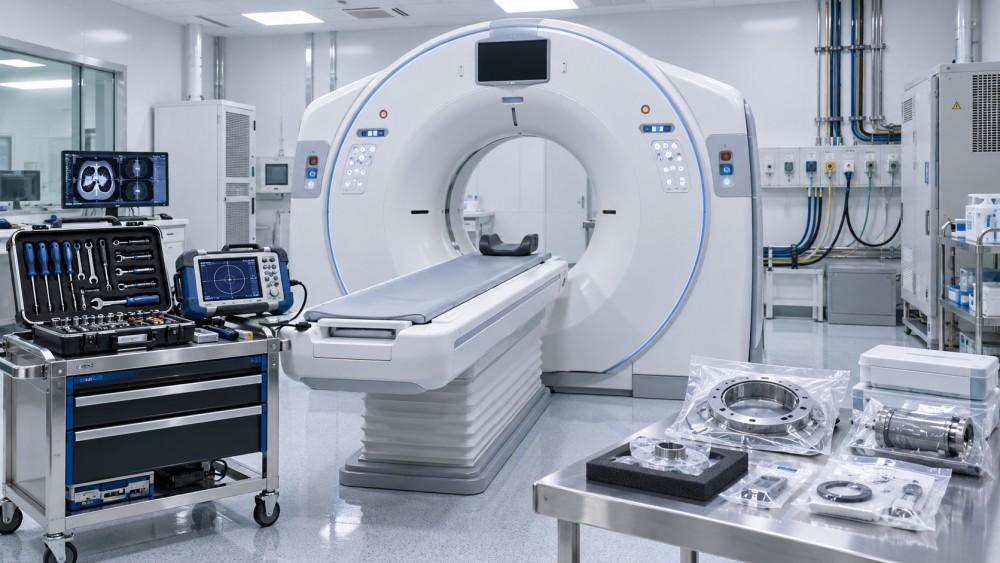
Medical equipment downtime is rarely limited to a technical inconvenience. It can delay diagnosis, reduce treatment capacity, disrupt schedules, and force staff into inefficient manual workarounds.
For hospitals, unavailable equipment may mean postponed scans, cancelled procedures, slower laboratory turnaround, or reduced intensive care capability during already demanding clinical periods.
For diagnostic laboratories, downtime can create backlogs that affect sample stability, reporting commitments, physician decisions, and the perceived reliability of the entire testing operation.
For distributors, weak medical equipment servicing support can damage customer relationships, increase warranty costs, and make future product launches harder to support commercially.
Service quality also affects total ownership cost. A low-priced device can become expensive when failures require long travel times, unavailable parts, repeated repairs, or external rentals.
Decision-makers should therefore assess servicing support alongside clinical performance, installation readiness, operator training, software compatibility, warranty scope, and long-term consumable availability.
The strongest business case exists when a device supports high patient volume, generates essential revenue, serves emergency care, or has no practical backup unit available.
In these situations, service commitments directly influence operational resilience. Procurement teams should document expected uptime, response time, repair responsibility, and escalation procedures before contracting.
Which Equipment Categories Face the Highest Downtime Exposure?
Not every device requires the same service model. Downtime risk depends on clinical criticality, utilization intensity, technical complexity, replacement options, and the consequences of delayed patient care.
Imaging systems often carry significant exposure because CT, MRI, mammography, digital X-ray, and C-arm units require specialized engineering knowledge, calibrated components, and controlled environments.
A failed CT scanner may affect emergency pathways, oncology planning, trauma assessment, and scheduled outpatient examinations, particularly where the hospital operates only one system.
Laboratory analyzers also require close attention because breakdowns may interrupt chemistry, hematology, immunoassay, coagulation, molecular testing, or microbiology workflows across multiple clinical departments.
Patient monitoring systems, ventilators, anesthesia machines, infusion pumps, defibrillators, and sterilization equipment involve direct patient safety considerations that demand immediate technical response arrangements.
Hospital infrastructure equipment can create wider disruption. Medical gas systems, nurse call networks, cleanroom systems, sterilizers, and power-protected digital platforms support many interconnected services.
High-throughput equipment deserves priority because small failures can rapidly create large backlogs. Managers should calculate the daily volume lost during one hour of unavailable capacity.
Lower-risk devices may justify basic maintenance coverage, while mission-critical systems usually require preventive maintenance, priority response, remote diagnostics, trained local engineers, and stocked spare parts.
When Preventive Maintenance Delivers the Greatest Value
Preventive maintenance reduces downtime risk when recurring inspections can identify wear, calibration drift, cooling issues, software faults, contamination, and component degradation before clinical failure occurs.
Its value is greatest for systems with predictable wear patterns, regular quality-control requirements, sensitive mechanical assemblies, or operating conditions that accelerate deterioration over time.
For imaging equipment, preventive visits may address detector condition, tube performance, motion systems, image quality, cooling performance, safety interlocks, and software configuration stability.
For laboratory instruments, maintenance can include probe cleaning, fluidic checks, pipetting verification, optics inspection, temperature confirmation, calibration review, and reagent-related contamination control.
Maintenance schedules should follow manufacturer requirements, actual utilization, environmental conditions, local regulations, and the organization’s tolerance for unplanned service interruptions during clinical operations.
Hospital leaders should avoid judging preventive maintenance only by its annual contract price. The appropriate comparison is the probable cost of disruption avoided through earlier intervention.
Useful service reports should identify completed work, replaced components, test results, unresolved risks, recommended actions, and the next planned maintenance date for each installed asset.
When providers cannot supply clear maintenance documentation, buyers should question whether the program is structured enough to support audits, budgeting, lifecycle planning, and risk management.
How Response Time and Technical Coverage Protect Clinical Continuity
Fast response matters most when a failure affects urgent care, high-volume departments, limited-capacity services, or equipment that cannot be safely substituted with another available device.
A service agreement should distinguish between remote acknowledgement, remote troubleshooting, engineer dispatch, onsite arrival, repair commencement, and restoration of clinically usable performance.
Vague promises such as “prompt service” provide little protection. Contracts should define working-hour coverage, emergency coverage, response targets, exclusions, escalation contacts, and reporting obligations.
Remote diagnostics can shorten downtime by allowing engineers to review error logs, software status, performance trends, and likely fault causes before travelling to the site.
However, remote support cannot replace onsite capacity for hardware failures, calibration needs, safety inspections, or failures involving mechanical systems, fluidics, power modules, and detectors.
Buyers should evaluate the service provider’s geographic coverage realistically. A national service claim may still mean lengthy travel from a distant regional engineering center.
Local technical availability is particularly important in markets where customs clearance, travel limitations, infrastructure challenges, or limited specialist labor can extend equipment repair timelines.
For critical systems, decision-makers should ask suppliers for actual performance evidence, including average response records, repair completion rates, repeat-failure data, and engineer availability by territory.
Why Spare Parts Availability Often Determines Real Repair Speed
An engineer can identify a fault quickly, yet downtime continues if the required component is unavailable locally, discontinued, delayed in transit, or restricted by import procedures.
Spare-parts planning is therefore a central part of medical equipment servicing support, especially for proprietary systems with specialized boards, sensors, pumps, detectors, and software licenses.
Hospitals should identify parts that have long lead times, high failure consequences, limited sourcing options, or a history of replacement during normal equipment operation.
Suppliers should explain whether critical components are stocked locally, held regionally, shipped from factories, or supplied only after technical inspection and commercial approval.
A useful service proposal identifies standard consumables separately from repair parts. These categories have different replenishment patterns, budgets, storage requirements, and ownership responsibilities.
Equipment buyers should also examine end-of-support policies. Older systems can remain clinically functional while parts, software updates, cybersecurity patches, and specialist expertise become scarce.
Long-term support commitments need practical detail, including expected parts availability periods, upgrade routes, obsolescence notifications, replacement recommendations, and conditions affecting continued service eligibility.
Where failure consequences are severe, organizations may justify holding selected critical spares onsite or arranging guaranteed access through a regional service inventory agreement.
How Software, Cybersecurity, and Integration Change the Service Requirement
Modern devices increasingly depend on software, connectivity, operating systems, data interfaces, cloud services, and hospital networks, making technical support broader than mechanical repair alone.
A system can be physically functional but operationally unavailable when interfaces fail, user authentication stops working, image transfer breaks, or cybersecurity controls block normal access.
Imaging and laboratory systems often depend on connections with PACS, RIS, LIS, EMR platforms, middleware, barcode systems, and reporting workflows that involve multiple vendors.
Before purchase, leaders should clarify which party owns responsibility for interface testing, software updates, network configuration, cybersecurity patches, and fault resolution across connected systems.
Service agreements should specify whether software updates are included, how downtime is managed during updates, and whether validation is required before returning equipment to routine use.
Cybersecurity support is increasingly relevant because unsupported operating systems and unpatched vulnerabilities can create compliance concerns, network restrictions, and unexpected interruption of device connectivity.
Procurement teams should request an equipment lifecycle roadmap covering software support periods, compatibility limitations, planned upgrades, cybersecurity advisories, and requirements for future hospital infrastructure changes.
Clear governance prevents disputes during incidents. It helps clinical engineering, information technology, suppliers, and department managers coordinate decisions without delaying restoration of essential services.
What Decision-Makers Should Evaluate Before Signing a Service Contract
Service contracts should be evaluated through operational scenarios rather than generic feature lists. The right coverage depends on how each device supports patient care and business continuity.
First, define the consequence of one hour, one day, and one week of downtime. Include patient impact, lost procedures, referral costs, staff disruption, and reputational damage.
Second, assess backup capacity. A department with multiple compatible analyzers may tolerate slower repair than a rural facility operating a single essential imaging system.
Third, compare warranty coverage with post-warranty support. Buyers should understand labor charges, travel costs, replacement-part pricing, software fees, and exclusions before unexpected failures occur.
Fourth, verify competence. Qualified technicians should have product-specific training, current authorization, access to technical documentation, calibrated tools, and knowledge of applicable safety procedures.
Fifth, review governance. A reliable provider supplies service reports, asset histories, maintenance schedules, escalation contacts, performance reviews, and evidence that contractual targets are being monitored.
Sixth, examine training obligations. User errors, incorrect cleaning, unsuitable consumables, and weak startup procedures can cause avoidable service calls and shorten equipment lifespan.
Finally, request references from comparable facilities. Performance at a small clinic may not demonstrate adequate support capacity for a hospital network, specialized laboratory, or high-volume imaging center.
How to Measure Whether Service Support Is Actually Reducing Risk
Medical equipment servicing support should be managed through measurable outcomes. Without operational metrics, organizations cannot tell whether service spending is reducing risk or merely funding reactive repairs.
Useful indicators include uptime percentage, average response time, mean time to repair, first-visit resolution rate, repeat-fault rate, preventive-maintenance completion, and overdue-service incidents.
Clinical departments should also monitor cancelled procedures, delayed reports, emergency referrals, manual workarounds, rental equipment costs, and staff overtime linked to equipment unavailability.
These measures help leadership identify whether downtime results from supplier performance, aging assets, unsuitable maintenance intervals, operator practices, environmental conditions, or insufficient replacement planning.
Regular performance reviews are especially important for multi-site organizations. They reveal whether different hospitals receive consistent support and whether local service resources match installed equipment volumes.
Data can also improve procurement negotiations. Demonstrated failure trends and repair delays give buyers a factual basis for requesting stronger response commitments, spare-parts coverage, or replacement options.
Service performance should be reviewed before warranty expiry, contract renewal, equipment expansion, and major facility projects. These moments provide leverage to correct weaknesses before risk grows.
The objective is not zero service events, which is unrealistic. The objective is predictable recovery, controlled clinical impact, and informed decisions throughout the equipment lifecycle.
Conclusion: Service Support Is Most Valuable Before a Failure Happens
Medical equipment servicing support reduces downtime risk when it combines preventive maintenance, rapid technical response, available spare parts, software expertise, trained users, and accountable performance management.
Its importance rises with clinical criticality, utilization, complexity, limited backup capacity, and the operational cost of interrupted care. These factors should shape service requirements before procurement.
For business decision-makers, the practical lesson is clear: compare suppliers by their ability to sustain equipment availability, not only by the purchase price or warranty headline.
A structured review of maintenance plans, response commitments, engineering competence, parts logistics, software support, and measurable uptime creates a stronger basis for investment decisions.
When service capability is evaluated early, hospitals, laboratories, distributors, and healthcare organizations can reduce disruption, protect clinical continuity, and achieve more reliable long-term equipment value.
- clinical engineering
- patient monitoring
- ventilators
- anesthesia machines
- infusion pumps
- defibrillators
- medical gas systems
- sterilization equipment
- medical equipment
- hospital infrastructure
- cleanroom systems
- laboratory analyzers
- medical equipment servicing
- hospital infrastructure equipment
- medical equipment servicing support
- patient monitoring systems
- Last One:No more articles
- Next Article:How healthcare infrastructure project planning reduces compliance delaysOct 07, 2026