
How Clinical Engineering Reduces Equipment Downtime in Hospitals
Equipment downtime can interrupt patient care, delay procedures, and create unplanned costs across a hospital. For project managers, the issue is not simply repairing failed devices faster.
The more important question is whether the hospital has designed a reliable system for preventing failures, prioritizing critical assets, coordinating service, and planning replacement decisions before disruption occurs.
Clinical engineering provides that system. It connects medical technology performance with clinical workflow, facility conditions, procurement choices, maintenance resources, and long-term capital planning.
When clinical engineering is involved early and consistently, hospitals can reduce avoidable downtime, improve equipment availability, and make more defensible decisions about service contracts, spare parts, upgrades, and replacement.
For engineering project leaders, the practical value lies in turning equipment reliability into measurable operational outcomes: fewer cancelled procedures, lower emergency repair spending, safer clinical operations, and stronger asset lifecycle control.
Downtime is rarely caused by one technical fault alone. It often results from weak maintenance planning, missing documentation, delayed parts, unsuitable installation conditions, insufficient user training, or unclear vendor responsibilities.
A clinical engineering program addresses these connected causes. It helps hospitals see medical equipment as a managed portfolio rather than a collection of independent machines.
This article explains where clinical engineering has the greatest impact, which management practices reduce downtime, and how project leaders can evaluate whether reliability investments are producing meaningful results.
Why Downtime Requires a Clinical Engineering Response
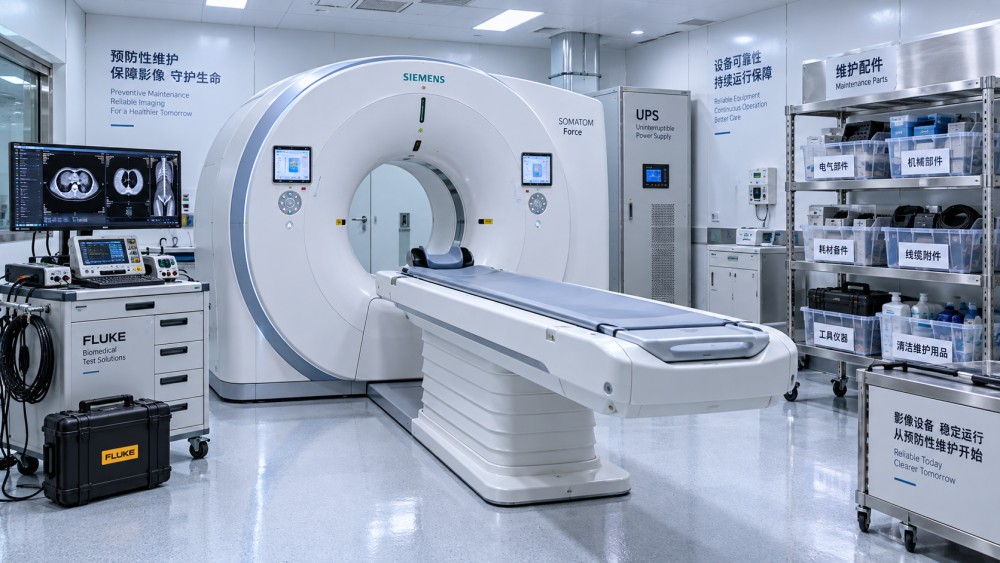
Medical equipment downtime has consequences beyond temporary inconvenience. A failed ventilator, imaging system, infusion pump, sterilizer, or laboratory analyzer can affect capacity, patient safety, revenue, and staff workload.
Clinical engineering evaluates downtime through operational and clinical risk. This approach helps hospitals distinguish between a minor equipment interruption and a failure that threatens essential care delivery.
For example, downtime in a CT scanner may delay emergency diagnosis, redirect patients, and create scheduling backlogs. A malfunctioning autoclave can slow surgical instrument turnover and affect operating room utilization.
In laboratory services, analyzer downtime may delay test reporting, force manual workarounds, increase sample handling risks, and create dependency on external laboratories or backup instruments.
Project managers need this broader view because equipment reliability affects project success after commissioning. A facility can be completed on schedule yet still underperform if installed systems cannot remain available during routine clinical demand.
Clinical engineering translates technical reliability into operational priorities. It identifies which assets require rapid response, which failures can be tolerated temporarily, and where redundancy is necessary.
This prioritization is especially important when maintenance budgets are limited. Hospitals cannot apply the same service intensity to every device, but they can align resources with clinical impact.
A structured risk classification normally considers patient safety, service criticality, device complexity, utilization levels, failure history, backup availability, and regulatory requirements.
High-risk equipment often includes life-support systems, anesthesia machines, defibrillators, patient monitoring networks, imaging equipment, dialysis systems, laboratory automation, and sterilization equipment.
However, low-cost devices should not automatically receive low priority. A small accessory, power supply, sensor, or consumable component can disable a larger clinical workflow when replacement stock is unavailable.
Clinical engineering teams also examine the relationship between equipment and infrastructure. Power instability, inadequate cooling, poor grounding, network interruptions, water quality, and unsuitable room conditions can all cause repeated failures.
This is why downtime reduction must involve biomedical, facilities, IT, procurement, clinical, and vendor stakeholders. A repair-only model usually identifies symptoms without resolving the underlying operating conditions.
Build an Accurate Equipment Inventory Before Managing Reliability
Reliable maintenance begins with reliable asset information. Hospitals cannot manage downtime effectively when they do not know exactly what equipment they own, where it is located, or how it is supported.
A complete equipment inventory should include manufacturer, model, serial number, department, installation date, warranty status, service history, software version, accessories, and responsible owner.
It should also record clinical criticality, maintenance interval, calibration requirements, service provider, spare-part dependency, expected useful life, and replacement planning status.
For project managers, this inventory should be created before handover, not reconstructed after the hospital begins operating. Commissioning is the best time to verify documentation and asset data.
Asset records should match the actual installed configuration. This includes connected peripherals, software licenses, network settings, installed options, electrical requirements, and environmental specifications.
Incomplete records create downstream delays. Service teams may spend hours confirming device identity, locating manuals, checking warranty coverage, or determining whether an approved replacement part is available.
Modern computerized maintenance management systems can centralize these records. A well-configured system supports work orders, planned maintenance schedules, repair histories, cost tracking, recall management, and performance reporting.
Technology alone is not enough. Data ownership, update discipline, and consistent asset labeling are essential. A maintenance platform becomes unreliable when departments record changes inconsistently or bypass established workflows.
Clinical engineering should establish clear rules for adding, relocating, retiring, and modifying equipment. These processes prevent asset records from drifting away from real operating conditions.
For new healthcare projects, equipment data should be included in handover requirements. Suppliers and contractors should provide structured asset registers, manuals, test results, training records, warranty details, and maintenance procedures.
This requirement is particularly valuable for complex installations such as imaging departments, operating rooms, intensive care units, laboratories, and central sterile services departments.
Without this foundation, hospitals often react to failures individually. With accurate asset intelligence, they can identify patterns, forecast resource needs, and act before recurring problems become expensive disruptions.
Use Risk-Based Preventive Maintenance Instead of Calendar-Only Service
Preventive maintenance is one of the most visible clinical engineering activities, but its value depends on how maintenance intervals and tasks are selected.
A calendar-only approach may schedule every device at fixed intervals regardless of usage, failure history, clinical criticality, environmental stress, or manufacturer guidance.
This can waste engineering resources on low-risk equipment while allowing higher-risk assets to receive insufficient attention. It may also take devices out of service unnecessarily.
Risk-based maintenance uses evidence to determine what work should be performed, when it should occur, and which equipment deserves the highest level of oversight.
Clinical engineering teams review manufacturer recommendations, regulatory obligations, internal incident data, utilization patterns, maintenance findings, and local operating conditions before setting maintenance strategies.
For a heavily used patient monitor fleet, the strategy may focus on battery condition, alarm performance, accessories, electrical safety, software updates, and user-reported faults.
For imaging equipment, preventive work may include detector checks, calibration, cooling system inspection, image quality testing, radiation safety verification, and review of room environmental conditions.
Laboratory equipment may require stronger attention to calibration, reagent storage, water quality, temperature control, sample handling components, and interface performance with laboratory information systems.
Project leaders should ask whether planned maintenance tasks are linked to known failure modes. A checklist is useful only when it addresses conditions that can genuinely affect performance or safety.
Maintenance programs should also account for service windows. Scheduling work during lower-demand periods reduces disruption, but only if departments communicate clinical activity forecasts in advance.
Clinical engineering can coordinate maintenance with operating room schedules, imaging bookings, laboratory workload cycles, and planned infrastructure shutdowns. This coordination reduces conflict between reliability work and patient care demand.
A mature program reviews maintenance completion rates, overdue tasks, repeat failures, and post-maintenance findings. These indicators reveal whether planned work is preventing problems or merely generating administrative activity.
Improve Response Time Through Clear Service Coordination
Even strong preventive maintenance cannot eliminate every failure. Hospitals therefore need a disciplined response process that restores critical equipment safely and quickly.
Clinical engineering defines how faults are reported, triaged, assigned, escalated, documented, and closed. This is especially important when internal teams and external vendors share responsibilities.
A useful service workflow begins with accurate fault reporting. Clinical users should be able to identify the device, describe the symptom, report patient impact, and state whether a backup unit is available.
Generic fault descriptions such as “not working” slow diagnosis. Better reporting helps engineers bring appropriate test equipment, replacement components, or technical expertise on the first visit.
Response targets should reflect asset criticality. A failed emergency defibrillator or ICU ventilator requires a different escalation path from a noncritical workstation or administrative display.
Service-level agreements should define response time, restoration targets, remote support availability, spare-part logistics, loan equipment arrangements, and escalation contacts for major failures.
Project managers should examine these details before contract award. A low-cost service agreement may become expensive when it excludes software support, travel, after-hours coverage, or critical replacement parts.
Vendor coordination is also essential during warranty periods. Hospitals should document every fault, intervention, replaced component, and recurring issue rather than treating warranty service as an informal supplier relationship.
This information becomes valuable during contract renewal and replacement planning. It shows whether a device has met promised reliability levels and whether the vendor has delivered effective support.
Clinical engineering should review repeated faults across identical devices. A recurring issue may indicate a design weakness, unsuitable accessory, incorrect configuration, poor environmental condition, or training gap.
Root-cause analysis is most effective when it involves the affected clinical department. Engineers may identify technical causes, while users can explain workflow conditions that trigger or worsen the failure.
The goal is not simply to close work orders faster. It is to prevent the same type of downtime from returning after each repair.
Manage Spare Parts, Backup Capacity, and Obsolescence Proactively
Many equipment outages last longer than necessary because the required part is unavailable, the supplier has discontinued support, or the hospital has no practical backup plan.
Clinical engineering helps hospitals identify components that should be held locally. These may include batteries, sensors, cables, filters, power modules, printer parts, pumps, and common accessories.
Stock decisions should be based on failure probability, clinical impact, supplier lead time, part cost, shelf life, and the availability of alternative equipment.
Holding every possible part is not economical. However, holding no critical spares can create long delays for devices that directly support emergency, surgical, diagnostic, or intensive care services.
For high-value systems, backup capacity may be more important than spare inventory. A hospital with one CT scanner or one sterilizer has a different operational risk profile than a site with redundant units.
Project planning should assess these dependencies before procurement. The analysis should consider expected patient volume, repair lead times, referral options, business continuity procedures, and space for temporary equipment.
Obsolescence is another major source of downtime. Devices may remain physically functional while software, operating systems, cybersecurity requirements, parts availability, or vendor support become limiting factors.
Clinical engineering tracks these risks throughout the equipment lifecycle. Early identification gives leaders time to budget for upgrades, negotiate support extensions, or prepare phased replacement plans.
Replacement decisions should not rely only on purchase age. A newer device with poor support, excessive repairs, or workflow limitations may be a greater operational risk than an older, well-supported system.
Useful replacement criteria include downtime frequency, maintenance cost, patient safety concerns, unavailable parts, regulatory compliance, software compatibility, utilization demand, and clinical performance gaps.
For project managers, this creates a more credible capital request. Rather than stating that equipment is “old,” clinical engineering can demonstrate measurable operational and financial reasons for replacement.
This evidence supports better discussions with finance teams, procurement committees, hospital leadership, and external investors who need to understand lifecycle risk before approving expenditure.
Reduce User-Related Failures Through Training and Workflow Design
Not all equipment downtime begins with a technical defect. Incorrect setup, improper cleaning, damaged accessories, missed alarms, battery misuse, and inappropriate operating conditions can all cause avoidable outages.
Clinical engineering works with clinical educators and vendors to ensure users understand daily checks, basic troubleshooting, cleaning requirements, accessory compatibility, and escalation procedures.
Training should be specific to the equipment model and clinical workflow. General device education may not prepare users for the configuration, software version, or accessories installed in their department.
New equipment projects should include training for primary operators, super users, department managers, biomedical staff, and relevant IT or facilities personnel.
Training records matter because staff turnover can create hidden reliability risk. A device may appear technically sound while the department lacks enough confident users to operate it safely and consistently.
Clinical engineering can also improve usability by reviewing common workarounds. Repeated workarounds may signal that device placement, cable routing, storage, charging access, or workflow design is contributing to failures.
For mobile equipment, storage and charging practices are especially important. Devices that are moved frequently often suffer from impact damage, missing accessories, depleted batteries, and undocumented location changes.
Simple controls can reduce these issues: designated storage locations, routine condition checks, accessory tracking, clear labeling, and responsibility assignments at shift changes.
Hospital leaders should treat these practices as part of reliability management, not merely staff discipline. Better workflow design reduces avoidable service calls and protects equipment availability.
When user-related issues are recorded systematically, clinical engineering can target training where it has the greatest impact instead of repeating broad sessions with limited operational value.
Measure the Outcomes That Matter to Hospital Operations
Clinical engineering reduces downtime most effectively when leaders measure performance consistently and use results to guide action. Repair counts alone do not show whether reliability is improving.
Key indicators may include equipment uptime, mean time between failures, mean time to repair, planned maintenance completion, repeat failure rate, service cost, and vendor response compliance.
These metrics should be interpreted by asset type and clinical importance. A fleet-wide average can hide serious problems affecting a small number of critical devices.
For example, a hospital may report high overall uptime while its only angiography system experiences recurring outages. The aggregate result looks acceptable, but the operational exposure remains significant.
Clinical engineering dashboards should therefore combine technical measures with service impact. Relevant information may include cancelled procedures, delayed tests, diverted patients, rental equipment costs, and lost capacity.
Project managers can use this evidence to prioritize interventions. The best investment may be an equipment replacement, a stronger service contract, a power upgrade, additional backup capacity, or targeted user training.
Cost analysis should consider total operating cost rather than repair invoices alone. Frequent small repairs, staff workarounds, delayed procedures, emergency rentals, and vendor travel can create substantial hidden expense.
Reliability reporting also strengthens procurement decisions. Historical downtime and maintenance data can help hospitals compare suppliers based on long-term support performance rather than initial purchase price alone.
Before selecting a new system, procurement teams should request information about preventive maintenance requirements, remote diagnostics, local service coverage, parts lead times, software support, training, and lifecycle commitments.
Clinical engineering provides the operational perspective needed to evaluate these claims. It can challenge assumptions, identify support gaps, and ensure that contract terms match actual clinical requirements.
This role is particularly valuable in hospital expansion projects, where multiple equipment categories, contractors, vendors, and infrastructure systems must work together from the first day of operation.
Reliable equipment is not achieved at the point of purchase. It is created through disciplined planning, installation validation, maintenance control, service coordination, and lifecycle governance.
Conclusion: Treat Equipment Reliability as a Managed Hospital Capability
Clinical engineering reduces hospital equipment downtime by moving reliability management from reactive repair toward structured prevention, informed prioritization, and evidence-based lifecycle decisions.
For project managers and engineering leaders, the strongest results come from combining accurate asset data, risk-based maintenance, responsive service coordination, spare-part planning, user training, and performance measurement.
The central lesson is that downtime is not only a technical maintenance issue. It is a clinical, financial, operational, infrastructure, and procurement risk that requires cross-functional ownership.
Hospitals that involve clinical engineering early in equipment planning can specify better support requirements, validate installation conditions, prepare operational teams, and avoid preventable disruptions after commissioning.
By measuring reliability in terms of patient care continuity and operational capacity, leaders can make clearer choices about where to invest and which risks demand immediate attention.
Ultimately, effective clinical engineering helps hospitals keep essential technology available when clinicians need it, protecting both service performance and the quality of care delivered.