
On March 31, 2027, the medical imaging device sector faces a concrete EU compliance deadline: the European Commission has moved from transition-period monitoring to concentrated certificate review for certain CE-marked products that have not yet completed MDR Annex XVI clinical evaluation. For exporters, importers, distributors, and procurement teams handling ultrasound, X-ray, C-arm, and dental CBCT equipment, this matters because certificate status is no longer just a documentation issue; it may directly affect continuity of supply into the EU market and near-term purchasing and delivery arrangements.
What the Commission Has Confirmed
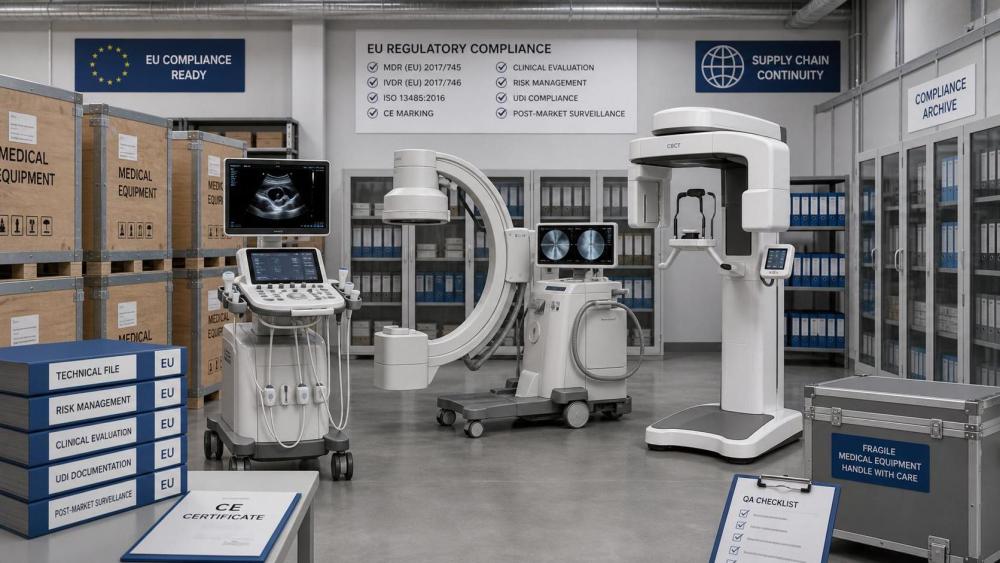
According to the MDR implementation progress update released by the European Commission on July 16, 2026, CE certificates for medical imaging devices that have not completed Annex XVI clinical evaluation will be subject to a concentrated review. The product scope identified in the provided information includes ultrasound, X-ray, C-arm, and dental CBCT equipment. Manufacturers are required to submit supplementary clinical evaluation reports no later than March 31, 2027. The development is described as having implications for the continued supply capability of global imaging equipment exporters to the EU market, while importers and distributors are expected to verify the status of existing product certificates and prepare alternative sourcing paths.
Where the Pressure Appears Across the Supply Chain
Export programs tied to existing CE certificates
From an industry perspective, exporters are likely to be affected first because ongoing access to the EU market depends on whether certificate files remain supportable under the announced review process. The immediate business exposure is not limited to regulatory teams; it can extend to shipment planning, customer commitments, and delivery scheduling. What deserves closer attention is whether products in active export pipelines still rely on certificate documentation that may require supplementary clinical evaluation support before the stated deadline.
Import and distribution channels managing stock continuity
Importers and distributors may face a more operational form of risk. The provided information already indicates a need to check the status of certificates for products currently in circulation and to plan substitute procurement routes. In practice, the sensitive points are product listing decisions, replenishment timing, and whether channel inventories are linked to models whose compliance files remain incomplete under Annex XVI expectations. For these businesses, certificate verification becomes part of commercial risk control rather than a back-office exercise.
Procurement and delivery teams handling installed-base commitments
Buyers and procurement functions may also need to adjust. Analysis shows that where tenders, framework purchasing, or rolling supply agreements involve the affected imaging categories, procurement teams should pay closer attention to certificate status, supporting documentation, and supplier readiness. The issue is not only whether a device is available today, but whether future deliveries and replacement planning remain stable if a supplier is drawn into concentrated review.
Compliance and assessment support functions
Certification-related service providers, technical documentation teams, and testing or assessment support functions may experience tighter timelines because manufacturers have been asked to submit supplementary clinical evaluation reports by a fixed date. Observably, this does not by itself confirm any final enforcement outcome for individual products, but it does indicate a shorter decision window for assembling compliant evidence packages and checking whether legacy documentation is still sufficient for commercial use.
Practical Priorities Before the Deadline
Map affected models against current certificate status
Analysis shows that companies handling ultrasound, X-ray, C-arm, and dental CBCT products should first identify which models depend on CE certificates that may still require Annex XVI-related supplementation. The useful focus is model-by-model verification, rather than broad portfolio assumptions, because supply disruption risk is most likely to appear at the product-file level.
Review clinical evaluation files and supporting records
What deserves closer attention is the completeness of supplementary clinical evaluation materials expected by the review process. Where technical files, supporting reports, or related compliance records are incomplete, companies may face pressure not only in regulatory review but also in customer communication, distributor assurance, and order confirmation. The provided information does not define the full execution standard, so firms should treat documentation readiness as a live compliance checkpoint rather than a closed matter.
Recheck purchase plans and substitute sourcing options
For importers, distributors, and buyers, the immediate practical question is whether existing purchase plans assume uninterrupted availability of products that may still be under review. Analysis shows that alternative sourcing paths, replacement model planning, and supplier qualification checks become more important when certificate status may affect continuity of supply. This is especially relevant where contracts or delivery schedules extend beyond the review deadline.
Watch for shifts in market-facing documentation
It is more appropriate to understand this development as a signal to monitor external execution documents closely. Companies should watch for changes in compliance declarations, bid documents, procurement specifications, after-sales support records, and product traceability materials where customers or channel partners begin asking for updated confirmation tied to certificate status and supplementary evaluation progress.
Why This Looks More Like an Execution Signal Than a Policy Headline
Observably, this update is not just another high-level MDR discussion. It points to a defined review action tied to a submission deadline, which gives the market a practical compliance signal. At the same time, the provided information does not establish how individual files will be assessed case by case, nor does it confirm final outcomes for specific certificates. That is why this is better read as an active execution-stage development: the rule direction is visible, but the operational effect will depend on how review expectations are applied in documentation, certification handling, procurement decisions, and channel response.
How the Market Should Read This Now
The most balanced reading is that the EU review focus has moved closer to products already circulating through real trade and supply arrangements, particularly in affected imaging categories. For the industry, the importance of this event lies less in headline value and more in its immediate impact on certificate review readiness, supply continuity checks, and purchasing contingency planning. It is more appropriate to understand this as a material compliance and delivery signal that has already entered the execution phase, while some practical consequences still require continued observation.
Basis of This Article and What Still Needs Verification
This article is based on the user-provided news title, event date, and event summary. For developments of this kind, market participants would typically continue to monitor official notices, regulator publications, trade or customs authority information, industry association updates, standard-setting documents, and reporting from authoritative sector media. A specific official source link was not provided in the input, so the underlying source path still needs to be verified on an ongoing basis. Further observation is also needed on implementation details, certification interpretation, procurement document changes, market feedback, and how affected companies execute their compliance response before and after the stated deadline.