
On July 6, 2026, the U.S. FDA formally put into effect a stricter traceability requirement for exported IVD reagents, making batch-level UDI system connectivity a concrete compliance condition for Chinese manufacturers and authorized representatives shipping to the U.S. market. The change matters because it does not stay at the label level alone: it also reaches customs documentation and electronic certificates, which means the impact can extend across export filing, import clearance, distributor inventory control, and compliant use by end laboratories.
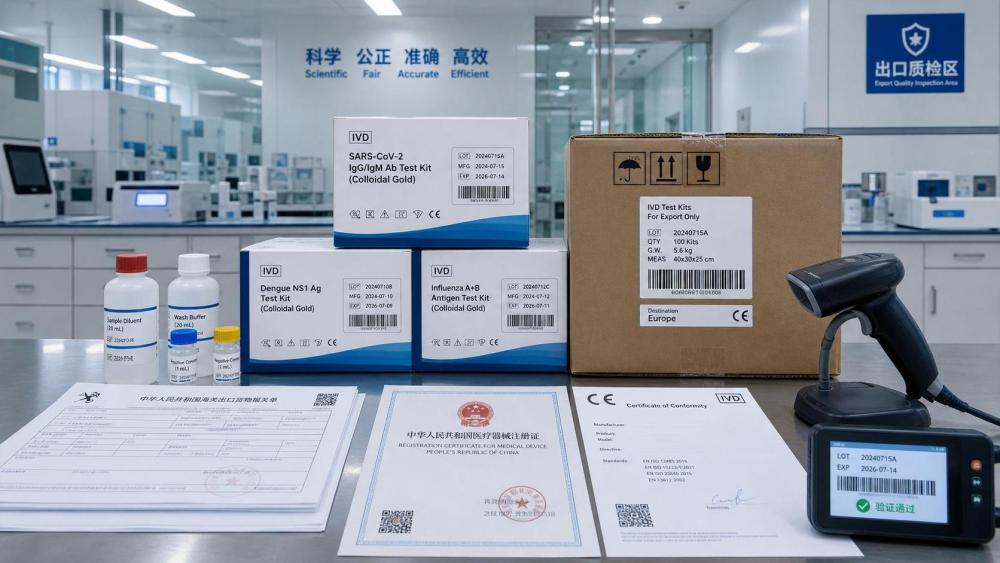
What the new requirement now clearly covers
The confirmed change is that the FDA has formally implemented the Guidance on Strengthened Traceability for IVD Export Batches as of July 6, 2026. Under the information provided, all Chinese manufacturers of in vitro diagnostic reagents exporting to the United States, together with their authorized representatives, must complete batch-level system integration with the FDA Global UDI Database (GUDID).
The same information also confirms that a unique batch UDI identifier must be shown consistently across three points: product labels, customs declaration documents, and electronic certificates. The stated direct effects relate to importers' customs clearance timing, distributors' inventory management, and compliant use by end laboratories. Companies that do not meet the requirement may face cargo delays at port, escalated inspection, and order rejection.
Where the pressure is likely to appear first in the supply chain
Export operations now face a documentation consistency test
For manufacturers and export-facing business teams, the immediate issue is no longer only whether a product can be shipped, but whether the batch identifier appears in a consistent and usable way across operational records. Because the requirement reaches labels, customs declarations, and electronic certificates at the same time, the affected business steps are likely to include shipment preparation, document review, and release coordination with overseas counterparts.
From an industry perspective, what deserves closer attention is the risk of mismatched records between physical product identification and trade documents. Even without additional facts about enforcement practice, the information provided already indicates that non-compliance can affect port handling and order acceptance.
Importers and distributors may see tighter control over inventory traceability
For importers and channel operators, the rule change is relevant because the batch-level UDI identifier can become part of the practical basis for customs processing and stock control. The stated impact on clearance timing suggests that import-side operations may need to pay closer attention to whether incoming lots are documented in a way that aligns with the new FDA requirement.
Observably, distributors are also exposed through inventory handling. If batch identifiers must be synchronized across documents and product labels, warehouse intake, lot separation, and downstream dispatch records may need closer review to avoid gaps between received stock and traceability records.
End laboratories are affected through compliant product use
The event summary explicitly notes an effect on compliant use by end laboratories. That makes this more than a border or shipping issue. For laboratories and downstream users, the practical concern is whether the reagents received can be traced and documented in line with the new batch-level identification requirement.
Analysis shows that the operational consequence here is likely to be strongest where laboratories rely on complete product and batch documentation for internal controls, incoming verification, or usage records. The provided information does not define the exact verification process, so this remains an area to monitor rather than a settled execution outcome.
What companies should review now
Check whether GUDID batch connectivity is operational, not only planned
The confirmed requirement is completion of batch-level connection with GUDID. For affected companies, the immediate compliance question is whether that connection is already functioning in a way that supports export activity, rather than existing only as an internal preparation item.
Review whether batch UDI appears consistently across all outward-facing records
Because the requirement explicitly covers labels, customs declaration forms, and electronic certificates, companies should pay attention to document alignment across regulatory, trade, and shipping workflows. Analysis shows that consistency across these records is likely to matter as much as the presence of the identifier itself.
Reassess delivery timing and acceptance risk with counterparties
The information provided links non-compliance to port delays, escalated inspection, and order rejection. Exporters, importers, and procurement teams should therefore review delivery schedules, shipment release assumptions, and acceptance terms tied to traceability documentation. This is not yet a basis for broad market conclusions, but it is a practical warning signal for active orders and near-term shipments.
Keep watch on execution language and market-facing document changes
The event summary confirms the rule change, but it does not provide detailed operational interpretations. It is therefore more appropriate to understand current follow-up work as close monitoring of execution language, certificate presentation, and any changes that may appear in procurement documents, compliance checklists, or downstream acceptance requirements.
Why this reads as an execution signal, not just another policy notice
As an editorial observation, this development is better understood as a rule already moving into execution rather than a distant policy direction. The effective date is explicit, and the requirement is tied to concrete identifiers, system connectivity, and transactional documents. That gives the change immediate relevance for businesses that are already shipping or preparing to ship IVD reagents to the United States.
At the same time, analysis shows that the market still needs to watch how the requirement is applied in day-to-day trade and compliance workflows. The information provided does not establish a full enforcement pattern, nor does it define every practical review step. For that reason, the event should be read as both a landed compliance change and an area where operational interpretation still matters.
How the sector should read this stage of the change
The significance of this update lies in the fact that traceability has been pushed further into actual export execution for IVD reagents, linking regulatory identification with trade documents and downstream use. That expands the number of business functions that need to pay attention, from regulatory affairs and labeling teams to export operations, import handling, distribution, and laboratory-facing support.
A neutral reading is that this is not merely a background regulatory adjustment. It is more appropriate to understand it as an implemented compliance requirement with immediate operational implications, while still recognizing that detailed enforcement practice, market response, and business adaptation should continue to be observed carefully.
Basis of this article and what still needs verification
This article is generated on the basis of the user-provided news title, event date, and event summary. For events of this type, commonly relevant source categories may include official regulatory notices, releases by supervisory authorities, customs or trade administration information, industry association updates, standard-setting documents, and reporting by authoritative media.
No specific official source link was provided in the input, so the exact official link remains to be verified on an ongoing basis. Continued attention should be paid to later regulatory detail, certification and compliance interpretation, changes in tender or procurement documentation, market feedback, and how affected companies implement the requirement in practice.