
On July 29, 2026, the FDA updated its compliance guidance for remote performance monitoring of IVD devices, setting a new requirement that takes effect on October 1, 2026 for products marketed in the United States. The change matters because it does not only affect device functionality at the product level; it also reaches into registration preparation, software validation records, firmware configuration, and post-market operational arrangements, especially for Chinese IVD exporters serving the U.S. market.
What the new FDA guidance now requires
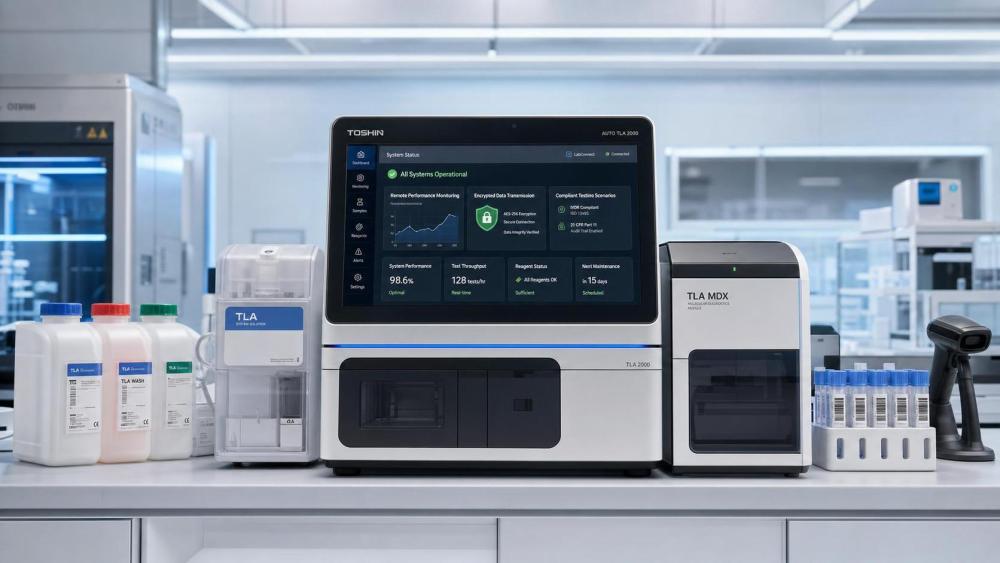
The FDA released IVD Remote Performance Monitoring Guidance v2.1 on July 29, 2026. According to the information provided, all IVD devices marketed in the United States, including analyzers, POCT systems, and molecular testing platforms, must have FDA-certified real-time remote performance monitoring capability starting October 1, 2026.
The guidance requires key operating parameters to be transmitted in encrypted form to a designated cloud platform. The examples provided include calibration status, reagent batch number, environmental temperature and humidity, and fault codes.
The information provided also states that this requirement directly affects the registration pathway of Chinese IVD export companies, their software validation documentation, and factory firmware configuration.
Where the rule change is likely to be felt first
Export-facing manufacturers will face documentation and configuration pressure
From an industry perspective, manufacturers shipping IVD products to the U.S. market are likely to feel the impact first because the rule directly connects device saleability with remote monitoring capability. The practical pressure points are likely to include product registration preparation, software-related compliance materials, and whether factory firmware is aligned with the new monitoring requirement before shipment.
What deserves closer attention is that the change is not limited to hardware performance. It also touches the compliance readiness of embedded software, data transmission design, and configuration control at the point of release.
Certification and compliance service providers may need to reassess review scope
Certification-related firms and compliance support teams may be affected because the new requirement explicitly references FDA-certified real-time monitoring capability. Analysis shows that projects involving U.S.-bound IVD products may need closer review of software validation files, operating parameter capture, encryption-related documentation, and consistency between declared functions and shipped firmware.
For companies relying on external regulatory support, the immediate issue is less about market messaging and more about whether submission files and technical dossiers reflect the new compliance expectation.
Distributors, buyers, and after-sales teams may need to recheck delivery assumptions
Channel operators, procurement teams, and after-sales service providers may also be affected where product acceptance depends on U.S. market compliance. Observably, if a device must support certified real-time upload of operating data, parties involved in delivery and deployment may need to verify whether the shipped configuration matches the required monitoring capability and whether related technical records are available for customer review or downstream quality handling.
For after-sales teams in particular, the rule signals that device operation, fault visibility, and traceability may become more tightly linked to remote data reporting arrangements.
What companies should review now
Check whether current registration materials still match the new requirement
Analysis shows that companies preparing U.S. market submissions should review whether existing registration paths and supporting files remain aligned with the updated FDA expectation. The key point is not to assume that previously prepared documentation will remain sufficient if remote monitoring capability is now a mandatory condition.
Revisit software validation records and technical file completeness
Because the provided information specifically points to software validation documents, companies should pay close attention to whether technical files adequately describe real-time monitoring functions, encrypted transmission of key parameters, and consistency between software behavior and regulatory claims. Where details are not yet provided in the input, this remains an area for continued verification rather than a concluded compliance checklist.
Review factory firmware and shipment configuration controls
The reference to factory firmware configuration deserves immediate operational attention. It is more appropriate to understand this as a signal that compliance may depend not only on product design, but also on what is actually enabled or configured before delivery. Companies involved in export fulfillment should therefore watch for any need to align production release settings with U.S. compliance expectations.
Monitor follow-up wording, execution criteria, and customer-side document requests
Observably, the current information establishes a mandatory direction and an effective date, but it does not provide the full execution detail within the input. For that reason, companies should keep tracking follow-up official wording, certification interpretation, tender or procurement document changes, and any new requests for technical records tied to remote monitoring capability.
Why this should be read as an execution signal
Analysis shows that this update is more than a general policy statement. The presence of a defined effective date, a named guidance version, and explicit requirements around certified real-time monitoring and encrypted data upload makes it more appropriate to understand the development as an execution-oriented compliance signal rather than a distant policy discussion.
At the same time, it should not yet be overstated as a fully transparent implementation framework based on the information provided here alone. Important operational questions may still depend on later clarification, market practice, and how review and procurement bodies apply the requirement in practice.
How the market should interpret this development now
The immediate significance of this FDA update lies in the fact that remote performance monitoring is being treated as a concrete compliance condition for IVD devices marketed in the United States. For companies connected to U.S.-bound IVD trade, the issue is no longer only product performance in a narrow sense, but also whether registration materials, software evidence, and shipment configuration are aligned with the new rule.
At this stage, it is more appropriate to understand the development as a rule change with direct compliance consequences and a near-term implementation timeline, while continuing to watch for further detail on execution standards, review interpretation, and market response.
Basis of this article and points that still require verification
This article is generated from the user-provided news title, event date, and event summary. For developments of this kind, commonly relevant source types may include official regulatory announcements, publications from supervisory authorities, trade or customs authorities, industry association notices, standard-setting documents, and reporting by established professional media.
A specific official source link was not provided in the input, so the exact official publication path still needs to be verified on an ongoing basis. What should continue to be monitored includes detailed implementation language, certification interpretation, changes in tender or procurement documents, industry feedback, and how affected companies execute the requirement in practice.