
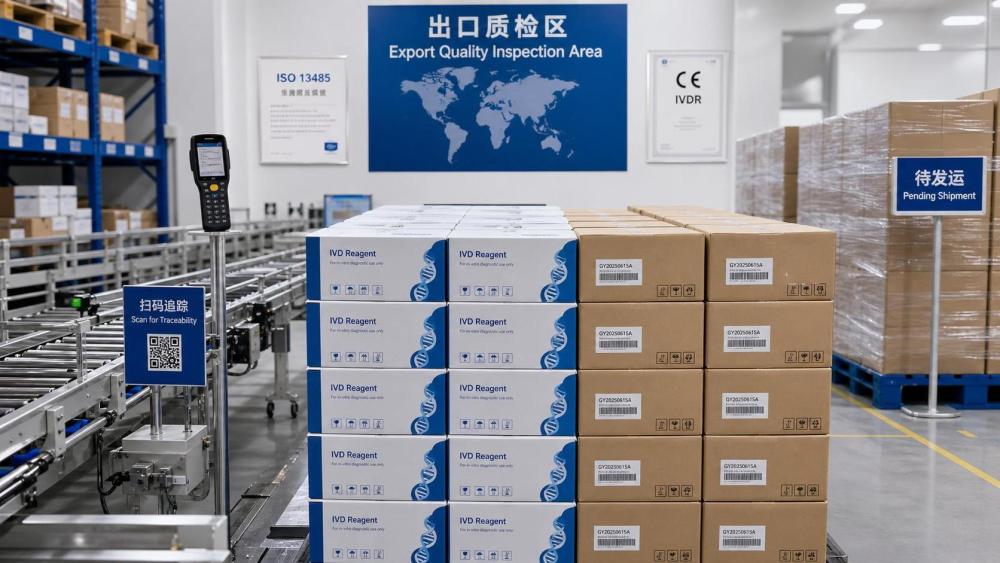
On July 6, 2026, the U.S. FDA issued an urgent notice requiring all China-based manufacturers exporting in vitro diagnostic (IVD) reagents to the United States to connect immediately to an FDA-recognized real-time traceability system (RTS) for batch-level tracking. This development deserves close attention from IVD exporters, supply chain teams, import partners, and customer-facing compliance functions because it directly touches customs clearance risk, delivery timing, and continued market access.
What the FDA Notice Confirms
The confirmed facts are limited but clear. The FDA published the notice on July 6, 2026. The requirement applies to Chinese manufacturers exporting IVD reagents to the U.S. market. From the date of the notice, those suppliers are required to complete connection to an FDA-recognized RTS that supports real-time batch traceability.
The notice also states the immediate compliance consequence: companies that do not complete the system connection may face customs clearance delays and the risk of import refusal. Based on the information provided, the rule directly affects compliance preparation, delivery schedules, and customer qualification for IVD reagent exporters.
Where the Pressure May Appear Across the Supply Chain
Export operations may face immediate execution risk
From an industry perspective, direct exporters are likely to feel the first impact because the new requirement is tied to shipment eligibility and border processing. The operational pressure is most likely to appear in batch documentation, shipment release readiness, and coordination between regulatory and logistics teams. What deserves closer attention is whether current outbound processes are already aligned with the traceability connection requirement.
Manufacturing teams may need closer batch-level coordination
Analysis shows that manufacturing functions may be affected where batch information, production records, and release controls intersect with external compliance systems. Even without adding assumptions beyond the notice, the requirement clearly shifts attention toward whether internal batch management can support real-time traceability expectations tied to U.S. exports.
Distribution and import-facing partners may need stronger verification steps
For channel operators, supply chain service providers, and import-side partners, the practical concern is continuity of movement. If a supplier has not completed the required system connection, downstream parties may face uncertainty in inbound timing and order fulfillment. Observably, this turns supplier verification and shipment status confirmation into a more immediate commercial issue, not just a regulatory one.
Buyers may reassess supplier readiness
Procurement teams and end-market customers may also be affected because delivery risk and import refusal risk can alter supplier access in practice. The issue is not only whether goods are produced, but whether they remain eligible to move into the U.S. market without avoidable disruption. In that sense, traceability system readiness may become part of customer qualification discussions.
What Companies Should Be Watching Now
Whether regulatory wording changes after the urgent notice
What deserves closer attention is any follow-up clarification to the FDA's urgent notice. Analysis shows that companies should distinguish between the confirmed headline requirement and any later interpretation that may shape implementation details. At this stage, the confirmed point is the need for immediate RTS connection and the stated risk of delay or refusal if that connection is incomplete.
How batch traceability links to shipment release
For export-oriented businesses, the practical issue is how the batch-level traceability requirement connects to day-to-day shipping activity. Companies should focus on whether internal records, release timing, and submission workflows are aligned well enough to avoid interruptions once shipments move toward customs clearance.
How to manage customer communication around delivery risk
Because the notice directly affects delivery cycles and customer access, commercial teams may need to prepare clear updates for buyers, distributors, and import partners. The key business concern is not broad policy interpretation, but whether current and near-term orders could be exposed to compliance-related delay.
How supplier qualification and supporting documents are reviewed
Observably, the notice increases the importance of checking supplier-side readiness before orders advance too far in the fulfillment cycle. Companies involved in sourcing, manufacturing, and export coordination should pay close attention to traceability-related records and any documentation tied to batch identification and shipment support.
How This Should Be Read at This Stage
This section is analysis rather than confirmed fact. It is more appropriate to understand this development as both an immediate operational change and a broader compliance signal. The immediate part is clear from the notice itself: system connection is required now, and non-compliance carries shipment-related risk. The broader signal is that batch-level traceability is being treated as a practical market-access condition rather than a background compliance matter.
At the same time, this should not be overstated into conclusions that are not yet confirmed by the provided information. The notice does not, on its own, establish the full long-term market outcome for every supplier. What it does establish is a sharper threshold for export readiness that the industry will need to keep watching closely.
Why the Notice Matters Beyond a Single Deadline
In practical terms, this update matters because it links regulatory compliance directly to trade flow, delivery reliability, and customer retention in the U.S. market. A reasonable reading today is that the notice should be treated first as an urgent execution issue for affected exporters, and second as a policy signal worth continued monitoring. It is more appropriate to understand this as an active compliance development with immediate business consequences, while still leaving room for further clarification and follow-up observation.
Basis of This Article and Ongoing Verification
This article is based on the user-provided news title, event date, and event summary concerning the FDA's July 6, 2026 urgent notice on real-time batch traceability system connection requirements for Chinese IVD reagent manufacturers exporting to the United States.
For this type of development, commonly relevant source categories may include official notices, company disclosures, industry association updates, authoritative media coverage, and standards-related documents. A specific official source link was not provided in the input, so the exact source document still requires continued verification. Further attention should remain on any subsequent official clarification, implementation wording, and practical effects on export compliance and delivery execution.