
On July 12, 2026, the U.S. FDA released Dental AI-Enabled Imaging Software Guidance v2.1, introducing a new filing expectation for newly submitted AI-assisted diagnostic software used in dental CBCT and intraoral X-ray applications. The update draws attention well beyond software review itself: dental imaging device manufacturers, ODM/OEM exporters, regulatory teams, and clinical validation partners now need to pay closer attention because the change is tied directly to submission materials, platform reporting, registration timelines, and compliance cost for products entering the U.S. market.
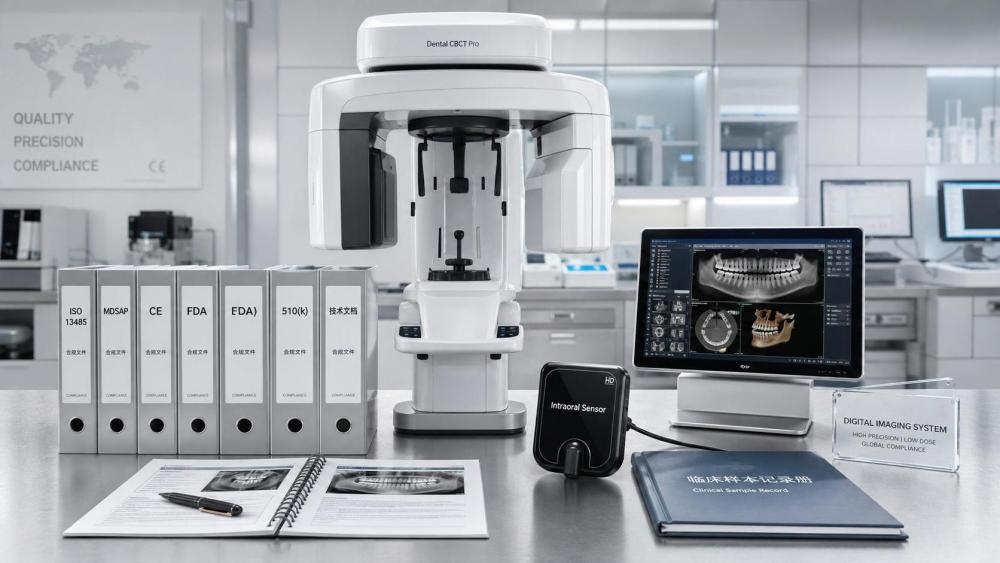
What the FDA Changed on July 12
According to the information provided, the FDA's updated guidance requires all newly submitted AI-assisted diagnostic software for dental CBCT and intraoral X-ray systems to include real-world validation data from at least three overseas clinical institutions. The requirement explicitly includes cooperation partners of Chinese OEM manufacturers. The same data must also be uploaded to the FDA's Digital Health Center of Excellence platform.
The confirmed information further indicates that this adjustment directly affects the U.S. export registration process for Chinese dental imaging ODM/OEM manufacturers, particularly in relation to registration cycle length and compliance cost.
Where the Pressure May Be Felt First
For dental imaging ODM/OEM exporters
From an industry perspective, this group is likely to feel the most immediate pressure because the rule change is tied to new submissions for U.S. market access. The impact may appear first in regulatory preparation, clinical coordination, and submission scheduling. What deserves closer attention is whether existing project plans, partner timelines, and export windows assumed a lighter validation burden than the updated pathway now requires.
For AI software and device integration teams
Companies working at the intersection of imaging hardware and AI-assisted diagnosis may face added complexity in how software evidence is assembled for filing. The issue is not only whether a product performs as intended, but whether real-world validation materials from qualifying overseas clinical institutions can be collected and organized in a form suitable for submission and platform upload. Observably, this may affect document readiness, internal review sequencing, and coordination between device and software teams.
For overseas clinical partners and cooperation networks
The update also raises the importance of overseas clinical institutions involved in validation work, including partners working with Chinese OEM manufacturers. Their role may become more central in evidence generation and submission support. The practical point to watch is whether these partnerships are structured well enough to support data preparation, timing, and consistency with FDA filing needs.
For regulatory and compliance service providers
Service providers supporting registration, submission assembly, and market entry may need to adjust their work around data collection scope, submission workflow, and platform reporting requirements. Analysis shows that the operational burden may shift from purely document-based preparation toward closer management of validation data pathways and submission traceability.
What Companies Should Watch Now
Whether the rule is reflected clearly in active filing plans
Companies preparing new U.S. submissions should review whether their current registration plans for dental CBCT or intraoral X-ray AI-assisted diagnostic software already account for real-world validation data from at least three overseas clinical institutions. This is a practical checkpoint because the issue is not abstract policy interpretation; it directly affects filing completeness.
How platform upload requirements change execution work
The requirement to upload data to the FDA's Digital Health Center of Excellence platform deserves separate attention. Companies should distinguish between having validation data and being operationally ready to submit that data through the specified platform. The policy signal and the actual execution burden may not be identical.
Whether partner arrangements can support compliance timing
For Chinese ODM/OEM manufacturers and their cooperation partners, the key question is whether current clinical and commercial arrangements can support the new evidence requirement without disrupting delivery expectations. This includes attention to documentation flow, partner responsiveness, and the possibility that regulatory preparation may take longer than earlier project assumptions allowed.
How to communicate registration timing and cost changes
Because the provided information explicitly notes effects on registration cycle and compliance cost, companies involved in U.S.-bound projects should pay attention to how those changes are communicated internally and externally. That matters for customer expectation management, project quoting, and cross-border coordination even before any broader market effect becomes clear.
How This Update Is Best Understood at This Stage
Analysis shows that this development is more appropriately understood as a concrete compliance change with broader strategic implications, rather than as a routine wording update. The fact pattern provided is specific: new submissions in defined dental imaging AI categories now need overseas real-world validation data from at least three clinical institutions, and those materials must also be uploaded to an FDA digital platform.
At the same time, it is still more appropriate to understand the wider market impact as something that requires continued observation. The confirmed information supports a clear conclusion on filing burden and likely pressure on registration timing and compliance cost, but it does not by itself establish how quickly different exporters, partners, or service providers will adapt in practice.
Why the Industry Should Treat It as an Actionable Signal
This update matters because it links regulatory review, clinical evidence generation, and digital submission handling in a more explicit way for dental AI imaging products entering the U.S. market. For the industry, the immediate significance is not a final market outcome but a sharper threshold for submission readiness. Current information supports a neutral conclusion: this is a tangible near-term change for affected filings and also a longer-term signal that evidence standards and reporting discipline in dental imaging AI merit close follow-up.
Basis of This Article and What Still Needs Verification
This article is based on the user-provided news title, event date, and event summary concerning the FDA update released on July 12, 2026. For this type of industry development, relevant source categories typically include official agency announcements, company disclosures, industry association updates, authoritative media reporting, and standards or guidance documents.
No specific official source link was provided in the input, so the exact official publication link still needs ongoing verification. Continued monitoring should focus on whether further FDA wording, implementation clarifications, or related submission interpretations emerge around dental CBCT, intraoral X-ray AI-assisted diagnostic software, overseas clinical validation data, and platform reporting requirements.