
Biomedical Engineering Applications in Modern Hospitals: Devices, Systems, and Roles
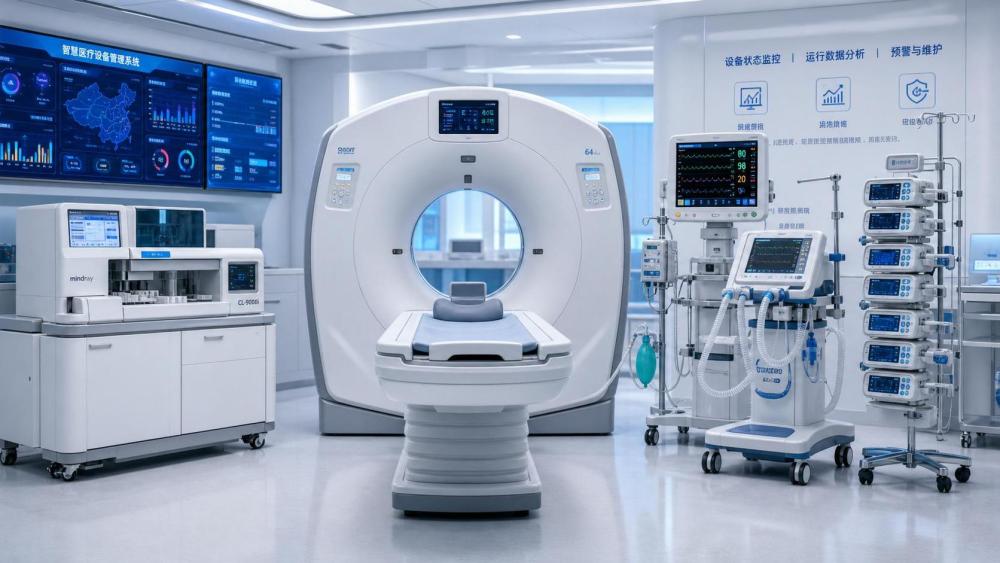
Biomedical engineering sits at the center of modern hospital performance.
It connects medical devices, clinical workflow, safety controls, and technical decision-making.
In practical terms, biomedical engineering helps hospitals choose, operate, maintain, and improve equipment that directly affects patient care.
That includes imaging systems, patient monitors, ventilators, infusion pumps, laboratory instruments, sterilization systems, and digital hospital infrastructure.
As hospitals become more connected, the role of biomedical engineering keeps expanding.
It is no longer limited to repairs.
It now supports procurement planning, device integration, compliance review, lifecycle cost analysis, and risk reduction across departments.
For hospitals under pressure to improve efficiency, biomedical engineering offers a clear operational advantage.
It helps teams move beyond buying equipment by price alone.
Instead, they can evaluate safety, uptime, usability, service support, and long-term value.
Why Biomedical Engineering Matters in Hospital Operations
Every hospital depends on devices that must work reliably under clinical pressure.
Biomedical engineering creates the technical backbone behind that reliability.
A monitor with poor alarm configuration can slow response time.
A CT scanner with frequent downtime can disrupt diagnosis and patient flow.
A sterilizer with weak maintenance planning can increase infection control risk.
These are not isolated technical issues.
They affect clinical quality, financial performance, and supplier decisions.
From a procurement view, biomedical engineering also improves comparison accuracy.
Teams can assess not only technical specifications, but also installation needs, operator training, calibration schedules, consumable supply, and software compatibility.
This is especially valuable when hospitals review multiple suppliers across imaging, ICU, laboratory, and operating room categories.
Core operational benefits
- Improves device uptime and reduces preventable failures.
- Supports safer equipment use through training and standardization.
- Helps procurement teams compare total operating cost, not just purchase price.
- Strengthens compliance, documentation, and audit readiness.
- Aligns technology choices with clinical workflow and hospital capacity.
Key Biomedical Engineering Applications Across Hospital Departments
Biomedical engineering supports many applications, but the value becomes clearer when viewed by department.
Each area has different equipment risks, workflow demands, and service priorities.
Imaging departments
In radiology, biomedical engineering helps manage ultrasound, X-ray, CT, MRI, mammography, and C-arm systems.
The work often covers room readiness, detector performance, dose management, preventive maintenance, and service contract review.
It also supports image quality consistency and workflow coordination with PACS and reporting systems.
ICU and patient monitoring
In critical care, biomedical engineering focuses on monitors, ventilators, infusion pumps, defibrillators, and anesthesia machines.
These devices require tight control of alarm settings, electrical safety, battery health, calibration, and network connectivity.
A small technical gap in ICU equipment can have immediate clinical impact.
Laboratory and diagnostics
Biomedical engineering also supports hematology, biochemistry, immunoassay, coagulation, molecular diagnostics, and lab automation.
Here, accuracy, throughput, reagent dependency, maintenance intervals, and data integration matter most.
Hospitals need equipment that performs well during peak testing demand, not only during a product demo.
Sterilization and infrastructure
Another major biomedical engineering application involves sterilizers, medical gas systems, nurse call systems, hospital beds, and cleanroom facilities.
These systems may seem less visible than imaging devices, but they are essential for safety and continuity.
In many hospitals, infrastructure failures create more disruption than individual device failures.
Devices and Systems Biomedical Engineering Teams Commonly Manage
A practical biomedical engineering program looks at both standalone devices and connected systems.
That distinction matters more now because hospitals depend on digital interoperability.
This mix of devices shows why biomedical engineering cannot be treated as a narrow maintenance function.
It requires technical knowledge, workflow awareness, vendor coordination, and financial discipline.
The Expanding Role of Biomedical Engineering Professionals
The role of biomedical engineering professionals has changed significantly.
Today, they work between clinicians, procurement teams, hospital management, and suppliers.
That cross-functional position makes them important in both equipment planning and operational problem-solving.
Common responsibilities
- Evaluating device specifications before purchase.
- Reviewing installation conditions and utility requirements.
- Setting preventive maintenance schedules and asset records.
- Supporting acceptance testing and user training.
- Managing service providers, spare parts, and warranty follow-up.
- Helping reduce device-related risk through policy and inspection.
In larger hospitals, biomedical engineering may also contribute to equipment replacement planning and capital budgeting.
That is where technical insight turns into better long-term investment decisions.
How Biomedical Engineering Supports Smarter Procurement
One of the most valuable biomedical engineering applications is procurement support.
Hospitals often compare products that look similar on paper but perform very differently in daily use.
A lower-priced system may require expensive consumables, frequent service visits, or difficult operator training.
Biomedical engineering helps uncover those hidden costs early.
Questions worth asking before purchase
- Does the device fit existing workflow and digital systems?
- What maintenance tools, parts, and training are required?
- How stable is local service support and response time?
- Are consumables easy to source at predictable cost?
- What documentation supports compliance, registration, and quality review?
- What is the realistic total cost over five to ten years?
This approach fits the way healthcare procurement really works.
It is structured, risk-aware, and tied to long-term clinical use.
Practical Challenges and How Hospitals Respond
Even strong biomedical engineering teams face pressure from budget limits, aging devices, and rising system complexity.
More connected equipment means more software dependence and more cybersecurity considerations.
At the same time, hospital staff expect faster installation, easier operation, and fewer disruptions.
Common response strategies
- Create detailed equipment inventories with service history.
- Prioritize high-risk devices for tighter maintenance control.
- Standardize product lines where possible to simplify training.
- Review vendor support quality before expansion or renewal.
- Use lifecycle data to guide replacement timing and budget requests.
From recent market changes, a clearer signal is emerging.
Hospitals want devices that are not only advanced, but also serviceable, stable, and easy to integrate.
That makes biomedical engineering more strategic than ever.
Conclusion: Biomedical Engineering as a Decision Framework
Biomedical engineering is not just about fixing hospital equipment.
It is a decision framework for modern healthcare delivery.
It helps hospitals connect devices, systems, safety, procurement, and long-term value in one practical process.
For organizations comparing medical technology options, biomedical engineering offers a more grounded way to judge real performance.
That means asking better questions, planning for the full device lifecycle, and paying close attention to clinical reality.
When hospitals apply biomedical engineering well, they improve uptime, reduce risk, and make procurement decisions with more confidence.
That is exactly where stronger equipment strategy begins.
- medical devices
- medical technology
- diagnostic imaging
- patient monitoring
- digital hospital infrastructure
- C-arm systems
- patient monitors
- ventilators
- anesthesia machines
- infusion pumps
- defibrillators
- ICU equipment
- hospital beds
- medical gas systems
- nurse call systems
- hospital equipment
- hospital infrastructure
- molecular diagnostics
- biomedical engineering
- dose management
- cleanroom facilities