
Urinary, IV, and vascular catheters are common in care delivery, but they serve very different purposes. Confusion between these catheters can affect handling, safety, training quality, and even procurement decisions.
In daily clinical use, the difference is not only where a device goes. It also involves dwell time, infection risk, material choice, securement, maintenance steps, and the kind of therapy or drainage expected.
That distinction matters across the wider healthcare industry. Hospitals, distributors, and technical teams need structured information on catheters because device value depends on performance, workflow fit, documentation, and long-term operating reliability.
Why the differences matter in practice
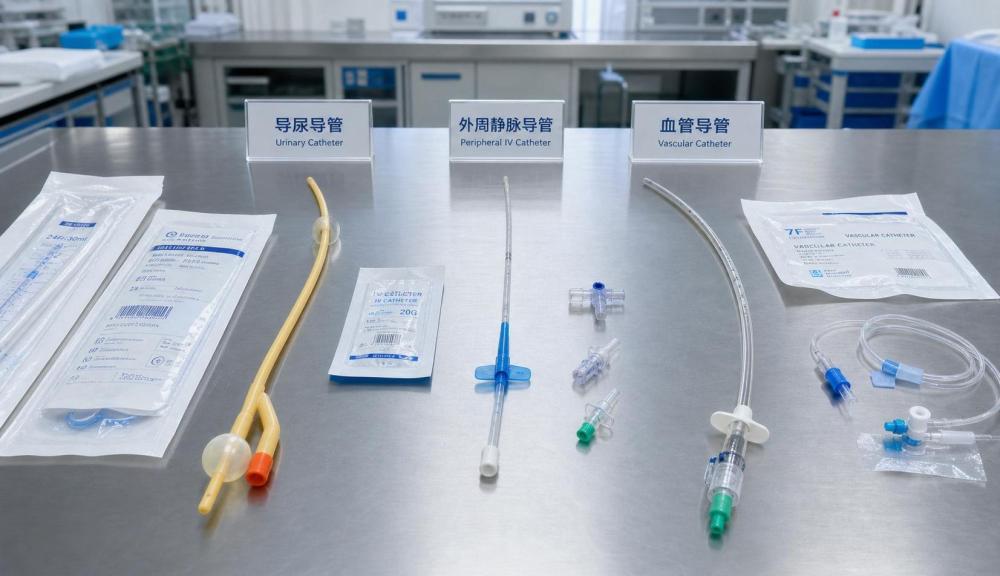
A catheter is a tube, but the clinical intention changes everything. One device drains urine, another delivers fluids into a peripheral vein, and another reaches central circulation or specific blood vessels.
When these categories are treated as interchangeable, problems appear quickly. Storage may be poorly organized, staff may follow the wrong maintenance routine, and selection may focus on price instead of application fit.
For a platform such as MTHH, this is exactly where healthcare information becomes useful. Clear technical comparison helps reduce misunderstanding before use, supplier review, installation planning, or purchasing discussions.
Three catheter groups, three very different jobs
The simplest way to compare catheters is by function and access route. That approach is more practical than memorizing product names alone.
Urinary catheters
Urinary catheters are designed to drain urine from the bladder. They are used when natural urination is not possible, not safe, or not reliable enough for monitoring.
Common examples include intermittent catheters and indwelling Foley catheters. The main concerns are drainage performance, patient comfort, blockage risk, and catheter-associated urinary tract infection.
IV catheters
IV catheters usually refer to peripheral intravenous catheters. They are inserted into smaller veins, often in the hand or arm, for short-term infusion therapy.
These catheters are common for hydration, routine medications, or short antibiotic courses. Key concerns include infiltration, phlebitis, secure placement, and compatibility with the prescribed infusion.
Vascular catheters
Vascular catheters is a broader term. It can include central venous catheters, arterial catheters, PICCs, dialysis catheters, and other devices placed in the vascular system.
These catheters are used for more complex access. They may support central drug delivery, hemodynamic monitoring, blood sampling, contrast injection, or renal replacement therapy.
A side-by-side view of the main distinctions
In real operations, comparing catheters through a few decision points is often more helpful than reading long definitions.
This comparison shows why catheters cannot be grouped as a single commodity. Their risk profile, insertion skill, accessory needs, and post-placement monitoring are clearly different.
Where confusion usually happens
In many facilities, confusion does not start at the bedside. It often starts earlier, during product naming, stock management, onboarding, or incomplete supplier education.
For example, “IV catheter” may be used loosely for any catheter linked to infusion. Yet a peripheral cannula and a central venous catheter have very different indications and maintenance requirements.
The same applies to urinary catheters. Selecting by size alone is not enough. Material, balloon design, expected duration, drainage configuration, and infection control protocols also matter.
This is why healthcare procurement and clinical engineering teams often need more than a catalog sheet. Structured content helps connect technical features with operational consequences.
Selection is about workflow, not only device category
A useful catheter choice begins with the care scenario. Short infusion in a stable ward patient calls for a different solution than critical care monitoring or long-term therapy.
From an operational view, several factors deserve attention:
- Expected dwell time and whether access is temporary or prolonged.
- Therapy characteristics, including irritant drugs, blood products, or high flow needs.
- Insertion environment, from general wards to ICU, imaging, or dialysis areas.
- Availability of accessories such as securement, dressings, filters, and drainage bags.
- Cleaning, flushing, replacement, and documentation requirements after placement.
These points influence total value. A lower-cost catheter may create higher maintenance burden, more replacement events, or weaker compatibility with existing protocols.
Risk control is different for each catheter type
All catheters require aseptic discipline, but the hazard pattern is not the same. That is why training should follow device-specific pathways rather than general catheter language.
For urinary catheters
The central issue is often infection prevention through appropriate indication, closed drainage integrity, correct positioning, and timely removal.
For IV catheters
The focus shifts to vein condition, securement, infusion site observation, and early detection of infiltration or phlebitis.
For vascular catheters
The stakes are usually higher. Bloodstream infection, thrombosis, and line-associated complications demand stricter insertion technique, maintenance bundles, and documentation discipline.
In practical terms, different catheters need different checklists, not just different labels.
What to review before use, training, or procurement
For organizations comparing catheters across suppliers, a few review points can clarify whether a product fits real clinical use.
- Material composition and whether it supports comfort, flexibility, and required dwell time.
- Available sizes, lumen options, tip design, and flow characteristics.
- Sterility assurance, packaging quality, traceability, and labeling clarity.
- Compatibility with current protocols, infusion pumps, drainage systems, or imaging workflows.
- Training support, technical documents, after-sales response, and consumable continuity.
These details matter in the same way other medical technologies are assessed. MTHH’s broader approach to equipment intelligence is relevant here: clinical safety and commercial value must be read together.
A clearer way to think about catheters
Urinary, IV, and vascular catheters should be understood as separate access tools with different clinical goals. That is the foundation for safer use and better product comparison.
A useful next step is to map each catheter category against actual care pathways, replacement practices, accessory needs, and complication monitoring. That creates a more reliable basis for training, supplier evaluation, and daily device use.
When those criteria are defined clearly, catheter decisions become less reactive and more consistent with patient safety, workflow efficiency, and long-term operational value.