
Rehabilitation Technology Platform Trends in 2026: Integration, Data, and Home-Based Care
In 2026, the rehabilitation technology platform is no longer viewed as a single therapy device or isolated software layer.
It is becoming part of a connected care structure that links treatment equipment, patient records, clinician workflows, and recovery beyond the hospital.
That shift matters because rehabilitation demand is rising while care delivery is spreading across acute hospitals, outpatient centers, community settings, and homes.
For organizations evaluating medical technology, the question is no longer whether digital rehabilitation tools exist.
The real question is how a rehabilitation technology platform fits into clinical operations, data governance, procurement planning, and long-term service models.
Why the platform category is changing
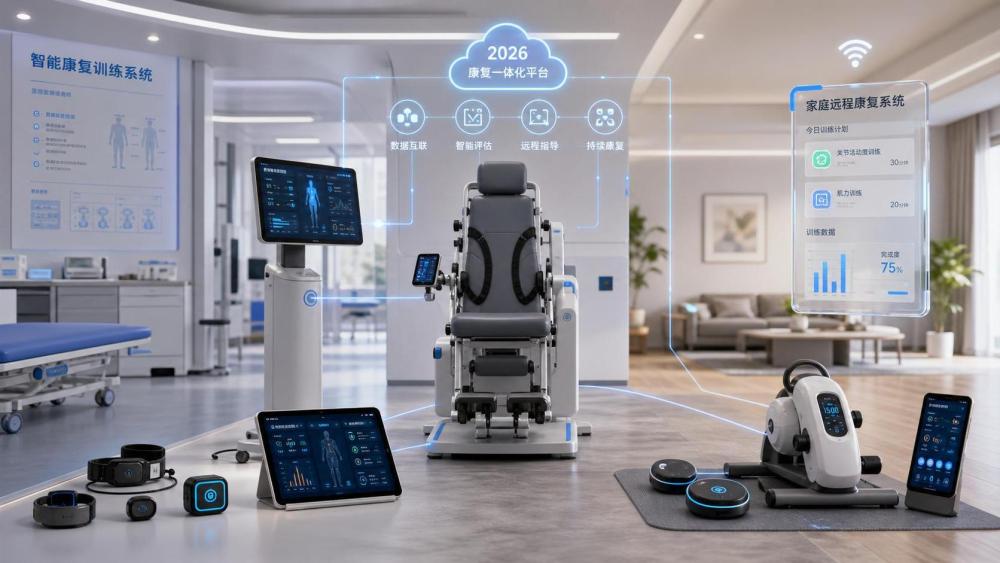
The rehabilitation technology platform used to describe equipment supporting therapy sessions within a controlled facility environment.
Today, the category includes sensor-enabled devices, therapy software, remote assessment tools, reporting dashboards, and interoperability layers.
This broader definition reflects how rehabilitation now depends on continuity rather than isolated sessions.
A stroke recovery program, orthopedic pathway, or neurological rehabilitation plan often extends across several sites and many weeks.
If systems cannot exchange data or support remote follow-up, clinical visibility quickly declines.
From a business perspective, this makes the platform more than a therapy purchase.
It becomes part of digital hospital infrastructure, similar to how patient monitoring or imaging workflow platforms are evaluated.
That is also why healthcare intelligence platforms such as MTHH increasingly frame rehabilitation equipment through workflow, service, and lifecycle value.
Integration is now a core selection issue
In many facilities, rehabilitation still suffers from fragmented technology stacks.
Assessment tools may sit in one system, therapy devices in another, and home-exercise records in a third.
That fragmentation creates avoidable manual work and limits outcome tracking.
A stronger rehabilitation technology platform reduces those gaps by connecting several functions:
- therapy device control and session documentation
- patient progress measurement and trend reporting
- integration with EHR, HIS, or rehabilitation management software
- remote monitoring for home-based recovery
- maintenance, software updates, and device fleet visibility
Integration affects more than convenience.
It shapes how quickly clinicians can review progress, how accurately organizations can report outcomes, and how consistently care plans continue after discharge.
In practical terms, interoperability should be treated as a procurement requirement, not an optional future feature.
What interoperability should actually mean
In vendor presentations, interoperability can sound broad and reassuring without being specific.
A useful review goes deeper.
Decision teams usually need to confirm data formats, interface standards, API availability, user permissions, and cybersecurity responsibilities.
It also helps to check whether integration supports only data export or true two-way workflow exchange.
That difference has direct operational consequences.
Data is becoming the value layer
As the rehabilitation technology platform matures, raw device function is no longer the only basis for comparison.
The quality, structure, and usability of data are becoming equally important.
This includes motion data, session adherence, exercise intensity, range-of-motion changes, pain reporting, and functional outcome scores.
When those data points are captured consistently, they support several business goals.
Data, however, only creates value when it is trustworthy and easy to interpret.
That means validation, documentation quality, audit trails, and clear user dashboards deserve close attention.
MTHH’s broader approach to healthcare technology evaluation is relevant here.
A low-cost system may look attractive until poor reporting, weak support, or unstable software increases operational burden.
Home-based care is moving from extension to expectation
One of the clearest 2026 trends is the normalization of home-based rehabilitation pathways.
This shift is driven by capacity pressure, patient preference, and the need to maintain therapy adherence after discharge.
As a result, the rehabilitation technology platform increasingly needs to support hybrid care models.
That means in-clinic assessment may be followed by app-guided therapy, wearable monitoring, tele-rehabilitation review, and automated progress alerts.
The opportunity is significant, but so are the practical questions.
- Can patients use the system with limited technical support?
- Does the platform flag non-adherence early enough?
- Are remote measurements clinically meaningful or only activity indicators?
- How are training, replacement, and troubleshooting handled outside the facility?
- Is data security consistent across mobile, cloud, and institutional environments?
Home-based care works best when the platform is designed for continuity, not simply for remote access.
There is a major difference between sending exercises home and managing a connected recovery pathway.
Where the platform creates measurable business value
A rehabilitation technology platform creates value in several layers at once.
The first is clinical consistency.
Standardized workflows and shared data make it easier to keep care plans aligned across sites and care teams.
The second is operational efficiency.
When device performance, session records, and patient engagement data are visible, scheduling and resource planning improve.
The third is asset performance.
Connected platforms can simplify software maintenance, spare part planning, and service response management.
The fourth is market positioning.
Organizations with structured rehabilitation pathways are better placed to support value-based models, referral confidence, and scalable expansion.
This is why evaluation should include both technical and commercial dimensions.
The platform must fit the therapy environment, but it must also fit documentation standards, service expectations, and long-term ownership costs.
Typical environments where value differs
Not every setting will prioritize the same features.
What to examine before committing
A modern rehabilitation technology platform should be reviewed like other high-impact medical technology systems.
That means moving beyond brochures and headline features.
Several checkpoints usually deserve structured comparison:
- clinical relevance of captured metrics
- software stability, update policy, and downtime risk
- integration readiness with existing digital infrastructure
- training model for facility staff and home users
- documentation, regulatory support, and cybersecurity controls
- service response time, spare parts, and local support capacity
- total operating cost across licenses, accessories, and maintenance
These criteria align with the wider medical equipment logic that MTHH emphasizes across imaging, diagnostics, patient care, and infrastructure.
The platform should be judged by how it performs in real conditions, not by interface appeal alone.
A practical direction for the next decision cycle
The 2026 market direction is clear.
The rehabilitation technology platform is becoming a connected operational system, with data and home-based care at the center.
That makes early evaluation more important than late correction.
A useful next step is to map current rehabilitation workflows, identify where data breaks occur, and define which outcomes really need visibility.
From there, platform comparisons become more disciplined.
Instead of asking which system has the longest feature list, it becomes easier to ask which one supports continuity, measurable value, and dependable long-term operation.
That is usually where better rehabilitation investment decisions begin.
Have questions about the global trade trends discussed here, or planning your expansion and supply chain strategy? Leave a message below and let the trade experts at MTHH guide you.
We respect your privacy. Your information is strictly confidential.
Related News
- Which rehabilitation technology solutions fit home-based stroke recovery?Aug 29, 2026Rehabilitation technology solutions for home-based stroke recovery: compare safe, practical tools for mobility, hand function, telerehab, and daily progress.
- How to Evaluate Rehabilitation Devices for Musculoskeletal RecoveryJul 23, 2026Rehabilitation devices musculoskeletal teams choose should fit clinical goals, safety, durability, and workflow. Learn how to evaluate options wisely and reduce long-term procurement risk.
- Noninvasive Ventilators: Key Features That Affect Comfort, Alarms, and Clinical UseJul 17, 2026Noninvasive ventilators influence more than pressure delivery. Discover how comfort settings, alarm design, leak compensation, and usability shape safer care and better clinical performance.
- How to Compare CE-Certified Respiratory Support Systems by Clinical UseJul 16, 2026Respiratory support systems CE certified should be compared by clinical use, alarms, workflow, service, and life-cycle cost. Discover a practical guide for smarter device selection.