
Noninvasive Ventilators: Key Features That Affect Comfort, Alarms, and Clinical Use
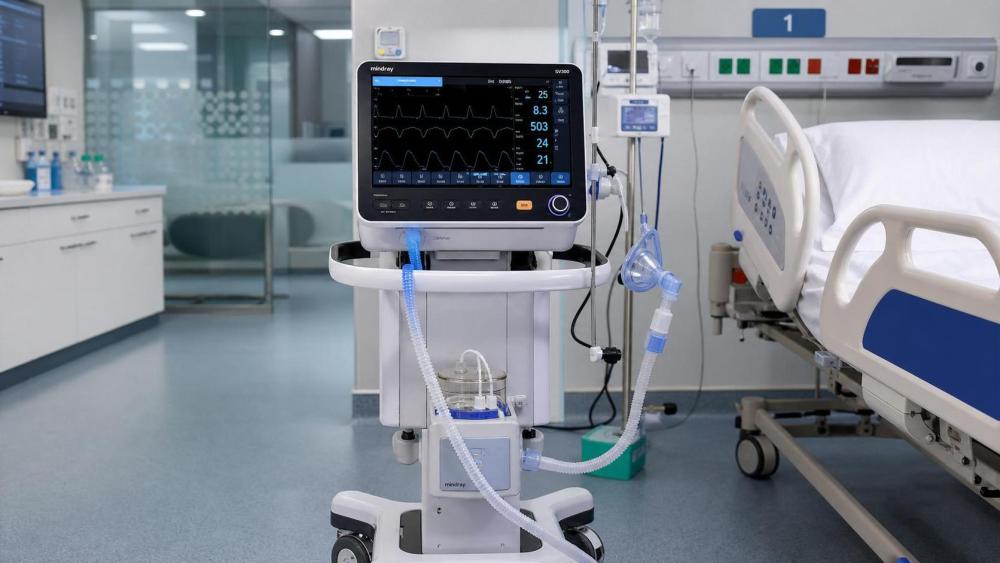
Noninvasive ventilators are now common in ICUs, emergency rooms, respiratory wards, and step-down units.
They support patients with COPD exacerbation, sleep-related breathing disorders, cardiogenic pulmonary edema, and selected post-extubation cases.
Still, basic pressure delivery is only part of the picture.
In day-to-day use, the value of noninvasive ventilators depends on comfort, alarm logic, interface control, and patient-device synchrony.
When these factors are well designed, therapy is easier to tolerate and staff intervention becomes more efficient.
When they are poorly handled, even a technically capable ventilator can create avoidable workload and unstable care.
This matters because noninvasive ventilation depends heavily on cooperation between patient, interface, and operator judgment.
Why Comfort Settings Matter in Noninvasive Ventilators
Comfort is often the first reason a patient accepts or rejects noninvasive ventilation.
A machine may meet pressure targets, yet still fail clinically if the patient feels air hunger, dryness, or mask-related distress.
That is why modern noninvasive ventilators need more than standard IPAP and EPAP adjustment.
Rise time and trigger sensitivity
Rise time controls how fast pressure reaches the set inspiratory level.
A rise time that is too aggressive may feel harsh.
A rise time that is too slow may increase work of breathing.
Trigger sensitivity is equally important in noninvasive ventilators.
If triggering is insensitive, the patient must work harder to start a breath.
If it is too sensitive, leaks or movement may cause auto-triggering.
Expiratory cycling and pressure relief
Cycling settings determine when inspiration ends and exhalation begins.
Poor cycling can create delayed exhalation, double triggering, or a feeling of breath stacking.
Some noninvasive ventilators manage this better through leak-adaptive algorithms.
Pressure relief features during exhalation may also improve tolerance in selected patients.
Humidification and interface compatibility
Dry airflow can quickly reduce compliance.
Integrated or compatible humidification helps protect mucosal comfort during extended sessions.
Mask fit also shapes comfort more than many settings menus suggest.
Noninvasive ventilators should support different masks, vented circuits, and patient profiles without complicated setup steps.
Alarm Design and Why It Changes Workflow
Alarm performance is one of the most practical evaluation points for noninvasive ventilators.
In real wards, alarm fatigue is a serious issue.
Frequent false alerts reduce response quality and disrupt patient rest.
Essential alarm categories
Useful noninvasive ventilators usually include clearly separated technical and patient-related alarms.
- High leak alarm
- Low minute ventilation alarm
- Apnea alarm
- High and low pressure alarms
- Power failure and battery alarm
- Circuit disconnection alarm
The issue is not simply whether these alarms exist.
What matters is whether they are easy to interpret at the bedside.
Smart alarm behavior
Better noninvasive ventilators use alarm prioritization, adjustable delay settings, and clearer root-cause prompts.
For example, persistent leak should not be presented in the same way as apnea.
Color coding, sound differentiation, and readable alarm history also reduce confusion during busy shifts.
This becomes even more important in high-turnover emergency or respiratory care areas.
Patient-Device Synchrony Is a Clinical Performance Issue
One of the clearest signs of a capable noninvasive ventilator is how well it synchronizes with spontaneous breathing.
Asynchrony may increase discomfort, prolong support time, and reduce treatment effectiveness.
Common forms include missed triggers, auto-triggering, premature cycling, and delayed cycling.
Leak compensation as a core function
Leaks are normal in noninvasive ventilation, especially around masks.
Because of that, leak compensation is not an optional feature.
It is central to stable performance in noninvasive ventilators.
A machine that cannot adapt to changing leak conditions may show unstable triggering and inaccurate delivered support.
Waveform visibility helps faster adjustment
Waveform display is often underestimated outside intensive care settings.
Yet clear pressure and flow curves help users identify whether poor tolerance comes from leaks, timing mismatch, or pressure settings.
Noninvasive ventilators with accessible waveform review support quicker bedside decisions.
Usability Features That Affect Daily Operation
In practical hospital use, interface design shapes safety as much as technical specifications do.
Noninvasive ventilators are often used under time pressure.
Menus that are hard to navigate slow down treatment and increase setup errors.
What good usability usually includes
- Fast mode selection for NIV, CPAP, and bilevel support
- Clear display of set values and monitored values
- One-step access to alarm limits
- Visible battery status and oxygen source status
- Simple pre-use check prompts
- Easy cleaning workflow for reusable parts
Transport and mobility also matter.
Some noninvasive ventilators are intended for fixed bedside use, while others support intra-hospital transport and emergency deployment.
Battery runtime, weight, and cart compatibility should match the clinical setting.
Clinical Use Scenarios Require Different Priorities
Not all noninvasive ventilators should be judged by the same priorities.
Clinical context changes what matters most.
Emergency and acute respiratory care
Here, setup speed and intuitive alarms are critical.
Users need reliable leak handling and clear monitoring within minutes.
Respiratory wards and step-down care
In these areas, comfort over longer sessions becomes more important.
Humidification, quiet operation, and manageable alarms influence adherence and ward workflow.
Post-extubation and monitored recovery
This setting demands closer attention to synchrony, apnea response, and trend review.
Noninvasive ventilators used here should provide dependable monitoring, not only basic support.
How to Evaluate Noninvasive Ventilators Before Selection
From a technical and operational view, evaluation should go beyond brochure specifications.
A practical review usually includes bedside simulation and workflow testing.
A short trial with real masks and typical leak conditions often reveals more than a spec sheet.
It also helps teams see whether noninvasive ventilators fit local protocols and staffing patterns.
What Really Matters in Practice
The best noninvasive ventilators do not stand out only because they deliver pressure accurately.
They stand out because they support calm, consistent, and efficient respiratory care.
Comfort settings affect acceptance.
Alarm design affects workflow.
Synchrony affects clinical response.
Usability affects safety every shift.
When reviewing noninvasive ventilators, focus on how the device behaves in actual care conditions, not only on its feature list.
That approach leads to better matching between equipment, clinical needs, and daily operation.