
EU MDR Annex XVI Expands CE Rules for Rehab Remote Modules
On June 28, 2026, the European Commission issued MDR implementation notice 2026/C 215/03, clarifying that rehabilitation equipment modules with remote patient data transmission, AI-assisted assessment, or cloud-based clinical decision support functions will need separate CE certification under Annex XVI. For manufacturers exporting rehabilitation devices to Europe, especially those supplying integrated hardware-plus-software systems, this matters because the compliance scope now reaches beyond the core device and into specific digital modules, with direct implications for documentation structure, cybersecurity statements, data localization declarations, and time to market.
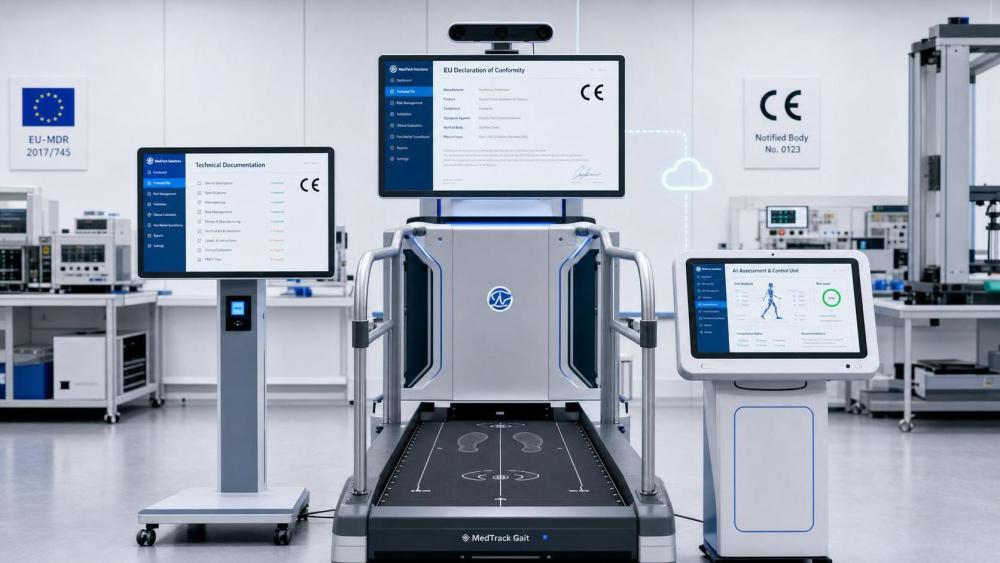
What the new notice specifically covers
According to the information provided, the notice places certain rehabilitation equipment modules into the Annex XVI category of products that are not for a medical purpose but may affect safety. The clarification applies to modules that provide remote patient data transmission, AI-assisted evaluation, or cloud-based clinical decision support.
The examples given include an embedded cloud platform used in a smart gait analysis system and a SaaS interface used by a neurofeedback training system. Under this clarification, those modules must obtain separate CE certification.
The same notice also requires relevant products to provide cybersecurity compliance statements and data localization compliance declarations. The adjustment is described as directly affecting the technical documentation architecture and product launch cycle of Chinese rehabilitation equipment manufacturers exporting to the EU.
Where the impact is likely to be felt first
Export-facing rehabilitation device manufacturers
From an industry perspective, manufacturers selling rehabilitation equipment into the EU are the first group likely to feel the effect. The reason is straightforward: products previously managed as a single hardware-led export package may now require module-level compliance treatment when remote monitoring, AI assessment, or cloud decision-support functions are involved. The main pressure points are likely to be product definition, document preparation, and launch sequencing.
Software and cloud function providers inside device offerings
Providers responsible for embedded cloud platforms, SaaS interfaces, and related digital functions may also be affected because the clarification focuses on the module rather than only the physical equipment. What deserves closer attention is whether software-linked functions are documented and positioned as standalone compliance elements within the broader product file.
Regulatory, documentation, and delivery teams
Teams handling technical files, certification coordination, and export delivery may need to rework how they split device documentation and supporting declarations. Analysis shows that the impact is not limited to formal certification itself; it may also extend to internal handoff points between R&D, regulatory affairs, legal review, and customer delivery planning.
EU distributors, buyers, and service partners
Channel partners and procurement-side stakeholders may need greater clarity on whether a rehabilitation system's remote or AI-enabled module has been certified separately. Observably, this can affect due diligence, product onboarding, and customer communication, especially where system functions are sold as part of a bundled solution.
Operational issues companies should watch now
How products and modules are defined
What deserves closer attention is the boundary between the main rehabilitation device and its digital module. Companies should review whether remote transmission, AI-assisted assessment, or cloud decision-support functions are presented as embedded features or as modules that now fall within the clarified Annex XVI scope.
How technical documentation is organized
The notice matters in practical terms because it directly affects technical documentation architecture. Companies should pay close attention to whether their current files clearly separate the module-level compliance narrative, supporting declarations, and product descriptions in a way that aligns with the new requirement for separate CE certification.
Cybersecurity and data localization statements
Another immediate point is the requirement to provide cybersecurity and data localization compliance declarations. Analysis shows that this is not just a filing detail; it changes the compliance package expected for affected modules and may require earlier coordination across software, data handling, and regulatory teams.
Launch timing and customer communication
Because the adjustment is stated to affect time to market, companies should watch project timelines, delivery commitments, and customer-facing explanations. In practice, the distinction between a device already prepared for export and a module now needing separate certification could become a key issue in sales and fulfillment discussions.
Why this reads as more than a narrow filing update
Analysis shows that this development is not simply about adding one more document to an EU export file. It signals closer regulatory attention to digital functions attached to rehabilitation equipment, particularly where those functions transmit patient data, support AI-based assessment, or rely on cloud-based decision support.
It is more appropriate to understand this as a concrete compliance change with broader regulatory implications still worth watching. The confirmed fact is the clarified requirement for separate CE certification and supporting declarations for certain modules. The larger industry question is how broadly companies will need to redesign product classification logic and documentation structures around connected rehabilitation systems.
How the market is likely to interpret it for now
At this stage, the update is best understood as an immediately relevant compliance development rather than a purely long-term policy signal. The requirement has practical consequences for exporters because it touches certification scope, documentation workload, and launch timing. At the same time, it should also be watched as a longer-term signal that digital sub-systems in rehabilitation equipment are being assessed with greater regulatory specificity.
A neutral reading is that the rule change does not by itself define every commercial outcome, but it does change the compliance threshold for affected modules in a way that companies cannot treat as secondary.
Basis of this article and what still needs verification
This article is based on the user-provided news title, event date, and event summary concerning the European Commission's MDR implementation notice 2026/C 215/03 issued on June 28, 2026.
For this type of development, commonly relevant source categories may include official notices, company compliance disclosures, industry association updates, authoritative media coverage, and standard or regulatory documents. A specific official source link was not provided in the input, so the exact publication text and any later interpretive materials still require ongoing verification.
Further monitoring should focus on whether additional official wording, implementation guidance, or market-side clarification changes how affected rehabilitation equipment modules are documented, certified, and delivered into the EU market.
Have questions about the global trade trends discussed here, or planning your expansion and supply chain strategy? Leave a message below and let the trade experts at MTHH guide you.
We respect your privacy. Your information is strictly confidential.
Related News
- Which rehabilitation technology solutions fit home-based stroke recovery?Aug 29, 2026Rehabilitation technology solutions for home-based stroke recovery: compare safe, practical tools for mobility, hand function, telerehab, and daily progress.
- How to Evaluate Rehabilitation Devices for Musculoskeletal RecoveryJul 23, 2026Rehabilitation devices musculoskeletal teams choose should fit clinical goals, safety, durability, and workflow. Learn how to evaluate options wisely and reduce long-term procurement risk.
- Noninvasive Ventilators: Key Features That Affect Comfort, Alarms, and Clinical UseJul 17, 2026Noninvasive ventilators influence more than pressure delivery. Discover how comfort settings, alarm design, leak compensation, and usability shape safer care and better clinical performance.
- How to Compare CE-Certified Respiratory Support Systems by Clinical UseJul 16, 2026Respiratory support systems CE certified should be compared by clinical use, alarms, workflow, service, and life-cycle cost. Discover a practical guide for smarter device selection.