
What determines mammography equipment price for a new imaging suite?
A mammography system quotation is only one part of the cost of opening a new imaging suite. The final investment is shaped by the clinical scope of the service, detector and software configuration, room readiness, integration work, service coverage, and the supplier's ability to support the system after commissioning. Two units with similar-looking specifications can produce materially different project costs once these elements are included.
For procurement teams, the useful question is not simply, “What is the mammography equipment price?” It is, “What level of system, site work, and ongoing support is required to deliver the examinations our facility intends to provide?” A screening-focused service, a diagnostic breast center, and a hospital imaging department may all purchase digital mammography equipment, yet their appropriate configurations and cost exposure can differ substantially.
Clinical purpose sets the starting price range
The intended use of the suite is the first factor that should shape the budget. A facility providing routine screening may be able to prioritize throughput, image consistency, patient positioning, and dependable operation. A center handling diagnostic workups, dense breast assessment pathways, or image-guided procedures may need a broader configuration with more advanced imaging and workflow capabilities.
Digital breast tomosynthesis is often one of the largest equipment-level cost drivers. It adds three-dimensional imaging capability, but its value depends on clinical protocols, radiologist preference, reporting capacity, reimbursement conditions, and patient volume. Buying tomosynthesis simply because it appears on competing quotations can create an avoidable capital burden. Conversely, omitting it from a suite expected to perform high volumes of diagnostic examinations may constrain the service soon after launch.
Procurement should define the planned examination mix before asking vendors to price a system. The specification should state whether the unit will be used for screening only, diagnostic mammography, tomosynthesis, contrast-enhanced examinations where locally appropriate, stereotactic or tomosynthesis-guided biopsy, or a combination of these services. Suppliers can then quote comparable configurations rather than presenting a low base price that excludes capabilities required in day-to-day clinical use.
Detector design and image quality affect both capital cost and operating confidence
Digital detector technology is central to mammography equipment price because it affects image acquisition, dose management, workflow, and potential replacement cost. Detector format, field coverage, pixel characteristics, image processing, and whether the system uses a fixed or replaceable detector architecture can all influence the quotation.
A lower initial price may reflect a more limited detector configuration, fewer software functions, or exclusions around detector warranty. That does not automatically make it the wrong choice. It does mean the buyer should establish whether the configuration supports the required patient population, positioning workflow, and clinical quality objectives.
Detector coverage matters in practical terms. Facilities should ask how the system performs for varied breast sizes and body habitus, whether additional exposures are likely for particular positioning situations, and how the unit supports technically challenging examinations. These are clinical and workflow questions, but they have financial consequences. Longer exam times, repeated images, or frequent workarounds reduce capacity and add pressure to staff schedules.
Image quality should also be assessed as a complete system outcome, not as a single detector specification. Acquisition software, reconstruction algorithms for tomosynthesis, workstation display quality, quality-control tools, and integration with radiology information systems all contribute to whether the equipment performs consistently in the intended setting.
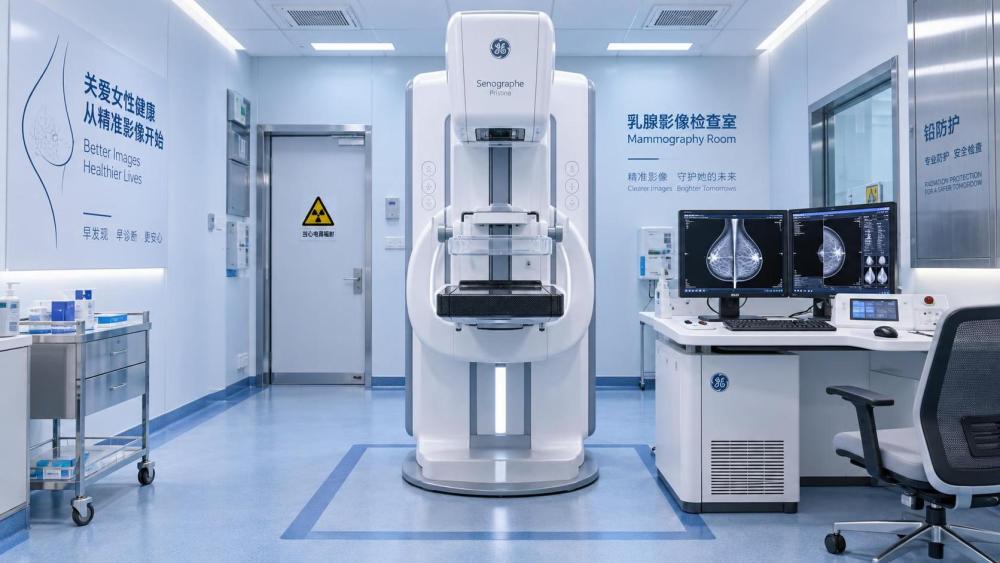
The room can be less expensive than the system, or the surprise cost in the project
A new imaging suite often requires more spending beyond the mammography unit than early budgets assume. Room preparation varies according to the existing building, the selected equipment, local regulations, and the clinical model. The equipment supplier may include some installation activities while excluding civil works, shielding changes, electrical upgrades, network connections, HVAC modifications, furniture, or architectural finishes.
Radiation protection planning should be addressed early, with appropriately qualified local specialists where required. The cost is not limited to lead-lined barriers. Door configuration, viewing arrangements, room geometry, control area layout, equipment position, and the building's existing construction can affect the final scope. A site with an already suitable X-ray room may need modest adaptation; a converted consultation room may require much more extensive work.
Electrical and IT requirements deserve the same attention. Mammography systems may require dedicated power arrangements, grounding provisions, network connectivity, secure access controls, and integration with PACS, RIS, electronic medical records, or scheduling systems. Where tomosynthesis image volumes are part of the workflow, storage capacity, network performance, and archival policies should be reviewed before purchase. A system that acquires images efficiently but experiences delays in transfer, review, or storage does not deliver the expected operational benefit.
Ask suppliers to separate their quotation into equipment, installation, and exclusions. Then build a site-readiness budget that is owned jointly by procurement, facilities, IT, radiology, and clinical engineering. This creates a more reliable project figure than treating the equipment quotation as the total cost of the suite.
Workflow features can justify a higher price when capacity is constrained
The cost of a mammography system rises with added automation, positioning support, software modules, and advanced workstations. Procurement teams should judge these features by their contribution to the actual workflow rather than by the length of the option list.
In a high-throughput screening environment, patient preparation, positioning efficiency, image availability, technologist ergonomics, and repeat-examination management may have more commercial value than a feature intended mainly for complex diagnostic workflows. In a hospital breast imaging service, the balance may shift toward diagnostic functionality, interoperability, access to prior studies, and procedure support.
Questions that help distinguish a useful workflow investment from an unnecessary option include:
- How many examinations are expected per day, and how variable will demand be?
- Will the system be operated by dedicated mammography technologists or a broader radiography team?
- Which functions are needed at launch, and which can realistically be added later?
- Does the proposed workstation support the radiologists' planned reading workflow without separate software purchases?
- Will images and reports move through existing hospital systems without manual re-entry or duplicate patient registration?
- Are biopsy or localization workflows part of the service plan, or outside the scope of this suite?
Some advanced options are easier to add after installation than others. Software licenses may be upgradeable, while a decision involving room design, gantry configuration, detector capability, or procedure accessories may be difficult and costly to reverse. The procurement specification should identify these irreversible decisions clearly.
Compare quotations on an installed and supported basis
One of the most common comparison errors is placing a base equipment price beside a more complete turnkey proposal and treating the difference as a product premium. The lower figure may exclude applications training, DICOM connectivity, clinical workstation software, acceptance testing, freight, commissioning, accessories, warranty extensions, or site work.
A practical comparison sheet should request the same commercial breakdown from every bidder. It should separate the system itself from the items needed to place it into clinical operation. The aim is not to force every supplier into identical commercial language; it is to expose what each price includes and what remains a hospital responsibility.
At a minimum, the review should identify the equipment configuration; standard and optional software; detector and tube warranty terms; patient comfort and positioning accessories; diagnostic workstations; integration scope; delivery and rigging; installation and acceptance testing; technologist and application training; preventive maintenance; corrective service response commitments; spare-parts coverage; and costs associated with future software or hardware upgrades.
Pricing also needs to be read alongside the implementation timeline. Delays caused by unprepared rooms, missing network infrastructure, incomplete documentation, or unavailable training can extend the period before the service becomes operational. An apparently economical purchase loses some of its advantage if the suite cannot begin examinations when planned.
Service terms often determine the real difference between similar systems
Mammography is a patient-facing diagnostic service with limited tolerance for prolonged downtime. Service coverage therefore affects the economic value of the purchase, particularly where the facility has only one unit. A lower purchase price can become less attractive if support is remote, spare parts are not locally available, or the service contract has broad exclusions.
The warranty should be reviewed in detail rather than summarized as a number of years. Procurement teams should ask whether labor, travel, preventive maintenance, software updates, detector components, X-ray tube components, and emergency visits are included. They should also clarify the process for resolving image-quality concerns that do not present as a clear hardware failure.
Response-time commitments require similar care. A promise to respond does not necessarily mean an engineer will attend the site within that period, nor that a critical replacement part will be available. For an imaging suite serving a defined screening program or referral network, the buyer may need a service-level structure that distinguishes remote triage, on-site attendance, parts delivery, and restoration of clinical use.
Training is another cost that can be understated in an initial quotation. Basic operational training may be included, while advanced applications support, training for new staff, workflow optimization, and ongoing education are charged separately. A new suite should budget for enough training to establish reliable positioning, quality control, protocol use, and escalation practices. The objective is not merely to switch the system on, but to operate it consistently after the vendor's implementation team leaves.
Compliance and documentation can change what “available for purchase” means
A system can be technically suitable yet inappropriate for a specific procurement if its documentation does not meet local regulatory, registration, radiation-safety, cybersecurity, import, or hospital governance requirements. These requirements vary by market and by the status of the purchasing organization, so they should be checked before a preferred vendor is selected.
For a new imaging suite, documentation review should cover the equipment's legal market status, relevant safety and quality records, installation requirements, user manuals, maintenance documentation, radiation-related documentation, software version control, cybersecurity information where connected systems are involved, and the supplier's responsibility for updates. Distributors and project planners should be equally clear about who will provide these materials, in what language, and at which point in the implementation schedule.
This work may not alter the sticker price of the mammography system, but it can alter the total project cost and launch date. It is particularly important when equipment is sourced across borders or when a distributor is responsible for installation coordination and first-line service.
Build the budget around lifecycle decisions, not only the first purchase order
The strongest procurement decision usually comes from matching the system configuration to a defined clinical service and then calculating the cost of operating that configuration over its expected use. Capital cost remains important, especially for facilities with constrained budgets. Yet a lower entry price deserves closer examination when it depends on limited warranty coverage, unsupported software, weak integration, costly future upgrades, or a service model that leaves the facility exposed to downtime.
Before award, procurement should be able to answer a few basic questions with confidence: What examinations will this suite perform? What site work is already funded? Which features are mandatory on day one? Who owns integration and acceptance testing? How quickly can the system be restored after a fault? Which costs will recur after warranty expiry?
When those answers are visible in the specification and contract, mammography equipment price becomes a manageable procurement variable rather than a misleading headline figure.
Have questions about the global trade trends discussed here, or planning your expansion and supply chain strategy? Leave a message below and let the trade experts at MTHH guide you.
We respect your privacy. Your information is strictly confidential.
Related News
- How to choose diagnostic imaging equipment for small clinicsNov 14, 2026Choose diagnostic imaging equipment for clinics with confidence. Compare clinical needs, costs, space, workflows, and supplier support before you buy.
- How to size medical gas pipelines for peak demandNov 09, 2026Medical gas pipeline systems design starts with peak demand. Learn how to size pipes, calculate pressure loss, and check critical paths for reliable performance.
- What Trendelenburg angle should an operating table provide?Nov 05, 2026Compare operating tables Trendelenburg angles, load limits and accessories. Discover what to check before choosing the right table for your procedures.
- How to estimate the total cost of hospital imaging equipmentNov 04, 2026Plan hospital capital equipment imaging investments with confidence. Learn to estimate installation, service and operating costs and compare bids fairly.