
Ventilators and CT Scanners in ICU Expansion: Planning the Right Equipment Mix
Ventilators and CT Scanners in ICU Expansion: Planning the Right Equipment Mix
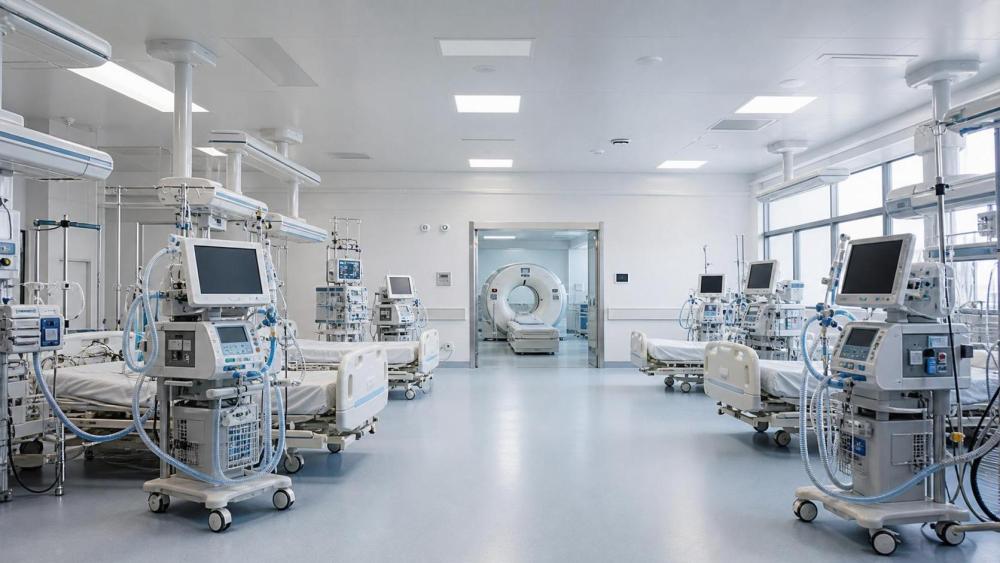
Expanding ICU capacity is rarely just a bed-count exercise.
The real challenge is building a dependable care environment around those beds.
In that environment, ventilators are essential, but they cannot be planned in isolation.
ICU expansion also depends on imaging access, especially CT scanners for urgent diagnosis and follow-up assessment.
When the equipment mix is wrong, bottlenecks appear fast.
A unit may have enough ventilators, yet still struggle with delayed imaging, transport risks, and poor patient flow.
That is why ICU planners need a balanced view.
The goal is not simply buying more ventilators or a larger CT scanner.
The goal is matching clinical demand, infrastructure limits, and service capacity in one practical plan.
Why Ventilators and CT Scanners Must Be Planned Together
Critical care patients often need both respiratory support and fast imaging decisions.
A ventilator keeps the patient stable, while CT scanners help teams confirm what is happening internally.
This includes lung injury, stroke, trauma, pulmonary embolism, bleeding, and postoperative complications.
From a project standpoint, these devices influence each other more than many teams expect.
If ventilator demand rises, patient transport to imaging usually rises too.
If CT scanner access is limited, ICU decision-making slows down, even when ventilators are available.
The equipment mix should therefore be planned around the whole patient pathway, not around individual purchase lines.
Start with Patient Volume, Acuity, and Case Mix
A sound ICU expansion plan starts with workload assumptions.
How many beds are expected to be occupied?
How many patients are likely to require invasive ventilation?
How often will they need CT imaging within the first 24 to 72 hours?
These questions shape both ventilators strategy and CT scanner strategy.
Useful planning inputs include:
- Expected ICU admissions by specialty
- Average ventilation rate per occupied bed
- CT demand for emergency, neurology, thoracic, and trauma cases
- Average transport time from ICU to CT scanner
- Peak-hour overlap between ventilator cases and imaging demand
- Seasonal surge patterns and disaster readiness targets
Without this baseline, buying extra ventilators may solve one problem while exposing another.
Define the Right Ventilators Mix for ICU Expansion
Not every ICU bed needs the same ventilators specification.
That is an important cost and usability issue.
In many expansions, teams overfocus on flagship features and underfocus on deployment flexibility.
A practical ventilators portfolio usually combines core ICU units with a smaller number of advanced systems.
Key selection points include:
- Support for invasive and non-invasive ventilation modes
- Ease of setup during urgent admission
- Alarm management and visibility in busy ICU settings
- Compatibility with hospital gas and power systems
- Humidification, filtration, and consumables availability
- Data output for monitoring and documentation workflows
- Local service support and spare parts response time
Transport ventilators also deserve separate planning.
They become critical when unstable patients must move to CT scanners or other departments.
A hospital may have enough bedside ventilators, yet still face risk if transport capability is thin.
Plan CT Scanner Capacity Around ICU Workflow, Not Just Imaging Volume
CT scanner planning often sits in a separate capital budget discussion.
In ICU expansion, that separation can create expensive blind spots.
The question is not only how many scans per day a CT scanner can perform.
The real question is how reliably ICU patients can reach imaging when every minute matters.
For ICU-related CT scanners decisions, review:
- Distance between ICU and CT scanner room
- Lift, corridor, and bed transport constraints
- Need for dedicated emergency imaging slots
- Scan speed and reconstruction turnaround
- Infection control workflow for critical patients
- Downtime coverage if the main CT scanner fails
In larger projects, a nearby emergency CT scanner may provide more value than a higher-end system placed far away.
That kind of decision changes patient risk, staffing load, and overall ICU efficiency.
Map the Hidden Infrastructure Behind Ventilators and Imaging
Equipment planning fails when support systems are treated as secondary details.
Ventilators depend on stable oxygen, compressed air, suction, and electrical backup.
CT scanners depend on shielding, power quality, cooling, network integration, and room preparation.
When ICU expansion moves quickly, these dependencies are often underestimated.
The minimum infrastructure checklist should cover:
- Medical gas capacity under full occupancy and surge conditions
- UPS and generator support for ventilators and transport routes
- Space for bed movement, staff access, and emergency intervention
- Ventilator storage, cleaning, and preventive maintenance zones
- CT scanner room readiness, shielding approval, and HVAC requirements
- PACS, RIS, and EMR connectivity for imaging and critical care records
This is where many procurement timelines slip, even when the equipment itself is available.
Balance Capital Cost with Long-Term Operating Reality
Price matters, but ICU expansion decisions should not stop at purchase price.
Ventilators and CT scanners create years of operating commitments.
Those commitments include service contracts, accessories, software, consumables, and training refresh cycles.
A lower initial offer can become a higher total cost decision very quickly.
Cost review should include:
- Annual preventive maintenance and parts replacement cost
- Availability and pricing stability of ventilators consumables
- CT scanner tube life, service turnaround, and uptime guarantees
- Training time needed for ICU, radiology, and transport teams
- Upgrade path for software, connectivity, and cybersecurity support
In practical terms, resilient support often matters more than premium specifications that are rarely used.
Use a Simple Planning Matrix Before Supplier Discussions
A structured matrix helps teams compare ventilators and CT scanners without losing sight of the project goal.
It also reduces the chance of fragmented purchasing across departments.
This matrix keeps the conversation grounded in use, risk, and operational value.
Common Mistakes in ICU Equipment Mix Planning
Several patterns show up repeatedly in ICU expansion projects:
- Buying ventilators without confirming gas infrastructure limits
- Assuming the existing CT scanner can absorb ICU growth
- Ignoring transport ventilators and transfer staffing needs
- Selecting mixed device brands that complicate training and maintenance
- Accepting weak service coverage in exchange for lower upfront cost
- Underestimating infection control steps during CT scanner use
Each of these errors looks manageable on paper.
In live operation, they usually appear as delays, staff frustration, and avoidable clinical risk.
A Practical Way to Move Forward
The best ICU expansion plans are realistic, staged, and easy to defend.
They treat ventilators as part of a care system, not as stand-alone assets.
They also treat CT scanners as a time-critical ICU resource, not only a radiology asset.
A practical sequence is straightforward:
- Quantify expected ventilators demand and ICU case mix.
- Measure current and future CT scanner access for critical patients.
- Validate utilities, room readiness, and transport workflow.
- Compare suppliers on service depth, not only product features.
- Standardize where possible to simplify training and maintenance.
That approach leads to a more resilient equipment mix and fewer surprises after installation.
For ICU expansion, the right decision is usually not more ventilators alone, or a bigger CT scanner alone, but a better-connected plan for both.
Have questions about the global trade trends discussed here, or planning your expansion and supply chain strategy? Leave a message below and let the trade experts at MTHH guide you.
We respect your privacy. Your information is strictly confidential.
Related News
- How to choose diagnostic imaging equipment for small clinicsNov 14, 2026Choose diagnostic imaging equipment for clinics with confidence. Compare clinical needs, costs, space, workflows, and supplier support before you buy.
- How to size medical gas pipelines for peak demandNov 09, 2026Medical gas pipeline systems design starts with peak demand. Learn how to size pipes, calculate pressure loss, and check critical paths for reliable performance.
- What Trendelenburg angle should an operating table provide?Nov 05, 2026Compare operating tables Trendelenburg angles, load limits and accessories. Discover what to check before choosing the right table for your procedures.
- How to estimate the total cost of hospital imaging equipmentNov 04, 2026Plan hospital capital equipment imaging investments with confidence. Learn to estimate installation, service and operating costs and compare bids fairly.