
How to prioritize repairs in a clinical engineering management workflow
When several medical devices fail at once, deciding what to repair first can affect patient safety, clinical continuity, and service response times.
A clear clinical engineering management workflow helps after-sales maintenance teams assess each request by clinical risk, equipment availability, fault severity, and service commitments.
This article explains how to triage repair requests, coordinate with hospital staff, and allocate technicians and spare parts without losing sight of routine maintenance.
The practical rule is simple: address an immediate patient safety threat first, then prioritize according to clinical impact, available alternatives, and the time needed to restore service.
How do you decide which repair comes first?
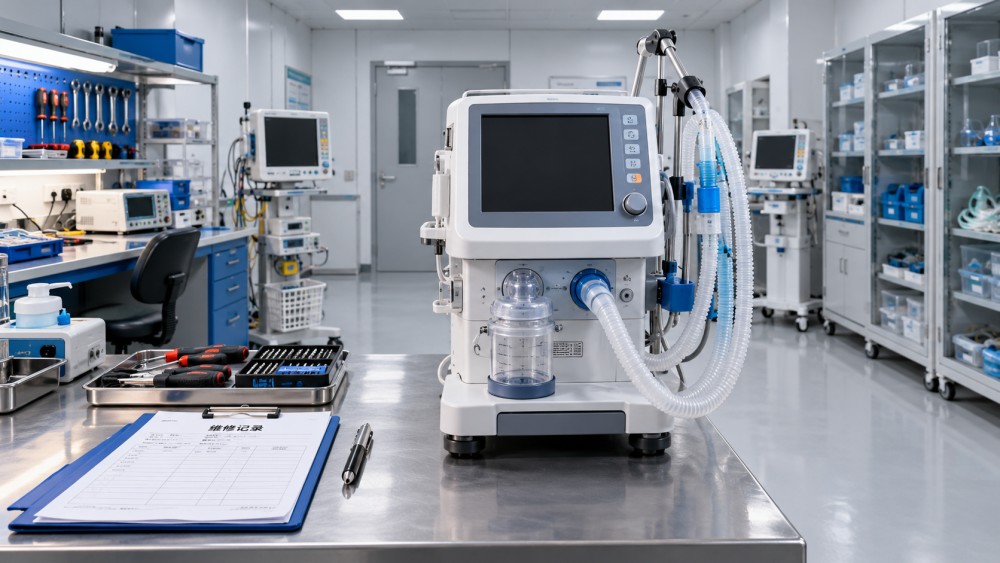
Start by asking whether the device is in use, whether its failure could harm a patient, and whether the clinical team has a safe alternative.
A ventilator with a suspected malfunction during patient use requires immediate clinical escalation. A failed monitor with a verified replacement available may be less urgent.
Do not assume that a device is safe because it remains powered on. Incorrect measurements, unreliable alarms, and intermittent faults can create serious risks.
For each request, assess five factors: patient safety, clinical impact, availability of alternatives, fault severity, and time sensitivity. Document the reason for the assigned priority.
Service contracts and promised response times matter, but they should not override an immediate safety concern. Escalate conflicts to the service manager and hospital contact.
Priority is not a permanent label. Reassess it when clinical conditions change, a backup fails, new fault information appears, or a repair is delayed.
What information should technicians collect before triage?
A useful intake record helps the dispatcher distinguish an urgent clinical problem from a routine fault and send the technician with the right tools.
Capture the device type, manufacturer, model, serial number, asset identifier, location, and contact details. Confirm whether the equipment is currently in clinical use.
Ask the reporter to describe the symptoms, displayed errors, onset time, and any recent changes. Record whether the fault is intermittent or repeatable.
Establish the immediate clinical impact: patients affected, procedures delayed, and whether a suitable replacement is available and ready for use at the point of care.
Check the service history for recurring faults, recent repairs, outstanding recalls, maintenance status, and known parts availability. Verify warranty and contract coverage separately.
If essential information is missing and a serious hazard cannot be excluded, contact clinical staff promptly and use a conservative provisional priority until facts are verified.
Record the time of the report and the time triage began. These timestamps support follow-up, handovers, and contract reporting without replacing clinical judgment.
How can you build a practical repair priority system?
Use a small number of priority levels that dispatchers, technicians, and hospital contacts can interpret consistently. Define each level with examples and escalation triggers.
Priority 1: Immediate safety or critical service threat
Use this level when a suspected device fault presents an immediate patient safety concern or threatens an essential clinical service without a safe alternative.
Examples include a ventilator malfunction during use or a defibrillator unavailable when urgently needed. Clinical staff must manage patient care and activate emergency procedures.
Notify the responsible clinical contact and service lead immediately. Begin the agreed emergency response, isolate the device when directed, and arrange an alternative through authorized staff.
Priority 2: High clinical impact
Use this level for a serious failure affecting essential care when an immediate safety threat has been controlled, but replacement capacity is limited or temporary.
Examples include an anesthesia machine fault before a scheduled operating list or a laboratory analyzer failure that significantly delays time-sensitive testing.
Confirm the next clinical deadline, dispatch a qualified technician, and agree on an update time. Escalate if backup capacity disappears or patient risk increases.
Priority 3: Disrupted routine service
Use this level when the device is unavailable but a suitable alternative supports care, or when a noncritical function is impaired without an immediate hazard.
Schedule diagnosis according to clinical need, technician availability, and parts supply. Confirm that the workaround remains acceptable until the repair is complete.
Priority 4: Planned or minor repair
Use this level for cosmetic damage, minor nonclinical defects, or approved work that can be safely scheduled without compromising performance or required maintenance.
Assign a target completion date and review the queue regularly. A low initial priority should not allow an unresolved fault to remain open indefinitely.
Set actual response and restoration targets with each hospital and contract. The levels above are examples, not universal clinical standards or guaranteed service times.
How should patient risk and equipment availability affect the queue?
Assess the consequences of failure in the device's current setting, not just its category. The same model can have different urgency across hospital departments.
For example, a monitor failure during a critical procedure may need immediate action, while an identical device awaiting installation may be scheduled for later assessment.
A replacement reduces urgency only when clinical staff confirm that it is suitable, functional, available where needed, and supported by trained users and necessary accessories.
Also consider shared dependencies. A failed network connection, medical gas supply, or central monitoring component may affect several devices and require a coordinated response.
Do not troubleshoot beyond your authorization or competence. Involve hospital engineering, IT, the manufacturer, or a specialist when the fault crosses technical responsibilities.
Where a device may have contributed to harm, preserve it and relevant accessories according to hospital policy. Do not erase logs or alter evidence unnecessarily.
How do you allocate technicians and spare parts?
Match the highest-priority work to technicians with the required training, access rights, tools, and manufacturer documentation. Consider travel time and the next clinical deadline.
A specialist should not automatically take every urgent call. A local technician may safely perform an authorized initial assessment while the specialist prepares remote support.
Before dispatch, check whether the likely parts are compatible with the exact model and configuration. Bring only approved components and follow applicable replacement procedures.
For scarce parts, compare the clinical impact of each waiting device and confirm expected delivery dates. Document the allocation decision and notify affected hospital contacts.
If a part is unavailable, discuss a verified loan device, manufacturer escalation, or an approved alternative repair path. Never substitute an unapproved component for convenience.
Keep a reserve for high-risk equipment where demand and lead times justify it. Use fault history and supplier performance to review stock levels regularly.
When several hospitals compete for the same resource, escalate the decision using documented clinical impact, available alternatives, contractual obligations, and realistic travel and repair times.
What should the hospital know while a repair is open?
Agree on one operational contact for the clinical area and one service contact for the repair. Confirm who can authorize access, isolation, and return to use.
At acceptance, communicate the assigned priority, planned response, and next update time. Separate a confirmed arrival time from an estimate of full restoration.
If diagnosis reveals a longer delay, explain the cause, revised estimate, and available options. Ask clinical staff to reassess whether the workaround remains adequate.
Use clear status labels such as awaiting assessment, diagnosis in progress, awaiting parts, repair in progress, verification pending, and returned to service.
Record important calls and decisions in the service system. A brief handover should identify the fault, actions completed, outstanding risks, and next responsible person.
How do you close a repair safely?
Completing a component replacement is not the same as returning equipment to service. Follow the manufacturer's instructions and the organization's approved verification procedures.
Perform the applicable functional, performance, and safety checks using suitable test equipment. Include alarm and accessory checks where relevant to the fault and device.
Document test results, replaced parts, software changes, unresolved limitations, and any required calibration. Record the technician's identity and the date of completion.
Obtain the required authorization before returning the device. Tell the clinical contact what was repaired, whether restrictions apply, and how to report recurring symptoms.
If the device fails verification or required documentation is incomplete, keep it out of service under hospital procedures and escalate the unresolved issue.
Follow local requirements and organizational policy for incident reporting, recalls, and adverse events. The technician should not independently decide that a report is unnecessary.
How can teams prevent urgent repairs from consuming the entire schedule?
Protect capacity for preventive maintenance, safety inspections, and known recurring faults. Continually postponing these tasks can create additional failures and future emergency calls.
Review the backlog with the hospital and agree on which planned tasks can move. Escalate any overdue safety-critical or legally required work through established procedures.
Track first response time, restoration time, overdue work, repeat failures, parts delays, and time awaiting hospital access. Compare results by priority and device category.
Interpret metrics carefully: a fast response does not prove a safe repair, and restoration delays may reflect parts shortages or clinical access constraints.
Review repeat failures for underlying causes such as damaged accessories, environmental conditions, incomplete diagnosis, training gaps, or a component nearing the end of support.
Share recurring issues with procurement and clinical engineering. Evidence about downtime, parts lead times, and service support can inform replacement and purchasing decisions.
Conclusion: Make priority a documented clinical decision
An effective clinical engineering management workflow starts with patient safety, considers actual clinical impact, and verifies whether a suitable alternative is available.
Consistent intake, clear priority definitions, qualified dispatch, reliable updates, and documented verification help after-sales teams make defensible decisions when several repairs compete for attention.
Keep the queue under review, protect essential planned maintenance, and escalate whenever the risk or available resources change. The best priority is the one supported by current evidence.
Have questions about the global trade trends discussed here, or planning your expansion and supply chain strategy? Leave a message below and let the trade experts at MTHH guide you.
We respect your privacy. Your information is strictly confidential.
Related News
- How to choose diagnostic imaging equipment for small clinicsNov 14, 2026Choose diagnostic imaging equipment for clinics with confidence. Compare clinical needs, costs, space, workflows, and supplier support before you buy.
- How to size medical gas pipelines for peak demandNov 09, 2026Medical gas pipeline systems design starts with peak demand. Learn how to size pipes, calculate pressure loss, and check critical paths for reliable performance.
- What Trendelenburg angle should an operating table provide?Nov 05, 2026Compare operating tables Trendelenburg angles, load limits and accessories. Discover what to check before choosing the right table for your procedures.
- How to estimate the total cost of hospital imaging equipmentNov 04, 2026Plan hospital capital equipment imaging investments with confidence. Learn to estimate installation, service and operating costs and compare bids fairly.