
Critical Care Device Patient Monitors: Key Features That Affect Response Time
In critical care, a patient monitor is not a passive display. It is part of the clinical response chain, shaping how fast instability is seen, verified, and escalated.
That is why critical care devices patient monitors deserve closer technical review than simple feature lists suggest. Response time depends on sensing, processing, alarm logic, screen design, connectivity, and service reliability working together.
For B2B healthcare decision-making, this topic also sits at the intersection of procurement, clinical engineering, ICU workflow, and long-term support. A monitor that reacts quickly on paper may still slow action in daily use.
Why Response Time Has Become a Purchasing Issue
Hospitals now evaluate monitoring systems in a more operational way. They are asking not only whether values are accurate, but how quickly the device turns patient change into usable clinical attention.
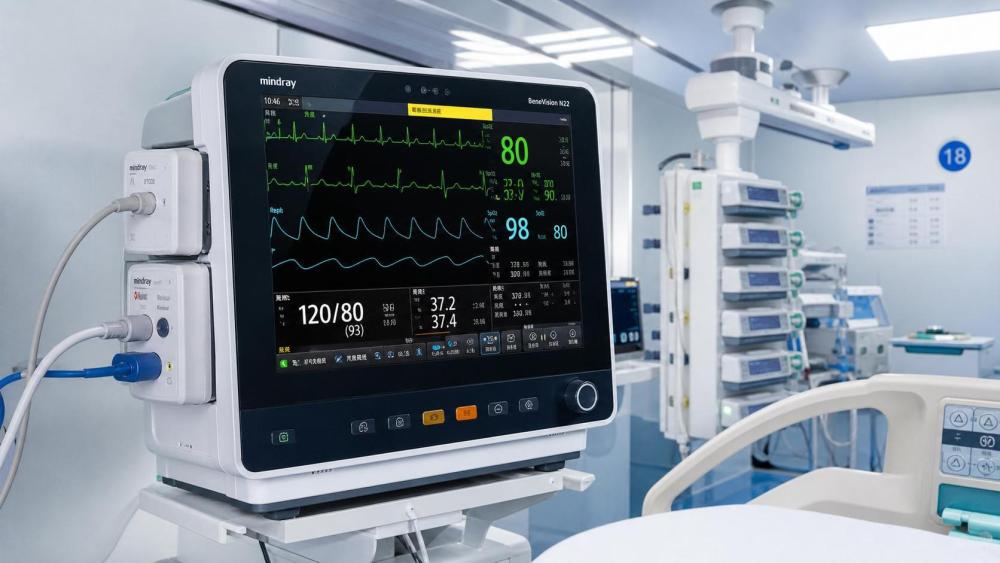
This shift reflects wider pressure across healthcare infrastructure. ICU beds are busy, emergency departments are crowded, and clinical staff must manage more devices, more alarms, and more networked data at once.
In that environment, critical care devices patient monitors influence risk in a very direct way. Delays of seconds or minutes can come from signal dropout, alarm overload, poor visualization, or weak integration with central systems.
Platforms such as MTHH are useful here because monitor evaluation is rarely only technical or only commercial. Real selection work combines device performance, software support, service response, training demands, and total operating value.
What Response Time Really Means in Patient Monitoring
Response time is often misunderstood as alarm speed alone. In practice, it starts earlier and ends later.
A monitor must first capture a reliable physiological signal. It then filters noise, calculates parameters, compares results with thresholds, prioritizes alerts, shows the event clearly, and shares it across the care environment.
If any step is weak, the effective response window gets longer. The problem may not appear in a specification sheet, yet it can affect bedside action every day.
For critical care devices patient monitors, useful evaluation therefore looks at the entire path from sensor input to caregiver recognition, not just one isolated number.
Core Features That Affect Clinical Speed
Some features have a larger impact on response time than others. These are usually the most important areas during comparison.
Signal acquisition and stability
Fast response starts with dependable data. ECG quality, SpO2 performance during motion, invasive pressure fidelity, and artifact handling all affect how quickly deterioration becomes visible.
A monitor that frequently loses signal may create both delay and distrust. Staff then spend time checking leads, repositioning sensors, or verifying whether the event is real.
Alarm architecture
Alarm systems need more than volume. Prioritization, escalation logic, configurable thresholds, and arrhythmia detection quality determine whether urgent events stand out or disappear in noise.
Alarm fatigue remains a major concern. When too many nonactionable alerts occur, true deterioration may be noticed later even if the device technically alarmed on time.
Display and user interface
Screen layout directly affects recognition speed. Clear waveforms, readable numerics, intuitive color use, and event trends help staff judge severity without extra navigation.
Poor interface design slows interpretation. Even accurate critical care devices patient monitors can underperform operationally when important information is buried in menus or compressed into unclear views.
Networking and central visibility
Bedside speed matters, but care teams rarely rely on the bedside alone. Central station visibility, mobile alert forwarding, EMR connectivity, and ward-level interoperability all influence how quickly the right person sees the event.
This is especially relevant in multi-bed ICUs, step-down units, and emergency observation areas where a single clinician may supervise several patients at once.
Startup, recovery, and system resilience
Response time also depends on what happens during downtime. Boot speed, battery endurance, network reconnection, data buffering, and recovery after power interruption all affect continuity.
A monitor that resumes slowly after transfer or outage may create a blind period at the worst moment.
How Different Care Settings Change the Priority
Not every unit needs the same balance of features. The importance of certain parameters changes with workflow intensity, staffing, and patient acuity.
This is why comparing critical care devices patient monitors without reference to setting can be misleading. A strong ICU platform may be weak for frequent transfers, while a transport-friendly model may lack deeper analytical capability.
Where Technical Evaluation Often Goes Wrong
Many evaluations still focus too heavily on parameter count and purchase price. Those are relevant, but they do not explain actual clinical speed.
A more grounded review should check the following:
- How quickly does the monitor stabilize after patient connection?
- How often do nuisance alarms occur under routine care conditions?
- Can staff identify the cause of the alert within one screen view?
- How well does the system perform during movement, interference, or weak perfusion?
- What happens when the network drops or the device is transferred between departments?
- How much training is needed before advanced alarm functions are used correctly?
These questions fit the broader logic used across MTHH content. Device value comes from accuracy, workflow compatibility, support readiness, and operational consistency rather than headline specifications alone.
Support Factors Outside the Monitor Itself
Response time is never created by hardware alone. Consumables, maintenance, software updates, and local service also matter.
Electrodes, cuffs, SpO2 sensors, mounting systems, and battery quality all affect uptime. If approved accessories are difficult to source, performance may drift or disruptions may increase.
Software lifecycle is equally important. Critical care devices patient monitors increasingly depend on cybersecurity updates, interoperability patches, and alarm-management refinements over time.
Documentation should also be reviewed carefully. Service manuals, maintenance intervals, calibration guidance, integration protocols, and training records influence whether the monitor can sustain fast, safe use after installation.
A Practical Way to Compare Systems
A useful comparison process starts with scenario mapping rather than catalog reading. Identify the most common deterioration events, staffing patterns, and transfer routes in the target facility.
Then translate those conditions into measurable checkpoints:
- time to acquire stable signals,
- time from threshold breach to actionable alert,
- clarity of bedside and central display,
- performance during transport or patient motion,
- ease of alarm customization,
- service response commitments and spare parts access.
At that point, vendor comparison becomes more credible. It also becomes easier to separate true performance differences from presentation quality during demonstrations.
For organizations reviewing critical care devices patient monitors, the next step is not simply choosing the most advanced screen. It is building a shortlist around response-sensitive use cases, then validating each system against workflow, support structure, and long-term operating demands.
Have questions about the global trade trends discussed here, or planning your expansion and supply chain strategy? Leave a message below and let the trade experts at MTHH guide you.
We respect your privacy. Your information is strictly confidential.
Related News
- What Trendelenburg angle should an operating table provide?Nov 05, 2026Compare operating tables Trendelenburg angles, load limits and accessories. Discover what to check before choosing the right table for your procedures.
- How to estimate the total cost of hospital imaging equipmentNov 04, 2026Plan hospital capital equipment imaging investments with confidence. Learn to estimate installation, service and operating costs and compare bids fairly.
- How to prioritize repairs in a clinical engineering management workflowNov 02, 2026Improve your clinical engineering management workflow with practical repair triage, risk-based priorities, and smarter resource allocation. Learn how.
- What drives the cost of hospital communication systems?Nov 01, 2026Explore the key drivers of hospital communication cost, from installation and integration to licensing and support, and compare supplier proposals with confidence.