
Contrast Injectors in Radiology: Key Safety Features and Workflow Gains
Why contrast injectors radiology teams use need context, not just specifications
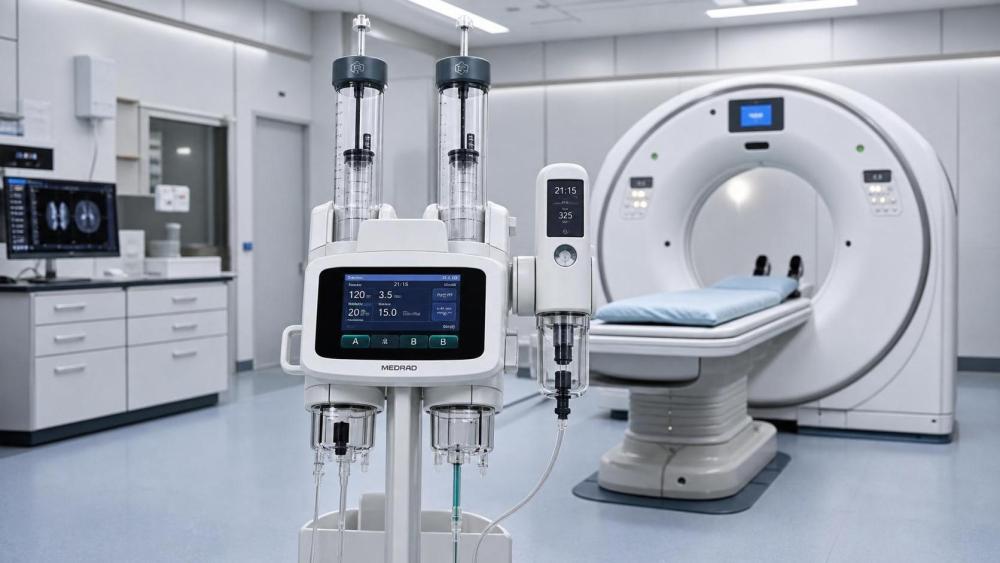
In busy imaging environments, contrast delivery affects more than injection speed. It influences scan timing, vessel enhancement, repeat exam risk, and how confidently each study moves through the department.
That is why contrast injectors radiology departments evaluate are now treated as workflow and safety systems, not simple accessories attached to CT or MRI rooms.
The real question is rarely which injector has the longest feature list. The better question is which system fits patient mix, protocol complexity, staffing patterns, and service expectations.
This matters across the broader healthcare equipment landscape that MTHH follows. In medical technology, value depends on performance under real operating conditions, not on headline parameters alone.
For contrast injectors radiology teams compare, safety features such as pressure monitoring, air detection, extravasation risk reduction, protocol locking, and data traceability often shape the decision more than pump appearance.
Actual use conditions change what “best” means
A high-volume CT suite does not judge contrast injectors radiology the same way a mixed-modality department does. Throughput pressure changes what counts as essential.
In one setting, fast room turnover and standardized chest or abdomen studies may dominate. In another, staff need flexibility for oncology follow-up, vascular studies, and pediatric adjustments.
MRI adds another layer. Compatibility, non-ferromagnetic design, remote placement, and longer tubing management can outweigh features that seem attractive in a CT-only comparison.
This is where structured evaluation helps. MTHH often frames equipment selection around application conditions, installation limits, maintenance expectations, and long-term workflow fit.
That approach is useful here because contrast injectors radiology operations depend on interact with scanners, disposables, software protocols, and training routines every day.
In high-throughput CT, consistency matters as much as speed
The most common pressure point is not maximum flow rate. It is whether the injector can deliver repeatable enhancement across many consecutive exams without slowing the room.
In high-throughput CT, protocol memory becomes a practical safety tool. Standardized injection profiles reduce manual entry errors during shift changes, peak hours, and emergency scheduling.
Pressure limit settings also need close attention. A system that allows protocol-specific thresholds can help balance image quality with catheter tolerance and patient comfort.
Dual-syringe capability is often valuable here. Saline flush support can sharpen bolus geometry, reduce residual contrast waste, and improve consistency in angiographic or perfusion-related studies.
A frequent mistake is assuming that any injector compatible with CT will perform equally well under continuous daily load. Reliability during repeated cycles matters more than brochure speed.
What usually deserves closer review in this setting
- Protocol storage depth and how easily operators can select approved presets
- Pressure monitoring accuracy and alarm behavior during high-flow studies
- Disposable loading time between patients
- Integration with scanner timing or exam documentation workflows
- Cleaning, service intervals, and downtime response
MRI rooms usually shift the decision toward control and compatibility
When contrast injectors radiology planners assess for MRI, the conversation changes. Magnetic field safety and room layout constraints become central, not secondary.
The injector may need to operate from a controlled distance. That affects tubing length, user interface visibility, and how quickly staff can respond to alarms during positioning.
Longer exam times also change expectations. It becomes more important that the system supports calm operation, clear status display, and predictable setup, especially when staffing is lean.
In practical terms, MRI environments reward contrast injectors radiology solutions that reduce unnecessary handling steps. Fewer interruptions can help protect both scheduling and patient experience.
Another overlooked point is room planning. Cable routing, equipment parking, and infection control routines can affect whether installation remains efficient after the first month of use.
Complex patient profiles raise the value of protective features
Not every department serves the same patient population. Oncology, cardiovascular imaging, trauma, and pediatric workflows create different risk patterns for contrast injection.
Fragile veins, variable body weight, implanted access devices, and urgent studies all increase the importance of controlled delivery. In these cases, fine adjustment matters more than raw power.
Operators often look for contrast injectors radiology systems that support low-volume precision, staged injections, and intuitive alarm logic. Complex patients leave less room for ambiguous controls.
This is also where training quality becomes part of safety. A strong interface helps, but usable protocols and documented operating steps are what prevent drift over time.
Equipment information platforms such as MTHH are useful here because they connect technical functions with application conditions, instead of treating every imaging room as identical.
Different environments do not prioritize the same things
A quick comparison makes the variation easier to see. The same contrast injector may be acceptable in one setting and inefficient in another.
The table also shows why price-only comparisons are weak. A lower entry cost may create higher operating friction when protocols, disposables, or service support do not match the workload.
Where workflow gains actually come from
Workflow improvement is often misunderstood. It does not come from injecting faster in every case. It comes from reducing variability around the injection process.
Good contrast injectors radiology departments keep tend to save time in quieter ways. They simplify setup, reduce protocol re-entry, lower repeat scans, and make staff handover more stable.
Data recording can also matter. Traceable exam parameters support quality review, incident follow-up, and internal standardization, especially across multi-room imaging operations.
This reflects a broader procurement principle seen across medical equipment categories. Operational value usually appears in reliability, training burden, consumable control, and service continuity.
For that reason, evaluating contrast injectors radiology teams plan to deploy should include both clinical workflow mapping and equipment lifecycle review.
Common misjudgments before installation and daily use
One common misjudgment is treating scanner compatibility as the only technical checkpoint. In reality, room layout, consumable logistics, and user training often determine daily success.
Another is assuming similar studies require identical settings. Even routine protocols may need adjustment for line quality, patient condition, or contrast concentration.
Some teams also underestimate service documentation. For contrast injectors radiology operations depend on, preventive maintenance records and alarm response guidance are part of risk control.
There is also a cost misconception. A cheaper injector can become expensive if disposables are restrictive, downtime is hard to resolve, or staff avoid advanced features because training was shallow.
- Check whether approved protocols can be locked and reviewed
- Confirm pressure limits align with actual catheter practice
- Review consumable availability over the expected operating period
- Verify installation space, power needs, and cleaning workflow
- Ask how software updates and service response are handled locally
A practical way to judge fit before moving forward
The most useful next step is to define the dominant use pattern first. That usually reveals which contrast injectors radiology setup is genuinely suitable.
Start with exam mix, target throughput, and patient complexity. Then review pressure control, protocol management, disposables, room constraints, and maintenance support against those realities.
If the comparison still feels close, look at implementation friction. Setup time, operator learning curve, documentation readiness, and service access often settle the decision more clearly than top-line specifications.
That is the value of a structured healthcare intelligence approach. MTHH emphasizes practical evaluation because medical equipment decisions work best when technical, clinical, and operational factors are reviewed together.
For contrast injectors radiology teams considering next, the strongest decision path is simple: map the real scenario, compare the limiting conditions, and test whether safety features support the workflow you actually run.
Have questions about the global trade trends discussed here, or planning your expansion and supply chain strategy? Leave a message below and let the trade experts at MTHH guide you.
We respect your privacy. Your information is strictly confidential.
Related News
- What Trendelenburg angle should an operating table provide?Nov 05, 2026Compare operating tables Trendelenburg angles, load limits and accessories. Discover what to check before choosing the right table for your procedures.
- How to estimate the total cost of hospital imaging equipmentNov 04, 2026Plan hospital capital equipment imaging investments with confidence. Learn to estimate installation, service and operating costs and compare bids fairly.
- How to prioritize repairs in a clinical engineering management workflowNov 02, 2026Improve your clinical engineering management workflow with practical repair triage, risk-based priorities, and smarter resource allocation. Learn how.
- What drives the cost of hospital communication systems?Nov 01, 2026Explore the key drivers of hospital communication cost, from installation and integration to licensing and support, and compare supplier proposals with confidence.