
Surgical Drapes for Operating Room: Common Selection Mistakes and Sterility Risks
Why surgical drapes for operating room use need closer review
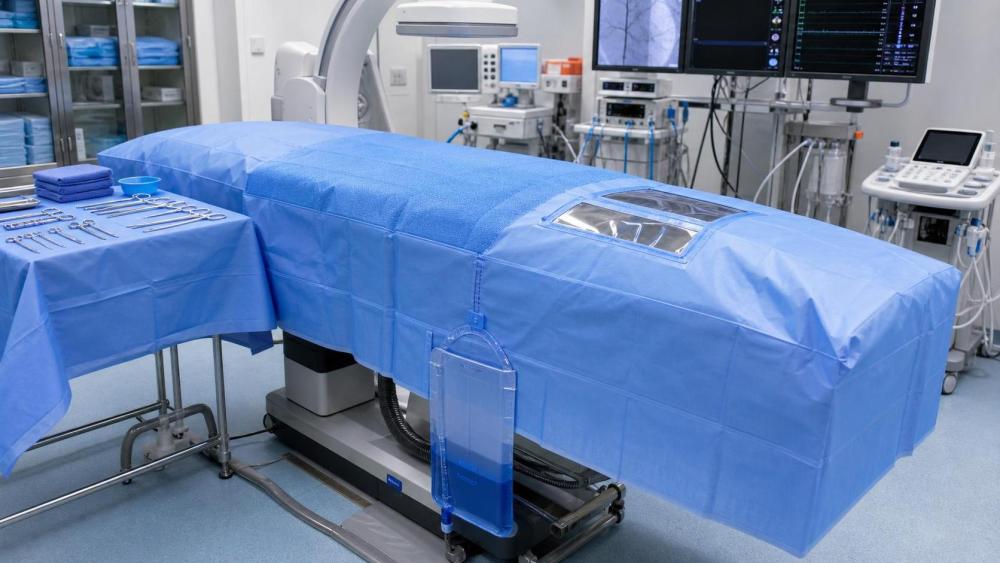
Choosing surgical drapes for operating room use affects more than stock availability. It shapes sterile field stability, staff movement, fluid control, and the consistency of infection prevention practice.
In real hospital operations, drapes are often grouped under consumables. That creates a common blind spot. A low unit price can hide higher contamination risk, workflow disruption, or repeated product changes.
This matters in the same way other medical technology decisions matter. MTHH often frames equipment and consumables through application conditions, safety requirements, and long-term operating value rather than price alone.
Surgical drapes for operating room settings should be reviewed with that same discipline. Barrier performance, material behavior, procedural fit, and documentation quality all influence whether a drape supports real sterility control.
Actual use conditions change what “suitable” means
Not every operating room uses drapes in the same way. Procedure duration, fluid exposure, equipment density, and patient positioning create very different performance demands.
A drape that works adequately in a short general surgery case may not hold up during orthopedic work with heavy irrigation. Likewise, a universal pack may create unnecessary folds near imaging access points.
The more complex the workflow, the less useful generic selection logic becomes. Surgical drapes for operating room use should be judged by how they behave during setup, procedure time, repositioning, and removal.
That is also why similar procedures still produce different needs across facilities. Airflow design, staff training habits, skin prep protocols, and disposal practices can change the practical performance of the same drape format.
Where demand differs most in practice
Short turnover rooms usually expose fit problems first
In high-volume theaters, small inefficiencies become visible quickly. If surgical drapes for operating room turnover require repeated repositioning, staff start improvising, and sterile discipline becomes less predictable.
This is where buyers often overvalue broad compatibility. A drape meant to cover many procedures can look efficient on paper, yet create excess material, blocked instrument access, or poor adhesive placement.
A better judgment point is whether the drape supports a clean first placement. If the fenestration, folds, and reinforcement zones align well, setup becomes faster without increasing handling touches.
In practical reviews, tray layout and drape unfolding sequence should be checked together. Sterility risk is not only about material quality. It also depends on how easily the product can be deployed correctly.
Fluid-heavy procedures test barrier claims more aggressively
Orthopedic, urology, and some cardiovascular procedures place different pressure on surgical drapes for operating room use. Irrigation volume, pooling, and instrument traffic can challenge barriers far beyond routine cases.
One frequent mistake is to accept barrier claims without asking how the drape performs after prolonged wet exposure. Strike-through resistance under pressure matters more than a simple material description.
Reinforcement patches, absorbent zones, and collection pouches should also be reviewed in context. When fluid is redirected poorly, the contamination path may shift to table edges, cables, or lower drape margins.
That is why sterility risk assessment should include disposal and end-of-case removal. A drape that contains fluid well during surgery can still create exposure if removal causes spill or surface contact.
Questions worth checking before approval
- Does the wet barrier remain stable through the expected procedure duration?
- Are absorbent and impermeable layers placed where fluids actually accumulate?
- Can pouches and tubing channels work with existing table setup?
- Does removal reduce splash and contact risk?
Hybrid rooms and device-dense spaces add another layer of risk
In hybrid operating environments, surgical drapes for operating room use interact with imaging arms, navigation equipment, cables, and multiple sterile accessories. Here, dimensional fit alone is not enough.
More often, the problem is access conflict. A drape may cover the patient adequately but interfere with line management, limit device movement, or create tension that lifts adhesive edges during repositioning.
These rooms benefit from walkthrough validation rather than catalog comparison only. Teams should check whether drape geometry matches table articulation, accessory rails, lead routing, and imaging clearance.
This is consistent with the broader MTHH view of healthcare procurement. Real-world compatibility matters because workflow interruption can reduce the value of an otherwise compliant product.
Common selection mistakes that increase sterility risk
The most common error is treating surgical drapes for operating room purchase as a one-variable decision. Cost, barrier rating, and pack count are important, but none of them explains actual use performance alone.
- Choosing by thickness only, without checking drapeability and placement control.
- Assuming one standardized pack suits every specialty with minor adjustments.
- Reviewing sterile barrier data, but not packaging integrity and opening sequence.
- Focusing on purchase price, while ignoring waste volume and room delay.
- Ignoring document readiness for traceability, testing standards, and market compliance.
Another overlooked point is product consistency across batches. Even small differences in adhesive strength, fold memory, or reinforcement placement can affect sterile setup reliability.
When complaints appear, they are often recorded as usability issues. In reality, many are early warnings of sterility control weakness or process mismatch.
What to compare before locking a drape specification
A useful review model compares surgical drapes for operating room use across performance, workflow, and lifecycle factors. That approach is closer to how responsible medical technology decisions are usually made.
This kind of comparison helps prevent narrow decisions. It also supports clearer discussion when product claims sound similar but operating conditions are not.
A practical next step is to build a scenario-based review standard
The strongest approach is to map surgical drapes for operating room use against a small set of real procedure profiles. Short cases, wet cases, long cases, and device-dense cases already reveal most gaps.
From there, review barrier data, procedural fit, packaging logic, and removal safety together. That creates a more reliable basis for specification approval than price comparison alone.
It is also worth documenting recurring field issues in the same structure used for other healthcare technologies: application condition, failure point, operational impact, and corrective requirement.
When surgical drapes for operating room decisions are treated as part of sterility system design, not just consumable selection, contamination risks become easier to detect before they become costly problems.
Have questions about the global trade trends discussed here, or planning your expansion and supply chain strategy? Leave a message below and let the trade experts at MTHH guide you.
We respect your privacy. Your information is strictly confidential.
Related News
- How to verify CE marking on rehabilitation consumables in GermanyNov 13, 2026Buying rehabilitation consumables in Germany? Learn how to verify CE marking, check MDR documents and spot supplier red flags before ordering.
- How to assess a medical consumables management supplier's ability to prevent stockoutsNov 11, 2026Evaluate a medical consumables management supplier with practical checks for forecasting, inventory visibility and contingency plans to reduce stockout risk.
- FDA Alert: Arrow Removes Guidewire Products Over Coating Shedding RiskNov 11, 2026FDA alert: Arrow guidewire products face voluntary removal over potential coating shedding. Explore the risks and key checks for buyers and healthcare providers.
- How does order volume affect disposable medical supplies cost?Nov 07, 2026Discover how order volume affects disposable medical supplies cost and learn to balance bulk discounts, storage, expiry risk, and reliable supply.