
How to Choose Ostomy Supplies for Wound Care Without Causing Skin Damage
How to Choose Ostomy Supplies for Wound Care Without Causing Skin Damage
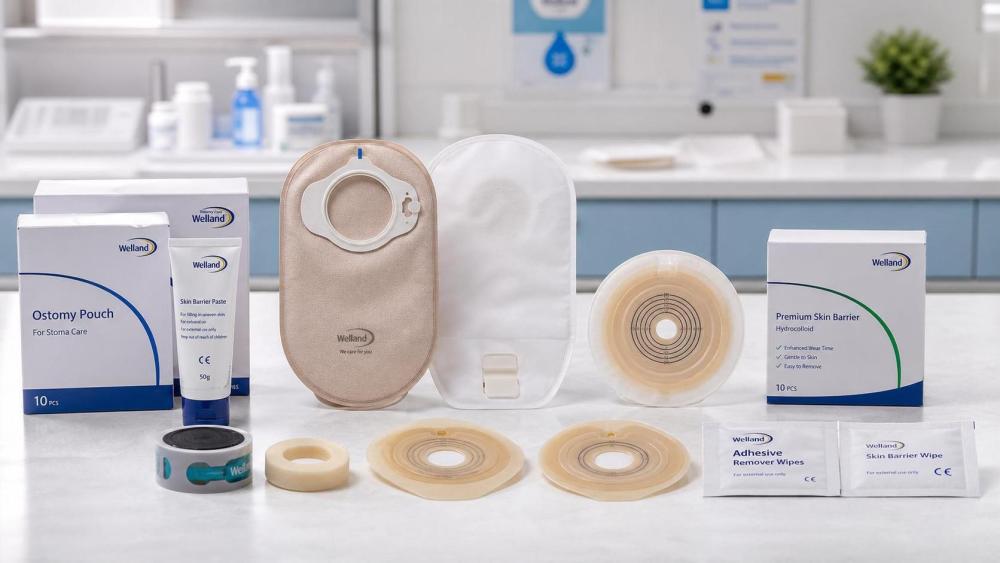
Choosing ostomy supplies for wound care requires more than matching a product to a procedure.
The wrong barrier, pouch, or adhesive can quickly lead to redness, pain, leakage, and delayed healing.
That is why ostomy supplies for wound care should be evaluated as a skin protection system, not just a consumable item.
In practice, selection depends on skin condition, wound location, output type, wear time, and handling convenience.
A product that works well on intact skin may fail on fragile, moist, or uneven tissue.
This also means that ostomy supplies for wound care should be reviewed with both comfort and risk control in mind.
The goal is simple: protect periwound skin, maintain a reliable seal, and reduce trauma during removal and replacement.
Start with Skin Condition Before Product Type
The first step is not choosing a brand.
It is identifying what the skin can safely tolerate.
When comparing ostomy supplies for wound care, check whether the surrounding skin is dry, weeping, denuded, thin, or inflamed.
Each condition changes how well an adhesive barrier will attach and how safely it can be removed.
What to assess first
- Skin moisture level around the wound or stoma
- Signs of maceration, stripping, rash, or pressure injury
- Contour changes such as folds, scars, or recessed areas
- Pain during removal of previous dressings or pouches
- Frequency of leakage or edge lifting
A flat, healthy surface usually allows more product options.
Fragile or wet skin needs gentler adhesives and stronger moisture management.
From a decision standpoint, this is often the factor that separates a stable fit from repeated skin damage.
Match the Barrier Material to Output and Wear Time
Barrier selection is central when evaluating ostomy supplies for wound care.
The material must handle the output while staying gentle on skin.
Liquid or enzyme-rich output can break down barriers faster and irritate skin more aggressively.
In those cases, extended-wear barriers may perform better than standard wear products.
Still, longer wear is not always better.
If removal causes stripping, a gentler barrier with more frequent changes may be safer.
Common material choices and when they fit
- Hydrocolloid barriers: useful for mild moisture absorption and flexible sealing
- Extended-wear barriers: better for liquid output or longer expected wear time
- Silicone-based adhesives: helpful when skin trauma during removal is a major concern
- Barrier rings or strips: useful for creases, dips, and uneven surfaces
This is where product testing matters.
A technically strong material may still fail if the local skin is too delicate or too moist.
Check Fit, Flexibility, and Edge Security
Fit problems are a major reason ostomy supplies for wound care cause irritation.
Even high-quality materials can fail when the opening size is wrong or the wafer does not adapt to body movement.
A tight opening can rub the stoma or wound edge.
A wide opening exposes skin to drainage and increases the risk of chemical irritation.
Flexibility matters just as much.
Abdominal folds, scars, and motion near the waistline can weaken the seal and create repeated friction points.
Key fit questions during selection
- Can the barrier be cut or molded accurately to the shape needed?
- Does it stay secure when bending, sitting, or walking?
- Are the edges lifting after sweating or routine movement?
- Does the system need a convex option for recessed anatomy?
In real use, edge security often predicts skin outcome better than advertised wear time.
If output reaches the skin even briefly, damage can develop fast.
Do Not Overlook Accessories That Prevent Skin Damage
Ostomy supplies for wound care rarely work as a single item.
Accessories often determine whether the system protects skin or aggravates it.
Barrier films can reduce adhesive trauma.
Adhesive removers can make pouch changes less painful and lower the risk of skin stripping.
Seals, rings, and paste can improve contact around irregular surfaces.
However, more accessories do not always mean better performance.
Too many layers can reduce adhesion, trap moisture, and complicate routine handling.
Useful accessory choices
- No-sting barrier film for skin at risk of adhesive injury
- Adhesive remover wipes for gentle pouch removal
- Barrier rings for uneven skin or shallow creases
- Support belts when movement affects seal stability
The better approach is to build the simplest system that reliably protects the skin.
Compare Options with a Practical Evaluation Table
When several ostomy supplies for wound care appear suitable, structured comparison helps.
This avoids choosing only by unit price or product familiarity.
This kind of review is especially useful when skin damage has already occurred.
It turns product selection into a measurable decision instead of trial and error.
Watch for Common Selection Mistakes
Some failures are predictable.
They happen when ostomy supplies for wound care are chosen without enough attention to daily use conditions.
Frequent mistakes
- Selecting the strongest adhesive for already damaged skin
- Ignoring body contours and focusing only on stoma size
- Using long wear time as the main decision factor
- Changing multiple products at once, making results hard to judge
- Skipping accessory review when leakage happens at the edges
A more reliable method is to adjust one variable at a time.
That makes it easier to see whether the issue is fit, adhesion, moisture, or handling technique.
Make the Final Choice Based on Daily Performance
The best ostomy supplies for wound care are the ones that protect skin consistently in real use.
That includes application, wear time, removal, skin appearance, and comfort after several change cycles.
A short product trial should document leakage, removal pain, redness, edge lift, and any change in wound surroundings.
When comparing options, look for the system that achieves a secure seal with the least skin stress.
That usually delivers better long-term outcomes than simply choosing the longest-lasting pouching system.
For decision-makers, the practical checklist is clear: assess the skin, match barrier performance to output, confirm fit, simplify accessories, and monitor daily results.
With that approach, ostomy supplies for wound care become easier to evaluate and far less likely to cause preventable skin damage.
Have questions about the global trade trends discussed here, or planning your expansion and supply chain strategy? Leave a message below and let the trade experts at MTHH guide you.
We respect your privacy. Your information is strictly confidential.
Related News
- How to verify CE marking on rehabilitation consumables in GermanyNov 13, 2026Buying rehabilitation consumables in Germany? Learn how to verify CE marking, check MDR documents and spot supplier red flags before ordering.
- How to assess a medical consumables management supplier's ability to prevent stockoutsNov 11, 2026Evaluate a medical consumables management supplier with practical checks for forecasting, inventory visibility and contingency plans to reduce stockout risk.
- FDA Alert: Arrow Removes Guidewire Products Over Coating Shedding RiskNov 11, 2026FDA alert: Arrow guidewire products face voluntary removal over potential coating shedding. Explore the risks and key checks for buyers and healthcare providers.
- How does order volume affect disposable medical supplies cost?Nov 07, 2026Discover how order volume affects disposable medical supplies cost and learn to balance bulk discounts, storage, expiry risk, and reliable supply.