
How to Choose Medical Electrode Pads Pediatric for Skin Safety and Signal Quality
How to Choose Medical Electrode Pads Pediatric for Skin Safety and Signal Quality
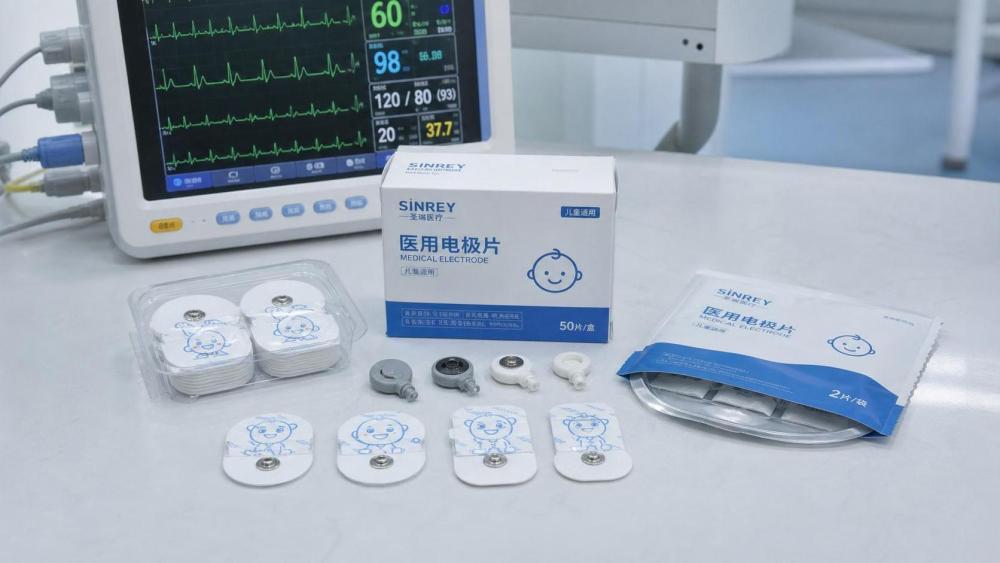
Choosing medical electrode pads pediatric applications can be more complex than it looks at first.
Skin safety, adhesion, and signal stability must work together in daily clinical use.
A pad that sticks well but irritates skin creates risk.
A pad that is gentle but unstable can weaken ECG or monitoring accuracy.
That is why medical electrode pads pediatric selection should start with performance balance, not unit price alone.
In practice, product evaluation should connect material design with care workflow, monitoring duration, and patient age range.
This also means procurement teams need more than a basic sample test.
They need a structured review of skin contact, signal output, compatibility, and operating value over time.
Why Pediatric Electrode Selection Requires a Different Standard
Pediatric skin is thinner, more sensitive, and more vulnerable to moisture loss than adult skin.
Because of that, medical electrode pads pediatric products need gentler adhesives and more controlled peel behavior.
This becomes even more important in neonatal and infant monitoring.
At the same time, pediatric monitoring often involves movement, repositioning, and longer observation periods.
So a weak bond can lead to lift-off, signal noise, false alarms, or repeated replacement.
From a technical assessment view, that creates both clinical and operational problems.
Reliable medical electrode pads pediatric performance should support stable traces without damaging fragile skin.
Key Material Factors That Affect Skin Safety
The backing material matters more than many buyers expect.
Breathable foam or nonwoven structures can help reduce moisture buildup under the pad.
That can lower maceration risk during extended monitoring.
Adhesive chemistry is equally important.
Hydrogel, solid gel, and acrylic adhesive systems behave differently on delicate skin.
For medical electrode pads pediatric use, low-trauma removal is often a priority.
Still, low trauma should not mean poor edge retention after sweating or repositioning.
Look closely at these material checkpoints during supplier review:
- Backing breathability and flexibility
- Adhesive residue after removal
- Skin irritation and sensitization test data
- Peel force consistency after several hours
- Performance on dry, humid, and slightly mobile skin
When medical electrode pads pediatric products are used in NICU or pediatric wards, even small differences in adhesive behavior can matter.
How Electrode Size and Shape Influence Signal Quality
Size selection is not only about fitting a small body surface.
It also affects skin contact area, motion stability, and waveform reliability.
If the pad is too large, it may interfere with placement or lift at the edges.
If it is too small, contact may become less stable during movement.
Medical electrode pads pediatric models usually need a compact footprint with enough conductive area for strong signal pickup.
Shape also affects placement in crowded chest or limb areas.
Rounded edges often help reduce premature lifting.
For ECG, telemetry, or bedside monitoring, signal quality should be checked under real movement conditions, not static bench assumptions.
Gel Type, Conductivity, and Noise Control
Conductive gel design directly affects impedance and waveform clarity.
For medical electrode pads pediatric applications, stable conductivity must continue across the intended wear period.
Drying too quickly can raise impedance and increase motion artifact.
Excessively wet gel can spread, reduce handling efficiency, or leave residue.
A useful evaluation point is how the electrode behaves after storage opening and during repeated handling.
Another is how well it suppresses baseline wander and transient noise.
Ask suppliers for data on:
- Initial impedance range
- Impedance stability over time
- Signal quality during movement
- Shelf-life performance after storage stress
- Compatibility with the intended monitor brand and lead system
These checks make medical electrode pads pediatric comparison much more practical than relying on generic claims.
Compatibility with Monitoring Systems and Clinical Workflow
Even a high-quality pad can become a poor choice if system compatibility is weak.
Medical electrode pads pediatric procurement should confirm connector format, stud design, lead attachment stability, and monitor compatibility.
This is especially relevant when hospitals use mixed fleets of monitors and telemetry systems.
Workflow fit is another overlooked factor.
Pads should be easy to open, place, reposition when necessary, and remove without disrupting care.
In high-turnover units, small handling improvements can reduce waste and nursing frustration.
So medical electrode pads pediatric selection should include user feedback from clinical staff, not only laboratory data.
What to Compare During Supplier Evaluation
A structured comparison table helps avoid decisions driven by price alone.
For medical electrode pads pediatric sourcing, compare clinical, technical, and service dimensions together.
In actual procurement, sample validation should cover at least several patient profiles and different monitoring durations.
Common Risks That Can Distort the Decision
One common mistake is treating all pediatric electrodes as functionally similar.
Another is accepting adult-derived performance assumptions for neonatal use.
Medical electrode pads pediatric performance can vary significantly across adhesive systems and substrate designs.
A second risk is overvaluing initial stickiness.
Very aggressive adhesion may seem secure at first, but removal trauma can offset that benefit.
A third risk is ignoring replacement frequency.
Low-cost medical electrode pads pediatric options may increase total cost if they fail early or trigger repeated repositioning.
A Practical Selection Approach
A practical decision process usually works better than a one-round sample review.
Start by defining the intended use clearly.
Separate neonatal, infant, and general pediatric scenarios if needed.
Then screen medical electrode pads pediatric candidates for biocompatibility, monitor compatibility, and wear duration.
Next, run a controlled trial focused on skin response, noise level, and replacement rate.
Finally, compare not only unit price, but also service support, supply reliability, and total usage efficiency.
The best medical electrode pads pediatric choice is usually the one that reduces both skin incidents and unstable monitoring events.
That kind of decision is more defensible, more sustainable, and more aligned with real clinical value.
Have questions about the global trade trends discussed here, or planning your expansion and supply chain strategy? Leave a message below and let the trade experts at MTHH guide you.
We respect your privacy. Your information is strictly confidential.
Related News
- How to verify CE marking on rehabilitation consumables in GermanyNov 13, 2026Buying rehabilitation consumables in Germany? Learn how to verify CE marking, check MDR documents and spot supplier red flags before ordering.
- How to assess a medical consumables management supplier's ability to prevent stockoutsNov 11, 2026Evaluate a medical consumables management supplier with practical checks for forecasting, inventory visibility and contingency plans to reduce stockout risk.
- FDA Alert: Arrow Removes Guidewire Products Over Coating Shedding RiskNov 11, 2026FDA alert: Arrow guidewire products face voluntary removal over potential coating shedding. Explore the risks and key checks for buyers and healthcare providers.
- How does order volume affect disposable medical supplies cost?Nov 07, 2026Discover how order volume affects disposable medical supplies cost and learn to balance bulk discounts, storage, expiry risk, and reliable supply.