
What Is the Typical Turnaround Time for In Vitro Diagnostic Test Results?
A clinician may be waiting to decide whether a patient can be discharged, a laboratory manager may be reviewing a delayed queue, or a procurement team may be comparing two analyzers that appear to offer similar throughput. In each situation, the question is not simply whether a test can produce a result quickly. The practical question is when a validated, released result will be available for clinical use.
What is the turnaround time for in vitro diagnostic test results? For routine automated tests, results may be available within minutes to a few hours after the laboratory receives an acceptable sample. More complex immunoassays, microbiology tests, molecular assays, send-out tests, and investigations requiring manual review can take longer—from several hours to multiple days. The final timeline depends on the entire testing pathway: collection, transport, accessioning, preparation, analysis, quality checks, result verification, and reporting.
Turnaround time is more than analyzer run time
A frequent source of confusion is treating instrument processing time as the full turnaround time, often shortened to TAT. An analyzer may complete an analytical cycle rapidly, but the result is not necessarily ready for release at that moment. Samples can arrive late, require centrifugation, need to be rerun because of an instrument flag, or wait for a technologist to review an unexpected result.
Laboratories should define the start and end points they use when discussing TAT. One department may measure from specimen receipt to result release. A clinical team may reasonably think of turnaround time as the period from blood draw or swab collection to seeing the result in the electronic record. Both definitions are useful, but they answer different operational questions.
- Collection-to-result TAT includes patient preparation, collection, labeling, transport, laboratory receipt, testing, verification, and reporting.
- Receipt-to-result TAT focuses on laboratory workflow after the specimen reaches the testing area.
- Analytical time refers to the period used by the instrument and assay process itself.
- Critical-result notification time may extend beyond result release when a laboratory must contact the responsible clinical team according to local policy.
When comparing IVD systems or discussing service expectations with a supplier, asking only “How fast is the test?” can produce an incomplete answer. A more useful question is: “Under normal operating conditions, how long does it take from receipt of a suitable sample to a verified result, and what events commonly extend that time?”
Typical result windows by test workflow
The following ranges are broad operational expectations rather than promised service levels. A specific laboratory’s reported time depends on its test menu, staffing model, workload pattern, sample transport arrangement, validation rules, and whether testing is performed continuously or in scheduled batches.
Routine does not always mean immediate. A standard chemistry panel may be analytically straightforward, yet a sample collected near the end of a shift could wait if the laboratory does not run that test continuously. Conversely, an urgent assay with a more involved method may be expedited through a well-designed priority workflow. Test complexity matters, but workflow design often determines the actual patient-facing time.
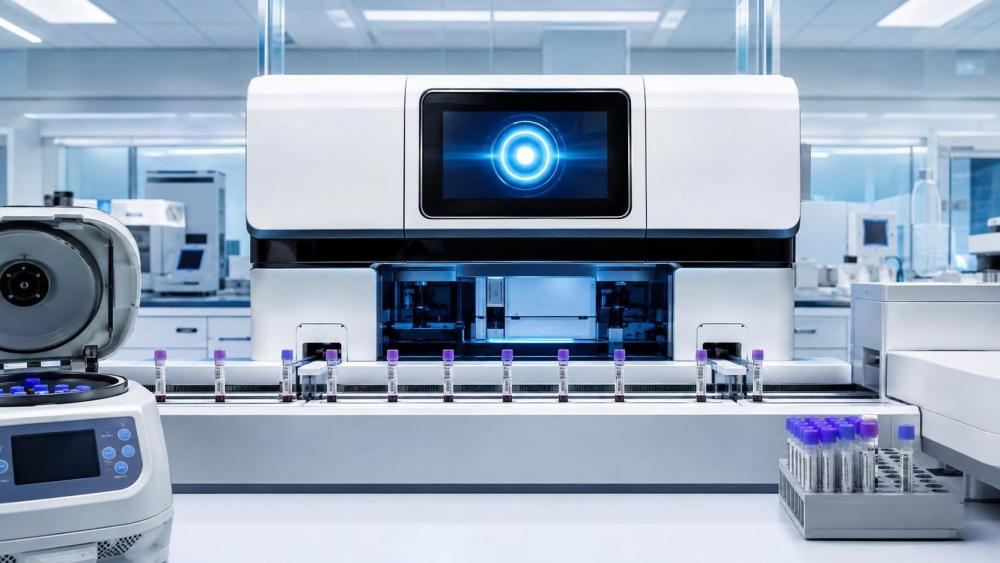
Where delays usually enter the process
Laboratory teams often describe the testing pathway as pre-analytical, analytical, and post-analytical. This distinction is useful because a delay is not automatically an analyzer problem. Replacing or upgrading an instrument may improve one part of the process while leaving the main bottleneck unchanged.
Before analysis: specimen quality and movement
The pre-analytical stage begins before the specimen reaches the analyzer. Patient identification, tube selection, labeling, collection technique, transport temperature, transit time, and sample integrity can all affect whether a test can proceed. A hemolyzed, clotted, leaking, mislabeled, or insufficient specimen may need recollection. That can extend the clinical timeline far more than a difference in analyzer cycle time.
Sample preparation also matters. Serum or plasma testing may require clotting time and centrifugation. Some molecular workflows require extraction before amplification. In a busy hospital, samples may arrive in uneven waves after outpatient clinics, ward rounds, or emergency department surges. A system designed for steady input can still develop a queue when many specimens arrive together.
During analysis: automation does not remove every exception
Automation can reduce manual handling and improve consistency, but it does not eliminate all interventions. Instruments require appropriate reagent loading, calibration, internal quality control, maintenance, and monitoring of alerts. A result can be delayed when a quality control run is outside the laboratory’s acceptance criteria, when a reagent lot must be checked, or when the analyzer requests a repeat measurement.
Some specimens also trigger rules that are clinically appropriate but operationally slower. A hematology analyzer may flag a sample for microscopic review. A biochemistry result may require dilution because the concentration exceeds the assay’s direct measurement range. A coagulation sample may be unsuitable because of collection issues. These are not necessarily failures; they are safeguards intended to prevent an unreliable result from being released.
After analysis: verification and communication
A numerical value is not always a reportable result. Laboratories may use automated verification rules for results that meet defined criteria, while unusual, critical, inconsistent, or technically questionable findings are routed for review. This post-analytical stage can include comparison with prior results, repeat testing, comment entry, authorization, and transmission through the laboratory information system.
Connectivity is therefore part of turnaround performance. An analyzer that produces results quickly but has unreliable interface communication, delayed middleware processing, or poorly configured result-routing rules can create a gap between completed testing and visible clinical reporting. When evaluating IVD equipment, procurement and clinical engineering teams should consider the analyzer, sample handling, information system integration, and support model as one operating chain.
Urgent testing and routine testing follow different clocks
Urgent or stat testing is often expected to move through a dedicated priority path. This may involve immediate transport, fast accessioning, direct analyzer loading, prioritized processing, and rapid review. That does not mean every test requested urgently can bypass the method’s technical requirements. A culture still needs time for growth, and an assay requiring a full preparation sequence cannot be safely compressed beyond its validated process.
Routine testing may be scheduled around laboratory workload and resource use. Batch testing can be sensible for assays with lower daily demand, limited reagent stability after preparation, or methods that are more efficient when multiple specimens are processed together. The trade-off is that a specimen arriving just after a batch has started may wait until the next cycle. Clinicians need clear expectations about this distinction, especially when ordering a test that influences same-day decisions.
For laboratories, the goal is not to force every assay into the shortest possible timeline. The goal is to match the reporting time to clinical need while maintaining analytical quality, traceability, and efficient use of personnel and reagents.
A practical way to investigate delayed results
When a result is late, start with timestamps rather than assumptions. A laboratory information system may record collection time, receipt time, accessioning time, analyzer completion time, verification time, and report-release time. Mapping these points can identify whether the delay occurred before the laboratory received the specimen, in the testing queue, during technical review, or after analysis.
- Confirm the test status. Determine whether the specimen is pending receipt, awaiting preparation, in process, completed but held, canceled, or rejected.
- Check specimen acceptability. Look for collection, identification, volume, clotting, hemolysis, transport, or storage issues that may have stopped processing.
- Review the assay workflow. Establish whether the test runs continuously, at set intervals, or only after enough specimens are collected for a batch.
- Look for analyzer and quality events. Determine whether maintenance, calibration, quality control, reagent replacement, repeat analysis, or downtime affected the queue.
- Identify verification holds. Check whether an abnormal flag, delta check, critical value procedure, or manual review rule prevented automatic release.
- Examine the reporting connection. If testing is complete but the result is not visible, investigate interface and result-transmission status.
This approach prevents an unproductive response such as assuming that all delays reflect low analyzer throughput. In some cases, adding capacity is justified. In others, improving sample transport, revising batch schedules, refining auto-verification rules, or correcting information-system workflow has a greater effect on the reported turnaround time.
What to ask when assessing an IVD system
Manufacturers may describe throughput, time to first result, or assay processing time. These specifications are relevant, but they should be interpreted in the context of the intended laboratory. A small clinic, a hospital emergency laboratory, and a centralized reference laboratory do not face the same timing pressures.
During technical evaluation, teams can ask how the system performs with mixed workloads rather than a single idealized assay run. It is useful to understand the time from sample loading to first result, the system’s capacity during peak periods, handling of urgent samples, repeat-test workflow, reagent and consumable interventions, calibration frequency, quality-control requirements, and how results transfer into the laboratory information environment.
Service arrangements also influence practical uptime. A laboratory should know what routine maintenance is expected from operators, how errors are identified, which parts are user-replaceable, how spare parts and reagents are managed, and what happens when an instrument becomes unavailable. A fast analyzer with frequent interruptions may not deliver a fast overall reporting process.
Communicating realistic expectations to clinical teams
Clear communication reduces avoidable escalation. Ordering teams benefit from knowing whether a test is performed on site, whether it is routine or urgent, whether it is batch-based, and whether specific specimen requirements apply. A result that needs several days because it depends on organism growth or external referral should not be presented as though it is delayed in the same way as a routine test that missed its usual release window.
Laboratories can also separate an expected TAT from an exceptional delay. An expected timeline reflects the normal validated workflow. An exceptional delay may involve recollection, analyzer downtime, a quality investigation, confirmatory testing, or a transmission issue. This distinction helps clinical teams decide whether to wait, collect another specimen, use an alternative test pathway, or make an immediate management decision based on other available information.
The most reliable answer to the turnaround-time question is therefore not a single number. It is a clearly defined time window tied to a particular test, specimen type, urgency level, laboratory workflow, and reporting process. Measuring each stage makes it possible to improve speed without weakening the checks that make an IVD result dependable.
Have questions about the global trade trends discussed here, or planning your expansion and supply chain strategy? Leave a message below and let the trade experts at MTHH guide you.
We respect your privacy. Your information is strictly confidential.
Related News
- Abbott Launches Next-Generation Whole-Genome Sequencing Oncodetect MRD TestOct 27, 2026Explore Abbott’s Oncodetect MRD test, using whole-genome sequencing to track up to 5,000 ctDNA variants. Discover key clinical evidence and procurement considerations.
- SCIEX Starts Beijing Plant Project, Danaher's Tenth Manufacturing Site in ChinaOct 24, 2026SCIEX's Beijing plant project marks Danaher's tenth manufacturing site in China. Explore how its RMB 100 million-plus investment could strengthen local mass spectrometer supply.
- How laboratory workflow solutions reduce sample processing delaysOct 23, 2026Discover how laboratory workflow solutions reduce sample processing delays, improve tracking, and streamline reporting. Explore practical steps to cut waiting times without compromising quality.
- How to evaluate a web-based LIMS for lab instrument integrationOct 22, 2026Evaluate a web based LIMS for reliable lab instrument integration. Learn how to verify connectors, test failure recovery, and compare costs before choosing your system.