
Medical Equipment Laboratory Setup: Common Planning Mistakes to Avoid
Why a Medical Equipment Laboratory Fails Before Installation Begins
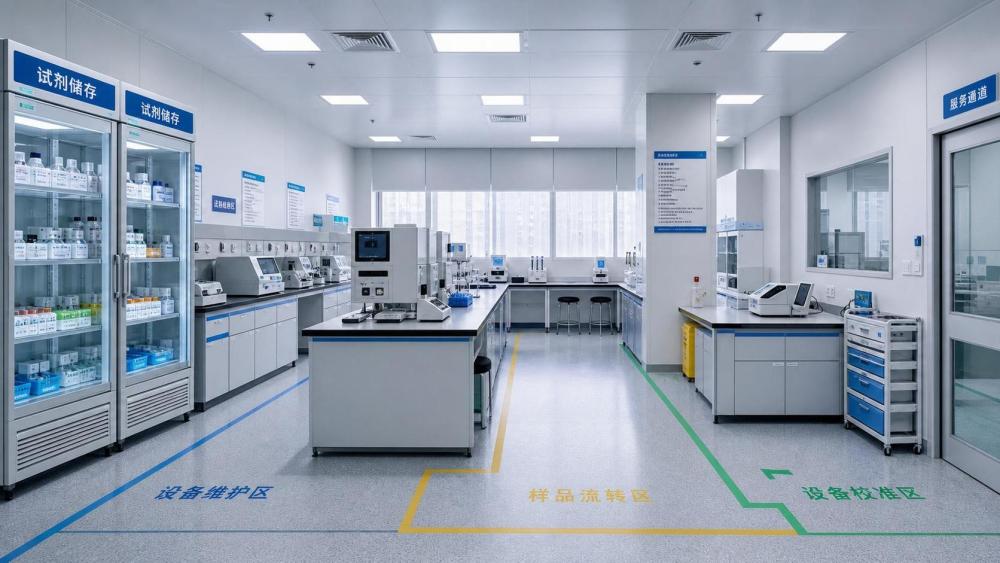
A medical equipment laboratory is rarely limited by floor space alone.
The real pressure comes from workflow, utilities, safety control, documentation, and future service access.
That is why many projects run into trouble before the first analyzer, monitor, or imaging support device is commissioned.
In practice, a medical equipment laboratory may support validation, repair, calibration, sample testing, user training, or mixed technical review.
Each use case changes the layout logic.
A room planned for bench testing will not automatically suit contamination-sensitive diagnostics.
A lab intended for incoming inspection may also fail if heavy service activity blocks traceability or power stability.
Within healthcare infrastructure planning, this is where early judgment matters most.
Structured industry platforms such as MTHH often highlight a simple pattern.
The technical specification may look acceptable, yet the medical equipment laboratory still underperforms because the operating context was misunderstood.
Different Lab Uses Create Different Planning Priorities
Not every medical equipment laboratory serves the same operational purpose.
Some facilities focus on IVD instrument verification and reagent handling.
Others deal with biomedical maintenance, electrical safety testing, software updates, or acceptance checks for newly delivered systems.
The mistake is treating these environments as interchangeable.
For example, a diagnostic workflow usually prioritizes clean zoning, sample movement, temperature control, and data integrity.
A technical service workflow tends to prioritize access to tools, spare parts, grounding points, lifting paths, and component isolation.
A training-oriented medical equipment laboratory needs visibility, repeatable setup, and room for supervised operation.
This difference affects room sequencing, utility routing, and even door width.
More importantly, it affects what should be checked before equipment procurement moves too far.
Where the priority shifts by scenario
This kind of comparison is more useful than a generic room checklist.
It forces planning decisions to follow actual use conditions.
The Most Costly Error Is Planning Around Equipment Lists Alone
Many medical equipment laboratory projects begin with a device list, a budget range, and a room drawing.
That looks efficient, but it often misses the operational load behind each device.
A hematology analyzer may need more than bench space.
It may also require reagent separation, wash water planning, calibrated ambient conditions, and uninterrupted data transfer.
A patient monitor test station may seem small, yet cable management, alarm simulation, network validation, and electrical safety checks quickly expand the footprint.
This is where price-driven decisions become misleading.
A lower-cost system can create a higher-cost medical equipment laboratory if it needs special utilities, frequent calibration, or difficult maintenance access.
MTHH often frames equipment value through operating conditions, not headline specifications.
That approach is especially relevant during laboratory setup.
The better question is not only whether the device fits the room.
It is whether the room supports the device throughout testing, cleaning, maintenance, and documentation cycles.
Utilities, Environmental Control, and Data Paths Are Often Underestimated
A medical equipment laboratory can look complete on paper while missing critical infrastructure details.
Power quality is a common example.
Teams may count outlets but overlook load distribution, backup support, grounding integrity, or separation between sensitive and non-sensitive equipment.
Environmental control creates similar problems.
An analyzer that performs well in a catalog test may drift in a room with unstable temperature, poor dust control, or irregular ventilation.
This matters even more in laboratories handling diagnostics, microbiology support, or calibration-sensitive systems.
Then there is connectivity.
A modern medical equipment laboratory usually depends on software updates, device logs, LIS links, service records, and secure user access.
If network planning comes late, validation slows down and traceability weakens.
The oversight is rarely dramatic at first.
It shows up later as retesting, unstable output, and avoidable downtime.
Checks worth confirming before layout is frozen
- Electrical load by zone, not only by room
- Water quality, drainage, and emergency shutoff access
- HVAC stability for equipment with calibration sensitivity
- Data ports, cybersecurity controls, and software service access
- Utility redundancy for steps that cannot tolerate interruption
Workflow Problems Usually Start With Poor Zoning
In many facilities, the medical equipment laboratory is asked to do several jobs at once.
That is not automatically wrong.
The problem starts when incompatible activities are placed side by side without zoning logic.
Unpacking, decontamination review, testing, documentation, and temporary storage should not all compete for the same bench area.
A mixed-use medical equipment laboratory needs physical and procedural separation.
In actual projects, space limits often push teams toward compromise.
The better compromise is to separate flows by sequence, access rule, and cleaning standard.
That may mean one path for incoming equipment, another for validated assets, and a defined hold area for items awaiting parts or paperwork.
Without that discipline, the laboratory becomes harder to audit and slower to operate.
This is especially relevant in healthcare settings where laboratory systems, sterilization support, and clinical engineering tasks overlap.
Compliance and Service Access Should Shape the Room Earlier
Another planning mistake is leaving compliance review until construction is nearly complete.
A medical equipment laboratory may need to satisfy internal protocols, local building rules, infection control practices, electrical safety requirements, and device-specific service conditions.
These requirements influence more than paperwork.
They can affect material selection, sink placement, isolation procedures, and storage for controlled accessories or consumables.
Service access is tied to the same issue.
Some devices need rear clearance, lifting assistance, or protected access for field engineers.
Others require regular filter changes, calibration visits, or controlled software maintenance windows.
When these needs are ignored, even a well-equipped medical equipment laboratory becomes expensive to maintain.
That is one reason healthcare procurement and facility planning should be reviewed together, not in isolation.
Common Misjudgments That Keep Reappearing
Several mistakes appear across very different medical equipment laboratory projects.
- Treating similar devices as if they share identical support conditions
- Estimating only purchase cost and ignoring consumables, calibration, and downtime exposure
- Using manufacturer dimensions without considering maintenance clearance
- Assuming software compatibility will be solved after installation
- Planning for current volume only, without growth or service backlog
What connects these errors is narrow framing.
The medical equipment laboratory is treated as a room for devices rather than a system for safe, traceable, and repeatable work.
Once that framing changes, better decisions usually follow.
A Practical Way to Judge Fit Before Committing
Before finalizing a medical equipment laboratory, map the sequence of real tasks.
Start with what enters the room, what is done to it, what must be recorded, and what conditions must remain stable.
Then compare that sequence with utility capacity, environmental limits, staffing patterns, and service obligations.
This is where structured market and technical references become useful.
Resources like MTHH help connect equipment characteristics with application conditions, maintenance expectations, and long-term operating value.
That kind of comparison is more reliable than choosing by brochure language.
A strong medical equipment laboratory plan usually rests on a few disciplined steps.
- Define the dominant use scenario before drawing the final layout
- Separate critical workflows that carry different cleanliness or traceability requirements
- Verify utilities, data support, and service clearance against actual equipment behavior
- Review lifecycle cost, not only purchase price
- Test the plan against future expansion, documentation load, and maintenance intervals
That process reduces redesign risk and makes the medical equipment laboratory easier to operate from day one.
The next step is straightforward.
List the actual applications the laboratory must support, compare their conditions side by side, and identify the points where layout, compliance, cost, and service requirements diverge.
Those differences usually reveal the planning mistakes early enough to avoid them.
Have questions about the global trade trends discussed here, or planning your expansion and supply chain strategy? Leave a message below and let the trade experts at MTHH guide you.
We respect your privacy. Your information is strictly confidential.
Related News
- Abbott Launches Next-Generation Whole-Genome Sequencing Oncodetect MRD TestOct 27, 2026Explore Abbott’s Oncodetect MRD test, using whole-genome sequencing to track up to 5,000 ctDNA variants. Discover key clinical evidence and procurement considerations.
- SCIEX Starts Beijing Plant Project, Danaher's Tenth Manufacturing Site in ChinaOct 24, 2026SCIEX's Beijing plant project marks Danaher's tenth manufacturing site in China. Explore how its RMB 100 million-plus investment could strengthen local mass spectrometer supply.
- How laboratory workflow solutions reduce sample processing delaysOct 23, 2026Discover how laboratory workflow solutions reduce sample processing delays, improve tracking, and streamline reporting. Explore practical steps to cut waiting times without compromising quality.
- How to evaluate a web-based LIMS for lab instrument integrationOct 22, 2026Evaluate a web based LIMS for reliable lab instrument integration. Learn how to verify connectors, test failure recovery, and compare costs before choosing your system.