
How to Compare High Throughput Clinical Analyzers by Throughput, Menu, and Downtime
Choosing among high throughput clinical analyzers takes more than comparing the fastest number in a brochure. In real laboratory operations, performance depends on how many reportable results a system delivers, how broad the assay menu is, and how often workflow slows because of maintenance, calibration, or unexpected downtime.
That is why this topic matters across hospital laboratories, independent testing networks, project planning, and distribution decisions. A high-capacity analyzer can improve turnaround time, but only when speed, test availability, service support, and operating stability align with the actual workload.
For healthcare evaluation work, the most useful comparison framework connects technical performance with procurement reality. MTHH often treats laboratory systems this way: not as isolated instruments, but as assets that affect staffing, reagent planning, documentation, quality control, and long-term operating cost.
What high throughput clinical analyzers really need to deliver
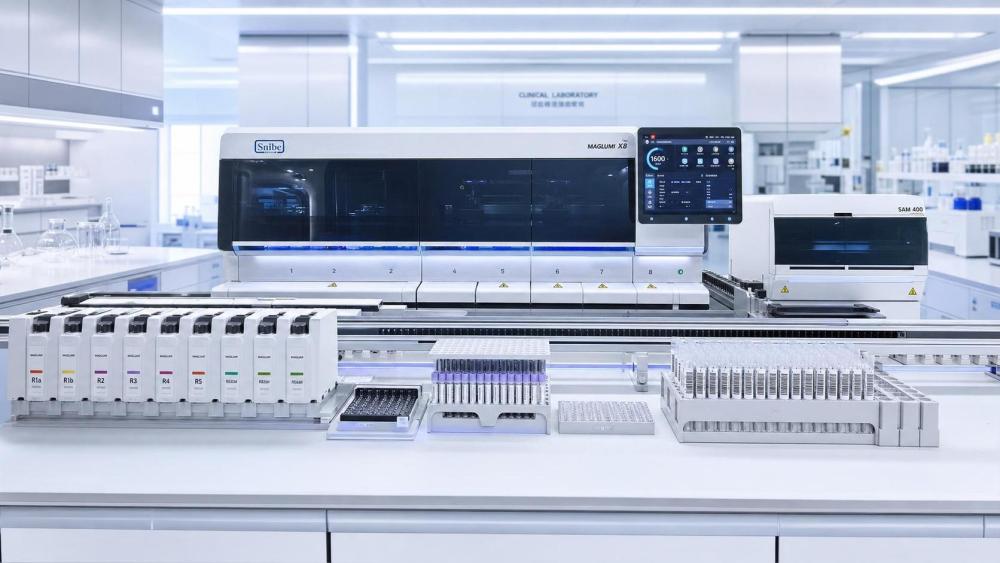
At a basic level, high throughput clinical analyzers are built for laboratories with sustained sample volume, broad testing demand, or pressure to shorten reporting times. They often appear in core labs, large hospitals, reference laboratories, and expanding diagnostic networks.
However, “high throughput” does not automatically mean “high value.” A system may process many tests per hour under ideal conditions, yet struggle when sample types vary, STAT priorities interrupt routine runs, or reagent replacement and calibration consume productive time.
A more useful definition focuses on sustained operational output. That means reportable tests per hour during normal workload, not just peak mechanical speed. It also means stable performance across routine chemistry, immunoassay, and other configured applications.
In practice, technical comparisons should connect three dimensions: throughput, menu, and downtime. These are the factors that most directly shape workflow continuity, instrument utilization, and return on investment.
Throughput is more than the headline number
Manufacturers usually present throughput as tests per hour or samples per hour. That is a starting point, but not a decision point. The meaningful question is how the analyzer performs under the laboratory’s expected mix of routine, reflex, repeat, and urgent testing.
Look at effective throughput, not theoretical speed
Effective throughput reflects actual output after calibration events, control runs, reruns, reagent loading, sample sorting, and operator intervention. This number is harder to obtain, but it is much closer to the business reality.
A system rated at 2,000 tests per hour may deliver less usable capacity than a lower-rated model with better reagent stability and fewer interruptions. The difference becomes visible during morning peaks, emergency inserts, and mixed-panel demand.
Questions that expose real throughput
- How many reportable results are produced during an eight-hour shift?
- What happens to output when STAT samples are inserted?
- How often does the analyzer pause for calibration or maintenance?
- Does throughput change significantly across different assay groups?
- How much hands-on time is required per 500 or 1,000 samples?
These questions matter because sample flow in large laboratories is rarely uniform. Comparing high throughput clinical analyzers without workload simulation can produce a misleading shortlist.
Menu breadth affects consolidation and workflow design
Throughput alone cannot show whether an analyzer fits the test portfolio. The assay menu determines how many tests can be consolidated on one platform, how often samples move between systems, and how complex the training and inventory model becomes.
A broad menu can reduce fragmentation. That may lower manual handling, shorten turnaround time, and simplify quality management. It can also improve space planning by limiting the need for multiple standalone instruments.
Menu comparison should be practical
Not every laboratory needs the largest possible assay list. A better comparison checks whether the analyzer covers high-frequency tests, clinically strategic tests, and future expansion needs without creating dependency on too many special consumables.
This is where MTHH-style evaluation is useful. It places test menu breadth alongside reagent dependency, quality control burden, and integration demands, which often matter as much as raw instrument specifications.
Downtime risk often decides long-term value
Downtime is frequently underestimated during procurement. Yet for high throughput clinical analyzers, downtime can erase the value of impressive speed. When a central instrument stops, the laboratory may face delayed reporting, overtime labor, repeat handling, and patient flow disruption.
There are two kinds of downtime to compare. Planned downtime includes cleaning cycles, preventive maintenance, calibration, and software updates. Unplanned downtime includes hardware faults, reagent handling errors, probe issues, and interface failures.
Measure downtime in operational terms
Instead of asking whether a system is “reliable,” ask how many hours per month the analyzer is unavailable, how quickly faults are resolved, and whether remote diagnostics or local spare parts support are in place.
The service model matters here. Fast response commitments, trained field support, validated maintenance protocols, and software support quality should be considered part of analyzer performance, not separate commercial extras.
- Review preventive maintenance frequency and task duration.
- Check mean time to repair and fault escalation pathways.
- Verify local parts stock and trained service coverage.
- Ask for uptime records from comparable installations.
- Examine how downtime affects LIS connectivity and sample traceability.
For large facilities, backup strategy also matters. A single high-capacity platform may look efficient on paper, but resilience can be weaker than a balanced multi-instrument configuration.
Workflow fit is where analyzer comparison becomes realistic
High throughput clinical analyzers operate inside a wider system. Sample reception, centrifugation, pre-analytics, barcoding, automation tracks, middleware, quality control, and LIS integration all influence performance.
An analyzer that looks technically strong may still be a poor match if loading height is awkward, operator intervention is frequent, reagent storage is inefficient, or room utilities complicate installation. Space, temperature control, water quality, power stability, and waste handling must be checked early.
This is especially relevant in healthcare infrastructure planning. Laboratory systems are not purchased as isolated boxes. They affect room layout, staffing patterns, consumable logistics, validation timelines, and future expansion capacity.
Common comparison scenarios
- Replacing several aging analyzers with one consolidated platform
- Expanding a hospital core laboratory after sample volume growth
- Building a new diagnostic center with limited technical staff
- Evaluating distributor portfolios for different market tiers
- Standardizing equipment across a laboratory network
In each case, throughput, menu, and downtime should be reviewed alongside installation conditions, documentation quality, training requirements, and reagent supply continuity.
A practical comparison framework
A useful review matrix should move beyond simple specification sheets. It should combine technical indicators with commercial and service factors that shape real ownership experience.
When comparing high throughput clinical analyzers, this structure helps balance speed claims with operational evidence. It also supports stronger supplier discussions because the review criteria are clear and measurable.
Where to look next before making a shortlist
The next step is usually to translate workload into a structured requirement set. Daily sample volume, peak hour demand, required assays, redundancy expectations, utility conditions, and service coverage should be documented before side-by-side comparison begins.
Site references are valuable, especially when they match local testing mix and staffing conditions. Factory specifications matter, but installed performance, maintenance history, and user feedback often reveal whether high throughput clinical analyzers perform consistently outside controlled demonstrations.
For broader procurement planning, it also helps to connect analyzer review with the wider medical technology picture. MTHH approaches this by combining technical, operational, and commercial context, which makes equipment assessment more useful for benchmarking, tender preparation, and long-term laboratory planning.
A disciplined comparison does not need to be complicated. Start with real workload, test the throughput claim against workflow reality, examine menu fit in detail, and treat downtime as a primary decision factor. That approach usually leads to a shortlist that is easier to defend and more reliable in practice.
Have questions about the global trade trends discussed here, or planning your expansion and supply chain strategy? Leave a message below and let the trade experts at MTHH guide you.
We respect your privacy. Your information is strictly confidential.
Related News
- Abbott Launches Next-Generation Whole-Genome Sequencing Oncodetect MRD TestOct 27, 2026Explore Abbott’s Oncodetect MRD test, using whole-genome sequencing to track up to 5,000 ctDNA variants. Discover key clinical evidence and procurement considerations.
- SCIEX Starts Beijing Plant Project, Danaher's Tenth Manufacturing Site in ChinaOct 24, 2026SCIEX's Beijing plant project marks Danaher's tenth manufacturing site in China. Explore how its RMB 100 million-plus investment could strengthen local mass spectrometer supply.
- How laboratory workflow solutions reduce sample processing delaysOct 23, 2026Discover how laboratory workflow solutions reduce sample processing delays, improve tracking, and streamline reporting. Explore practical steps to cut waiting times without compromising quality.
- How to evaluate a web-based LIMS for lab instrument integrationOct 22, 2026Evaluate a web based LIMS for reliable lab instrument integration. Learn how to verify connectors, test failure recovery, and compare costs before choosing your system.