
Diagnostic Service Capacity Cost: What Drives Pricing and When It Becomes a Bottleneck
Diagnostic Service Capacity Cost: What Drives Pricing and When It Becomes a Bottleneck
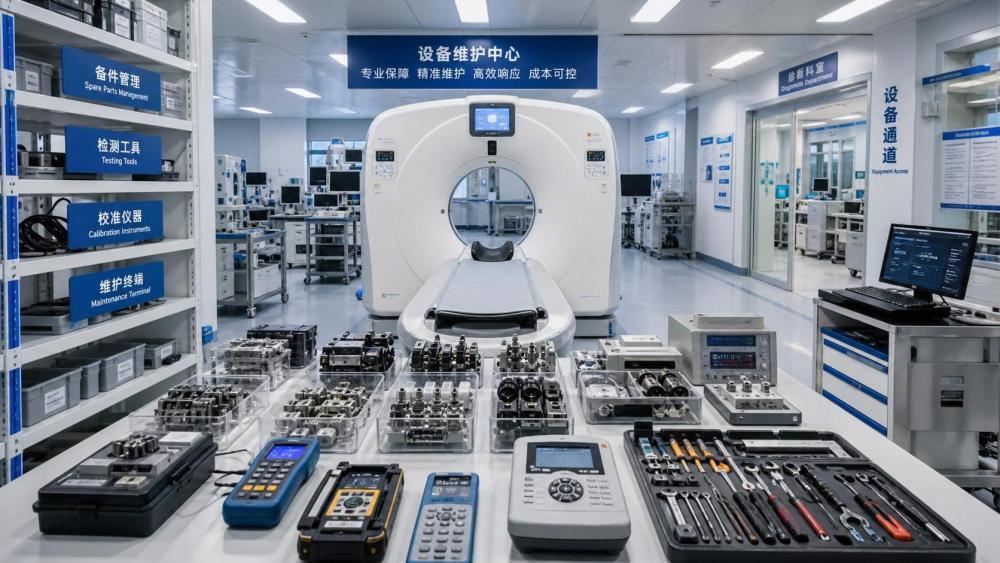
Diagnostic service capacity cost is not just a service contract number.
It reflects whether diagnostic systems stay available when clinicians need them most.
That includes engineer coverage, parts access, response time, escalation paths, and preventive maintenance discipline.
In imaging and laboratory environments, weak service capacity can quietly destroy the value of a low purchase price.
A scanner, analyzer, or monitor only creates value when it works consistently inside the real care workflow.
That is why diagnostic service capacity cost deserves review before approval, not after recurring delays appear.
What Diagnostic Service Capacity Cost Actually Includes
The term often gets reduced to labor rates.
In practice, diagnostic service capacity cost covers a larger support structure.
This structure determines how fast equipment returns to service after faults, software issues, calibration drift, or component failure.
- Field engineer availability by region and product line
- Remote diagnostics tools and technical support depth
- Local and central spare parts inventory
- Preventive maintenance frequency and completion rates
- Calibration, validation, and quality assurance support
- Software patching, cybersecurity updates, and interoperability troubleshooting
- Applications training and operator refresh sessions
From a budget perspective, these elements explain why two similar service offers can look far apart on price.
The cheaper option may simply assume less service capacity behind the contract.
That also means the lower quote may transfer risk back to the hospital or distributor.
What Drives Diagnostic Service Capacity Cost Upward
Several cost drivers are structural rather than temporary.
Understanding them makes pricing easier to evaluate during procurement.
1. Equipment Complexity
MRI systems, CT scanners, immunoassay analyzers, and molecular platforms require specialized engineering depth.
Higher complexity increases training expense, certification needs, and diagnostic time.
2. Installed Base Distribution
When a vendor has a thin installed base in a country, service density usually suffers.
Travel time rises, parts stocking becomes less efficient, and diagnostic service capacity cost often increases.
3. Parts Strategy
Premium contracts usually include better parts access.
If critical boards, detectors, probes, pumps, or reagent handling modules are not stocked locally, downtime stretches quickly.
4. Labor Market Pressure
Clinical engineering talent is limited in many regions.
Manufacturers and service firms compete for field engineers with device-specific skills.
That wage pressure feeds directly into diagnostic service capacity cost.
5. Service-Level Commitments
A four-hour response target costs more than next-business-day support.
Guaranteed uptime commitments also require deeper backup resources.
That premium can be justified when diagnostic throughput is financially and clinically critical.
When Limited Service Capacity Becomes a Real Bottleneck
Not every delay becomes a crisis.
The problem starts when support limits disrupt revenue, patient flow, or care quality.
More obvious warning signs usually appear before executives label it a bottleneck.
- Repeated delayed preventive maintenance visits
- Backlogs in service tickets for the same modality
- Frequent rescheduling of imaging or lab work
- Growing overtime for internal biomedical teams
- Increased instrument downtime tied to waiting for parts
- Operator workarounds that bypass recommended procedures
In actual operations, bottlenecks emerge fastest in high-utilization assets.
Examples include CT, MRI, hematology lines, chemistry analyzers, and urgent care imaging units.
If those systems fail, downstream departments feel the impact within hours.
At that point, diagnostic service capacity cost is no longer theoretical.
It becomes an operating constraint with measurable financial consequences.
How to Evaluate the Cost Against the Risk
A service quote should never be reviewed in isolation.
The practical question is whether the quoted diagnostic service capacity cost matches the business exposure.
A simple review table helps organize that judgment.
This view shifts the discussion from price alone to cost-weighted operational risk.
That usually leads to better capital approval decisions.
Common Procurement Mistakes Around Diagnostic Service Capacity Cost
Several patterns appear again and again during equipment sourcing.
- Approving equipment before validating local service headcount.
- Comparing service contracts without checking included parts and exclusions.
- Assuming remote support can replace all onsite intervention.
- Ignoring application training as part of service capacity.
- Treating downtime risk as an engineering issue only.
These mistakes make diagnostic service capacity cost look inflated at first.
Later, they usually produce hidden expense through lost exams, delayed reports, emergency rentals, and strained staff coverage.
Practical Questions to Ask Before Approval
A tighter question set often reveals whether the service model is realistic.
- How many certified engineers support this product in the target region?
- What is the median time to restore service for this exact modality?
- Which spare parts are stocked locally, and which require import?
- How often is preventive maintenance completed on time?
- What software support is included for interfaces, updates, and cybersecurity issues?
- What support remains after warranty, and how does diagnostic service capacity cost change?
These questions help separate a commercially attractive bid from a sustainable operating model.
Final Decision View
Diagnostic service capacity cost should be judged as part of total equipment value.
The right number is rarely the lowest number.
It is the cost that protects throughput, supports patient care, and prevents avoidable operational disruption.
When service depth is underbuilt, the bottleneck usually appears after installation, when negotiating leverage is already weaker.
A disciplined review of diagnostic service capacity cost during procurement creates a clearer balance between acquisition savings and ongoing performance risk.
That is where better approval decisions usually start.
Have questions about the global trade trends discussed here, or planning your expansion and supply chain strategy? Leave a message below and let the trade experts at MTHH guide you.
We respect your privacy. Your information is strictly confidential.
Related News
- Abbott Launches Next-Generation Whole-Genome Sequencing Oncodetect MRD TestOct 27, 2026Explore Abbott’s Oncodetect MRD test, using whole-genome sequencing to track up to 5,000 ctDNA variants. Discover key clinical evidence and procurement considerations.
- SCIEX Starts Beijing Plant Project, Danaher's Tenth Manufacturing Site in ChinaOct 24, 2026SCIEX's Beijing plant project marks Danaher's tenth manufacturing site in China. Explore how its RMB 100 million-plus investment could strengthen local mass spectrometer supply.
- How laboratory workflow solutions reduce sample processing delaysOct 23, 2026Discover how laboratory workflow solutions reduce sample processing delays, improve tracking, and streamline reporting. Explore practical steps to cut waiting times without compromising quality.
- How to evaluate a web-based LIMS for lab instrument integrationOct 22, 2026Evaluate a web based LIMS for reliable lab instrument integration. Learn how to verify connectors, test failure recovery, and compare costs before choosing your system.