
Clinical Laboratory Automation Systems: When Automation Improves TAT and Staffing Efficiency
When clinical laboratory automation systems create real operational value
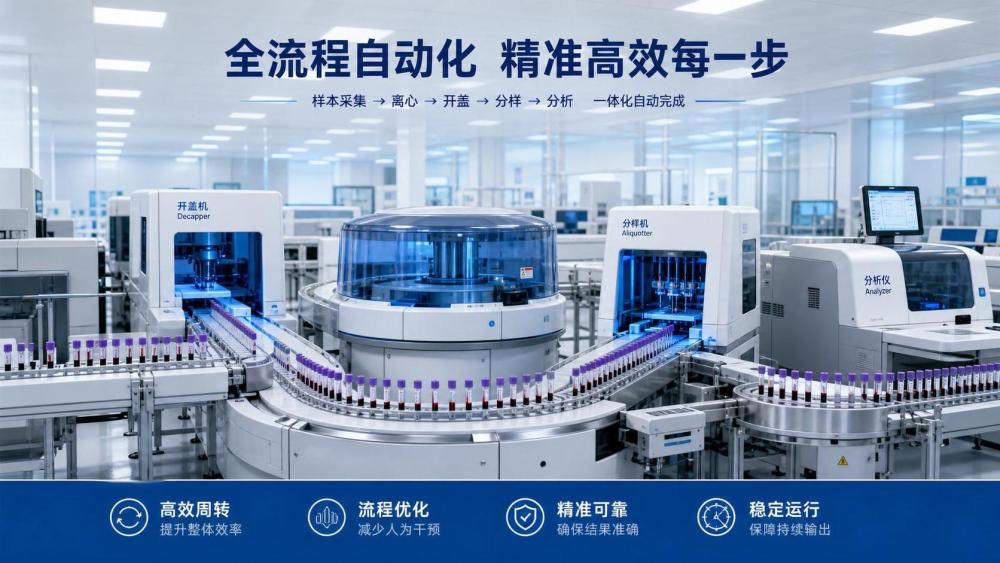
Clinical laboratory automation systems matter most when volume pressure and staffing limits start affecting daily reporting reliability.
In many laboratories, the first problem is not instrument speed alone.
The real issue is how samples move, wait, repeat, and compete for technician attention across the shift.
That is why automation decisions should be tied to workflow conditions, not only analyzer specifications.
A well-matched automation layout can shorten turnaround time, reduce manual touches, and stabilize staffing efficiency during peak periods.
A poorly matched one may add interfaces, maintenance tasks, and routing complexity without solving the original bottleneck.
Within the broader healthcare equipment market, MTHH often frames laboratory investment this way.
Performance has to be read together with installation conditions, software support, reagent dependency, service response, and long-term operating cost.
That perspective is especially important for clinical laboratory automation systems because their value appears across the full testing chain.
Different laboratory settings rarely need the same level of automation
In actual use, demand differences usually come from sample mix, reporting urgency, staffing structure, and existing instrument diversity.
A central hospital laboratory processing chemistry, immunoassay, hematology, and coagulation all day faces one kind of pressure.
An independent laboratory with batch-heavy routine work faces another.
A smaller facility may simply need pre-analytical support to reduce repetitive manual handling.
This is where clinical laboratory automation systems should be judged by fit.
The same conveyor, sorter, decapper, aliquoter, and middleware combination will not perform equally across these settings.
More automation is not automatically better.
What matters is whether automation removes the exact manual steps that delay results or consume skilled labor.
High-volume core laboratories usually benefit from line balancing
Core laboratories often struggle with uneven sample arrival patterns rather than simple lack of analyzer capacity.
Morning collections, outpatient spikes, and urgent inpatient requests can overload accessioning and routing before testing even begins.
In this setting, clinical laboratory automation systems improve TAT when they smooth specimen flow between pre-analytical and analytical steps.
Useful indicators include queue time reduction, fewer manual reroutes, and better utilization across connected analyzers.
Staffing efficiency improves because skilled personnel spend less time on repetitive loading, sorting, and exception tracking.
Mid-size hospital laboratories often need selective automation
A common mistake is assuming a full track system is the natural upgrade path.
For many mid-size sites, selective automation creates better value.
Pre-analytical modules, automated centrifuge integration, barcode tracking, or middleware-driven sample prioritization may solve the real problem.
These laboratories often need flexibility because test menus change, outreach programs expand, and staffing patterns vary by day.
Clinical laboratory automation systems should therefore be judged on modular growth, not only current throughput.
Independent laboratories care about standardization across repeated routine work
Independent laboratories usually run with high routine volumes and strong pressure on cost per reportable test.
Here, automation earns its place when it reduces variation between shifts and limits dependence on highly manual specimen preparation.
The value is not only faster TAT.
It is also more predictable staffing efficiency, easier training, and cleaner quality control across multiple daily batches.
The decision points change when urgency, menu complexity, and staffing models change
A practical comparison makes the differences clearer.
This comparison also explains why technical brochures rarely tell the full story.
Two systems with similar hourly throughput may perform very differently once urgent samples, reruns, and staffing gaps appear.
Where automation improves TAT, and where it only moves the bottleneck
Turnaround time improves when the main delay sits between specimen receipt and analyzer readiness.
That includes sorting, centrifugation, decapping, aliquoting, identification, and routing errors.
In these cases, clinical laboratory automation systems remove hidden waiting time that standard throughput figures do not show.
But automation does not always solve the slowest step.
If delays come from reagent stock issues, confirmation procedures, analyzer downtime, or manual result review, the gain may be smaller.
A useful evaluation method is to map specimen movement minute by minute across a full day.
That reveals whether the bottleneck is physical transport, instrument access, software release, or staffing coverage.
MTHH-style evaluation logic is relevant here because laboratory systems should be assessed through workflow compatibility and service conditions, not price alone.
Staffing efficiency depends on task redesign, not just headcount reduction
One of the most frequent misjudgments is treating automation as a simple labor replacement tool.
In practice, the stronger benefit is task redistribution.
Clinical laboratory automation systems free skilled staff from repetitive pre-analytical work and allow more attention to exceptions, quality events, and instrument oversight.
That matters in facilities where experienced personnel are difficult to replace.
It also supports continuity across weekends, night shifts, and periods of absenteeism.
The better question is not how many positions disappear.
The better question is whether the system reduces low-value manual touches per reportable test.
When that metric improves, staffing efficiency usually becomes more sustainable.
Before implementation, several overlooked conditions decide the outcome
Automation projects often underperform because planning focuses on instrument layout and ignores surrounding conditions.
- Confirm whether the LIS and middleware can support bidirectional communication, priority rules, and traceability needs.
- Check floor loading, electrical supply, HVAC stability, and specimen transport paths before final system design.
- Review consumables, spare parts, and maintenance windows as part of total operating cost.
- Validate training requirements for operators, supervisors, and service coordination teams.
- Plan downtime procedures, manual fallback steps, and phased go-live sequencing.
Another common error is treating similar laboratories as interchangeable.
Two sites with equal daily volume may still need very different clinical laboratory automation systems because their urgent testing ratio and analyzer mix differ.
That is why site-specific assessment remains more reliable than category-based assumptions.
A practical next step is to build a fit-based evaluation framework
Clinical laboratory automation systems deliver the strongest results when selection starts from workflow evidence.
Begin with specimen volumes by hour, not only by day.
Then review how many manual handling steps occur before analysis, how often urgent samples interrupt routine flow, and where staffing pressure becomes visible.
After that, compare system options against integration requirements, service coverage, implementation difficulty, and long-term flexibility.
For organizations using structured healthcare market intelligence, this approach fits naturally with broader equipment evaluation practice.
It connects technical capability with clinical workflow, documentation readiness, maintenance planning, and operational risk.
That is usually where a laboratory investment becomes easier to defend and easier to implement well.
The most useful next move is to define the actual bottleneck, set measurable TAT and staffing targets, and test whether the proposed automation removes those constraints under real operating conditions.
Have questions about the global trade trends discussed here, or planning your expansion and supply chain strategy? Leave a message below and let the trade experts at MTHH guide you.
We respect your privacy. Your information is strictly confidential.
Related News
- Abbott Launches Next-Generation Whole-Genome Sequencing Oncodetect MRD TestOct 27, 2026Explore Abbott’s Oncodetect MRD test, using whole-genome sequencing to track up to 5,000 ctDNA variants. Discover key clinical evidence and procurement considerations.
- SCIEX Starts Beijing Plant Project, Danaher's Tenth Manufacturing Site in ChinaOct 24, 2026SCIEX's Beijing plant project marks Danaher's tenth manufacturing site in China. Explore how its RMB 100 million-plus investment could strengthen local mass spectrometer supply.
- How laboratory workflow solutions reduce sample processing delaysOct 23, 2026Discover how laboratory workflow solutions reduce sample processing delays, improve tracking, and streamline reporting. Explore practical steps to cut waiting times without compromising quality.
- How to evaluate a web-based LIMS for lab instrument integrationOct 22, 2026Evaluate a web based LIMS for reliable lab instrument integration. Learn how to verify connectors, test failure recovery, and compare costs before choosing your system.