
Medical Equipment Procurement: How to Compare Total Cost, Service, and Lifespan
Medical Equipment Procurement: How to Compare Total Cost, Service, and Lifespan
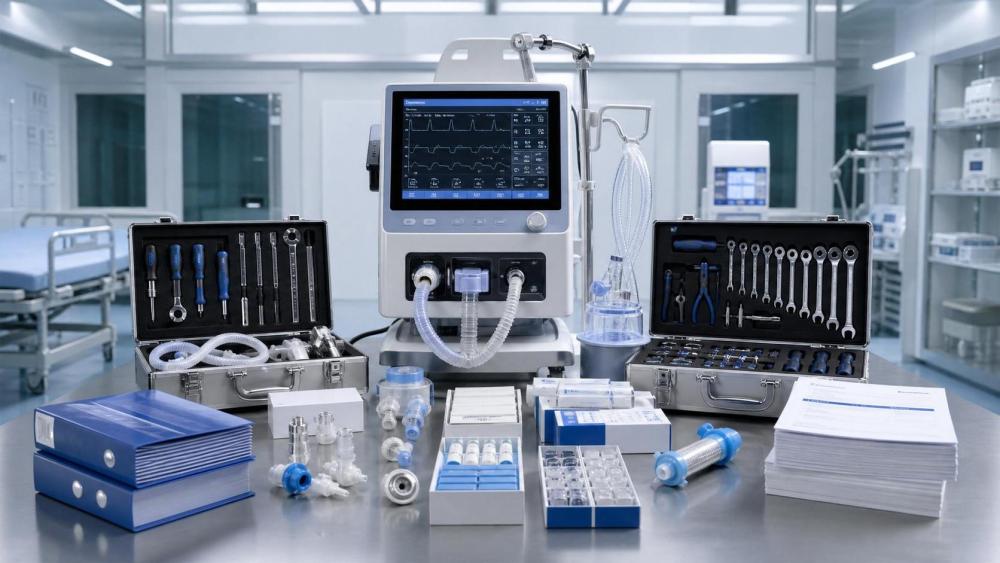
Medical equipment procurement should never be judged by purchase price alone.
A lower quote can still create higher long-term cost.
That is usually where approval decisions become difficult.
In healthcare, equipment value depends on uptime, service access, compliance, and expected working life.
The right medical equipment supports clinical operations without creating hidden budget pressure.
The wrong choice often looks affordable at the start.
Later, it may require costly repairs, frequent calibration, software fees, or replacement parts with long lead times.
This is why structured medical equipment evaluation matters before approval.
A practical review should compare total cost of ownership, vendor support, clinical fit, and remaining useful life.
When these factors are reviewed together, decisions become clearer and easier to defend.
Why Purchase Price Is Only the Starting Point
Most proposals begin with unit price, but medical equipment rarely behaves like a simple one-time purchase.
Installation, validation, user training, maintenance, and consumables often reshape the actual budget.
For example, an analyzer may be competitively priced but heavily dependent on proprietary reagents.
An imaging system may offer a strong discount but require expensive room upgrades.
A patient monitor may seem similar to alternatives, yet differ greatly in software licensing and alarm integration.
These differences affect operational spending far more than many first quotes suggest.
In actual procurement work, the better question is not, “Which option is cheapest today?”
The better question is, “Which medical equipment remains affordable and reliable over time?”
Core cost areas to review
- Acquisition cost, including accessories, software modules, and delivery.
- Site preparation, utilities, shielding, network readiness, and installation.
- Training cost for users, technicians, and biomedical support staff.
- Annual maintenance, calibration, and service contract expenses.
- Consumables, reagents, disposables, spare parts, and replacement accessories.
- Downtime cost caused by service delays or unstable equipment performance.
How to Compare Total Cost of Ownership
Total cost of ownership is the most useful framework for medical equipment approval.
It turns a price comparison into a long-term financial view.
This also helps reduce surprises after installation.
A strong review period usually covers five to ten years, depending on equipment category.
Short-life devices should be modeled differently from capital-intensive imaging systems.
The same principle still applies: forecast every major expense tied to use.
A simple comparison structure
This approach makes medical equipment options easier to compare across departments and budget cycles.
It also helps explain why the lowest bid is not always the most economical one.
Service Quality Often Determines Real Value
Service support is one of the most underestimated parts of medical equipment procurement.
Yet service quality often decides whether equipment performs consistently after purchase.
A stable service network can protect both revenue and patient workflow.
Poor support creates delays, staff frustration, and emergency spending.
This becomes even more serious for imaging, laboratory, ICU, and sterilization systems.
Questions worth asking suppliers
- What is the guaranteed response time for corrective service?
- Are spare parts stocked locally or shipped internationally?
- How often does preventive maintenance need to be performed?
- Is software support included, and for how many years?
- Who provides user training after staff turnover?
- Can the vendor provide uptime data from similar installations?
In practical terms, medical equipment with stronger service may justify a higher initial price.
That difference can be recovered through fewer interruptions and lower repair volatility.
From a financial standpoint, predictable support is easier to budget than repeated emergencies.
Lifespan, Obsolescence, and Upgrade Risk
Medical equipment lifespan is not only about whether a device still turns on.
The more important question is whether it remains clinically useful and commercially supportable.
A device can be operational but already outdated in software, connectivity, or compliance terms.
That creates hidden replacement pressure earlier than expected.
When comparing medical equipment, it helps to separate physical lifespan from useful economic lifespan.
This also means asking whether upgrades are modular or whether replacement requires a full system change.
Common lifespan warning signs
- Limited software update roadmap.
- Short availability window for spare parts.
- Dependence on aging operating systems or interfaces.
- No clear compatibility with future hospital IT systems.
- High maintenance frequency after midlife use.
A longer usable life improves return on investment only if performance remains stable.
If aging medical equipment slows workflow or fails compliance checks, keeping it longer may cost more.
Compliance and Documentation Affect Financial Risk
Compliance readiness is not just a regulatory issue.
It directly affects procurement timing, installation approval, and operational continuity.
Medical equipment with incomplete documentation can delay commissioning or create audit problems later.
This is especially important for cross-border sourcing, distributor arrangements, and public tenders.
A product may look technically acceptable, yet still carry commercial risk if files are missing or inconsistent.
Documents that usually need review
- Product registration and market authorization records.
- Quality management certification and manufacturing evidence.
- User manuals, maintenance guides, and installation requirements.
- Risk management, safety testing, and labeling materials.
- Warranty terms, service scope, and training commitments.
Clear documentation reduces approval friction and protects downstream operations.
It also makes medical equipment comparison more objective when multiple vendors appear technically similar.
A Practical Approval Framework for Better Decisions
A useful procurement decision should combine financial logic with operational reality.
That is where many medical equipment reviews either become strong or fall apart.
The most reliable method is to score each option against the same factors.
This keeps discussions focused and easier to document.
Recommended decision criteria
- Total cost over the expected life cycle.
- Service strength, uptime expectation, and local support readiness.
- Clinical suitability and workflow compatibility.
- Compliance status and document completeness.
- Upgrade path, obsolescence risk, and resale or replacement timing.
This framework supports a more balanced medical equipment decision.
It also helps justify approvals to internal stakeholders who need clear, defensible reasoning.
In the end, the best medical equipment purchase is not the one with the lowest entry price.
It is the one that delivers reliable performance, manageable service cost, and sustainable value year after year.
Before approval, compare every option through cost, service, lifespan, and compliance together.
Have questions about the global trade trends discussed here, or planning your expansion and supply chain strategy? Leave a message below and let the trade experts at MTHH guide you.
We respect your privacy. Your information is strictly confidential.
Related News
- FDA Issues Benefit-Risk Discussion Paper on Robotic Medical DevicesNov 07, 2026Explore the FDA discussion paper on robotic medical devices, its potential benefit-risk implications, and what manufacturers and purchasers should monitor.
- How to select ISO standards for medical device performance evaluationNov 06, 2026Choose medical device performance evaluation ISO standards with confidence. Learn to match claims, test methods, and regulatory requirements to reliable evidence.
- FDA Updates QMSR FAQs and Medical Device Cybersecurity GuidanceNov 06, 2026FDA QMSR FAQs and medical device cybersecurity guidance: Explore potential implications for ISO 13485 alignment, compliance planning and supplier coordination.
- Philips Reaches €288 Million Settlement in US Respiratory Device Recall ProbeNov 05, 2026Philips reaches a €288 million US settlement over its respiratory device recall. Explore the financial impact and implications for manufacturers.