
Medical Device Usability Study: Key Steps to Avoid Test Bias
A medical device usability study matters whenever evidence must support approval, procurement, deployment, or market comparison. If bias enters the study design, the result may misread real user behavior, hide safety risks, or make an otherwise suitable device look weak.
That is why usability evidence now carries more weight across clinical engineering, healthcare procurement, compliance review, and product planning. In settings where equipment performance, workflow fit, maintenance burden, and patient safety all intersect, clean study design is not a detail. It is part of sound technical judgment.
Why usability evidence deserves closer attention
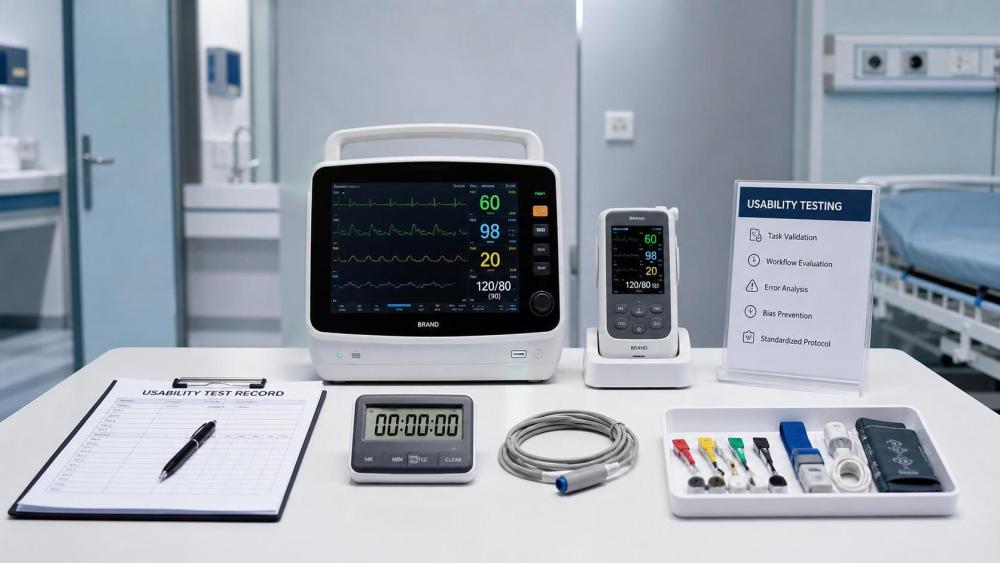
A medical device usability study examines how intended users interact with a device, interface, accessory, or workflow under realistic conditions. It is not limited to ergonomics. It also looks at task completion, use errors, confusion points, training dependence, and recovery from mistakes.
This becomes especially relevant for technologies used across imaging, laboratory diagnostics, patient monitoring, surgical care, sterilization, and digital hospital systems. A device may meet technical specifications, yet still create unsafe or inefficient use conditions when labels, alarms, controls, or software logic are poorly aligned with practice.
For structured healthcare information platforms such as MTHH, usability sits between engineering performance and operational value. It helps explain why a product with similar specifications may deliver very different outcomes once installed in a hospital, clinic, laboratory, or emergency setting.
Where test bias usually begins
Bias in a medical device usability study rarely appears as one obvious flaw. More often, it builds through small design choices that shape participant behavior before the first task even starts.
One common problem is unrealistic participant selection. If experienced users are asked to represent beginners, or if specialist workflows are tested with general staff patterns, the study no longer reflects actual use conditions.
Another issue comes from over-guided moderation. When the facilitator explains too much, reacts visibly to mistakes, or helps participants recover, the session starts measuring coaching quality rather than device usability.
Test environments can also distort findings. A patient monitor evaluated in a quiet room may appear intuitive, yet behave differently in a busy ward. A laboratory analyzer tested without realistic sample flow may hide interface delays that affect throughput.
Documentation bias matters as well. Selective note taking, inconsistent error coding, and vague task definitions often make later comparison impossible. In procurement and compliance contexts, that weakens the credibility of the full record.
Key steps to reduce bias before testing starts
The most effective bias control begins long before recruitment. A reliable medical device usability study needs a clear use specification, realistic risk-based tasks, and a test objective that matches the business question.
Start with intended use, not with convenience
The device should be mapped to its intended users, use environments, operating frequency, and safety-critical tasks. This sounds basic, but many weak studies blur these boundaries to save time or simplify recruitment.
If a device is used differently in ICU, outpatient imaging, and mobile emergency care, those differences should shape task design. A single generic script may miss the real points where use error is likely.
Build tasks around known risk points
A medical device usability study should not test only easy or linear actions. It should include setup, alarm response, parameter entry, cleaning steps, consumable replacement, shutdown, and any transition where confusion may affect safety or performance.
This is especially useful when evaluating patient monitors, infusion systems, imaging consoles, sterilization equipment, or IVD platforms where errors may emerge during repetitive or time-sensitive tasks.
Define success and error consistently
Before testing begins, the team should decide what counts as a critical error, a close call, a delay, or an acceptable workaround. Without that structure, reviewers may interpret the same session in very different ways.
How to keep the session neutral and credible
During execution, neutrality is the main safeguard. The moderator, environment, and recording method should support observation rather than influence behavior.
- Use a standardized script for introductions, task prompts, and clarifications.
- Avoid leading phrases such as hints, warnings, or emotional feedback.
- Keep room conditions close to intended use whenever practical.
- Record user actions, time points, pauses, and recovery steps consistently.
- Separate observation from interpretation during live sessions.
In practice, that means a participant who selects the wrong menu should not be corrected too quickly. The way the person notices, escalates, or recovers from the mistake is often the most valuable part of the medical device usability study.
Simple controls can improve reliability. Independent note review, video verification, and predefined coding sheets reduce the chance that a strong opinion shapes the final conclusion.
Practical scenarios across healthcare technology
Usability bias does not affect every product in the same way. The point of concern changes with the device category, workflow pressure, and operational setting.
This is one reason MTHH-style evaluation content is useful. It connects usability findings with purchasing reality, service demands, documentation quality, and total operating value rather than treating test results as isolated laboratory evidence.
Reading study results with better judgment
A medical device usability study can look polished and still provide weak decision support. The report should therefore be read with attention to structure, not only to conclusions.
Useful questions include whether the participants matched real users, whether the tasks reflected high-risk operations, whether training conditions were realistic, and whether errors were analyzed by severity rather than simply counted.
It is also worth checking how the study handled documentation. Were deviations reported clearly? Were use difficulties linked to labeling, interface layout, maintenance steps, or accessory fit? Did the team separate user weakness from design weakness?
For procurement and comparative review, the strongest evidence often comes from triangulation. Usability findings should be read alongside reliability data, service capability, training requirements, software support, consumable dependency, and installation constraints.
What to do next with usability findings
The next step is rarely to accept or reject a product on one study alone. A better approach is to turn the medical device usability study into a structured decision tool.
- List the highest-risk tasks and compare them with actual site workflow.
- Review whether training can realistically close observed use gaps.
- Check if service, labeling, software updates, or accessories may change usability after deployment.
- Use the study to refine supplier questions, pilot criteria, and acceptance benchmarks.
When usability evidence is interpreted in that broader way, it becomes more than a compliance exercise. It supports safer device selection, better workflow alignment, and clearer expectations before installation or market rollout.
For any upcoming evaluation, the most practical move is to examine not only whether a medical device usability study exists, but whether its design truly avoided bias. That distinction often determines whether the findings can guide a confident next decision.
Have questions about the global trade trends discussed here, or planning your expansion and supply chain strategy? Leave a message below and let the trade experts at MTHH guide you.
We respect your privacy. Your information is strictly confidential.
Related News
- FDA Issues Benefit-Risk Discussion Paper on Robotic Medical DevicesNov 07, 2026Explore the FDA discussion paper on robotic medical devices, its potential benefit-risk implications, and what manufacturers and purchasers should monitor.
- How to select ISO standards for medical device performance evaluationNov 06, 2026Choose medical device performance evaluation ISO standards with confidence. Learn to match claims, test methods, and regulatory requirements to reliable evidence.
- FDA Updates QMSR FAQs and Medical Device Cybersecurity GuidanceNov 06, 2026FDA QMSR FAQs and medical device cybersecurity guidance: Explore potential implications for ISO 13485 alignment, compliance planning and supplier coordination.
- Philips Reaches €288 Million Settlement in US Respiratory Device Recall ProbeNov 05, 2026Philips reaches a €288 million US settlement over its respiratory device recall. Explore the financial impact and implications for manufacturers.