
Medical Device Market Intelligence in the Middle East: 2026 Signals to Watch
Middle East healthcare spending is entering a more selective phase, and that changes how market signals should be read. In 2026, medical device market intelligence Middle East is less about headline growth and more about where budgets, regulations, service models, and infrastructure plans are converging into real purchasing activity.
That matters because device demand in the region rarely moves on price alone. Hospital expansion, digital integration, maintenance capacity, distributor readiness, and registration pathways often decide whether an opportunity becomes a contract, a delayed tender, or a stalled market entry plan.
For organizations tracking imaging systems, IVD platforms, patient monitoring, ICU equipment, sterilization, and hospital infrastructure, the useful question is no longer whether the region is growing. The better question is which signals actually indicate durable demand.
Why 2026 requires sharper market reading
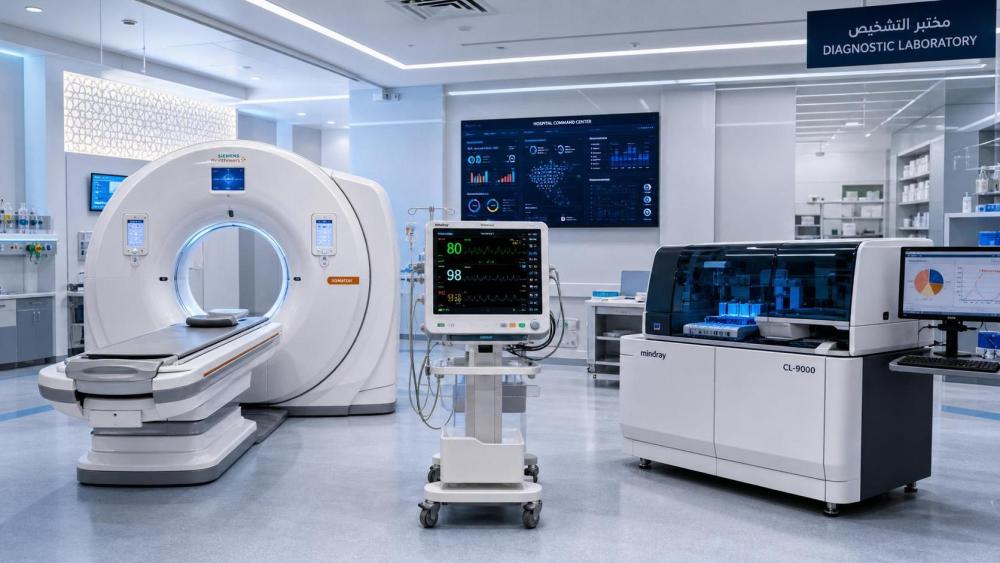
Across the Gulf and wider Middle East, healthcare modernization is becoming more operational and less symbolic. Large capital programs continue, but purchasing reviews are increasingly tied to workflow efficiency, clinical uptime, training support, and long-term service value.
This is where medical device market intelligence Middle East becomes practical. It helps separate visible investment announcements from procurement activity that is technically feasible, budget-supported, and aligned with local installation and support conditions.
In many markets, public investment still shapes demand. Yet private hospital groups, specialty centers, diagnostic chains, and rehabilitation providers are also influencing category growth. The result is a more layered market, with different buying logic across each segment.
A new imaging center may focus on throughput and software integration. A hospital ICU project may prioritize reliability, alarm management, consumables continuity, and response time for service calls. A lab tender may turn on reagent dependency and calibration stability as much as analyzer speed.
What market intelligence should include now
A useful market view is broader than shipment estimates or brand rankings. In medical technology, intelligence becomes meaningful when it connects commercial demand with clinical use, technical requirements, compliance status, and downstream operating cost.
For the Middle East, that means tracking several layers at once:
- hospital construction, expansion, and facility upgrade timelines
- registration requirements and documentation readiness by country
- distributor capability in installation, training, and after-sales service
- clinical demand by specialty, not just by device category
- consumables supply, spare parts access, and warranty execution
- digital workflow compatibility with hospital information systems
Platforms such as MTHH are relevant because they organize these technical and commercial variables into structured industry content. That is especially useful in a region where procurement outcomes depend on how performance, compliance, service, and infrastructure fit together in practice.
The 2026 signals that deserve attention
1. Procurement is moving toward lifecycle value
Many buyers now look beyond the acquisition price. They are comparing uptime, preventive maintenance schedules, training burden, consumable dependency, software support, and the likely cost of ownership over several years.
This favors suppliers that can document reliability, clinical fit, and service response clearly. It also raises the value of medical device market intelligence Middle East that includes operational realities rather than only market size narratives.
2. Imaging and diagnostics remain anchor categories
Diagnostic imaging and IVD systems are likely to stay central in 2026 planning. Demand is supported by chronic disease management, screening programs, hospital network expansion, and pressure for faster diagnostic turnaround.
Within imaging, ultrasound, CT, MRI, digital X-ray, and C-arm systems remain important, but decisions are becoming more technical. Room conditions, dose management, workflow integration, and maintenance support are increasingly decisive.
Within laboratories, analyzer throughput alone is not enough. Reagent cost structure, calibration frequency, quality control, automation compatibility, and uptime planning often determine whether a platform is commercially attractive.
3. Critical care and infrastructure categories are still strategic
Patient monitors, ventilators, infusion systems, anesthesia machines, sterilization equipment, medical gas systems, and emergency care infrastructure remain sensitive categories. They are closely linked to patient safety, staff workload, and accreditation readiness.
In this part of the market, a weak service model can erase the value of a competitive price. Business planning in the region therefore needs intelligence on installation standards, operator training, and local engineering support.
4. Compliance quality is becoming a market filter
Country-specific registration pathways, technical files, labeling, risk documentation, and post-market support are becoming stronger filters for entry. A product can be technically suitable and still lose momentum if documentation readiness is weak.
That is one of the clearest reasons medical device market intelligence Middle East should include regulatory and quality system tracking. In many cases, execution risk starts before sales discussions begin.
Where demand signals appear first
Demand rarely appears evenly across all facilities. It usually forms around specific care models, project types, and infrastructure gaps. Reading those patterns early makes market evaluation more accurate.
These signals matter because they appear before the final purchasing event. MTHH-style structured intelligence is useful here, since it helps connect category knowledge with procurement timing and operational constraints.
How to interpret regional opportunities more realistically
It is easy to overread the Middle East as one market. In reality, market access, reimbursement logic, procurement centralization, distributor strength, and hospital ownership patterns vary widely.
That means medical device market intelligence Middle East should be used as a comparative framework, not a single forecast line. A strong opportunity in one country may fail in another because the support structure is not transferable.
A practical reading usually includes four questions:
- Is the device clinically aligned with current investment priorities?
- Can installation, user training, and maintenance be executed locally?
- Are documentation and registration pathways already manageable?
- Does the distributor or service network match the product complexity?
If one of these conditions is weak, the addressable market may be much smaller than headline demand suggests.
What this means for 2026 planning
The strongest positions in 2026 will likely belong to organizations that treat intelligence as an operating tool rather than a marketing reference. That applies across imaging, laboratory diagnostics, patient care devices, and hospital infrastructure systems.
Useful next steps are usually concrete:
- map priority countries by registration complexity and service readiness
- review each device line by total operating value, not entry price
- track hospital projects at specification stage, not only at tender release
- test distributor strength against technical support expectations
- compare demand by clinical workflow and infrastructure fit
The region still offers meaningful growth, but the clearer advantage now comes from disciplined interpretation. Medical device market intelligence Middle East is most valuable when it helps turn scattered signals into a workable decision framework for product selection, market entry, and long-term positioning.
For 2026, the next move is not simply to watch market size. It is to build a sharper view of where clinical demand, procurement logic, compliance readiness, and service capability are lining up at the same time.
- medical technology
- diagnostic imaging
- laboratory diagnostics
- patient monitoring
- C-arm systems
- patient monitors
- ventilators
- anesthesia machines
- ICU equipment
- medical gas systems
- sterilization equipment
- hospital infrastructure
- dose management
- hospital infrastructure systems
- medical device market intelligence
- medical device market intelligence Middle East
Have questions about the global trade trends discussed here, or planning your expansion and supply chain strategy? Leave a message below and let the trade experts at MTHH guide you.
We respect your privacy. Your information is strictly confidential.
Related News
- FDA Issues Benefit-Risk Discussion Paper on Robotic Medical DevicesNov 07, 2026Explore the FDA discussion paper on robotic medical devices, its potential benefit-risk implications, and what manufacturers and purchasers should monitor.
- How to select ISO standards for medical device performance evaluationNov 06, 2026Choose medical device performance evaluation ISO standards with confidence. Learn to match claims, test methods, and regulatory requirements to reliable evidence.
- FDA Updates QMSR FAQs and Medical Device Cybersecurity GuidanceNov 06, 2026FDA QMSR FAQs and medical device cybersecurity guidance: Explore potential implications for ISO 13485 alignment, compliance planning and supplier coordination.
- Philips Reaches €288 Million Settlement in US Respiratory Device Recall ProbeNov 05, 2026Philips reaches a €288 million US settlement over its respiratory device recall. Explore the financial impact and implications for manufacturers.