
Medical Device Documentation Audit Checklist: Common Gaps That Delay Approval
Why does a medical device documentation audit matter before approval is even submitted?
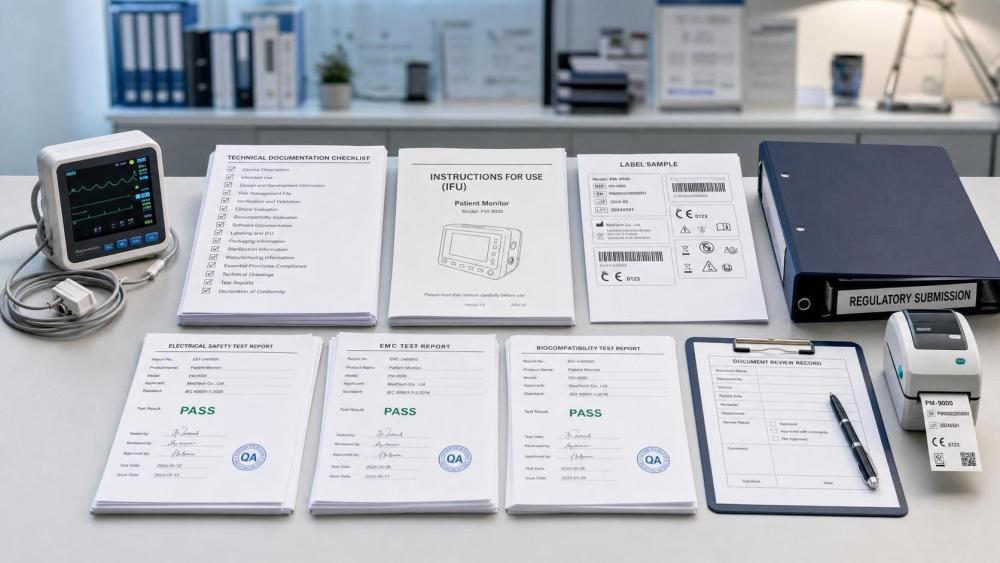
A medical device documentation audit is rarely just a paperwork exercise. It is usually the earliest warning system for approval delays, distribution risk, and avoidable rework.
In practice, many files look complete until someone checks consistency across labeling, risk controls, testing records, and market-specific requirements.
That is where delays begin. The issue is often not one missing document, but several small gaps that conflict with each other.
For example, an IFU may describe one intended use, while the clinical evaluation supports another. A label may carry claims not reflected in verification data.
A strong medical device documentation audit helps detect these problems before a regulator, notified body, importer, or hospital review team does.
This matters across imaging systems, IVD platforms, patient monitors, sterilization equipment, and hospital infrastructure devices, where documentation affects safety and procurement confidence.
Industry platforms such as MTHH are useful here because they frame technical and commercial information in a structured way. That supports earlier document review, not just later submission repair.
Which gaps most often appear in a medical device documentation audit checklist?
The most common gaps are not always dramatic. More often, they are routine oversights that spread across multiple records and slow approval cycles.
A practical checklist usually starts with these points:
- Intended use statements that differ between the technical file, IFU, labels, and marketing materials.
- Risk management files that list hazards, but do not clearly connect them to design controls or residual risk conclusions.
- Verification and validation reports with missing protocols, unclear acceptance criteria, or outdated device versions.
- Biocompatibility, electrical safety, EMC, software, or usability records that exist, but are not traceable to the final product configuration.
- Labeling packages that are incomplete for target markets, especially symbols, translations, UDI elements, and storage instructions.
- Clinical evaluation files that rely on literature only, without properly justifying equivalence or post-market evidence.
- Supplier and component records that do not support critical quality claims, especially for sensors, reagents, sterile barriers, and software modules.
A medical device documentation audit should also check change history. Many delayed submissions involve documents that were updated individually, but not aligned as a controlled set.
That problem is common when product lines expand into several regions or when one platform serves hospitals, laboratories, and distribution partners at the same time.
How can you tell whether the problem is missing content or poor traceability?
This is one of the most useful questions in a medical device documentation audit. Missing content and poor traceability create different risks and require different fixes.
Missing content means the evidence is not there. Poor traceability means the evidence exists, but cannot be linked clearly to claims, hazards, specifications, or released versions.
A simple comparison helps make that distinction visible:
When the issue is traceability, the review burden rises quickly. Auditors and reviewers spend more time proving the product story than assessing the product itself.
That extra effort often delays market access for otherwise strong devices.
Where do labeling, risk, and clinical records usually fall out of sync?
These three areas drift apart more often than teams expect. They are maintained by different functions, updated at different times, and reviewed under different pressures.
A medical device documentation audit should check whether the same product promise appears consistently across all three.
Consider a diagnostic analyzer. The label may claim faster throughput, but the performance file may reflect an older reagent setup. The risk file may not address the workflow change.
The same pattern appears in imaging and patient care equipment. A software update can change user interaction, alarm behavior, dose settings, or service steps.
If usability, cyber, or clinical justification is not refreshed at the same time, the file becomes internally inconsistent.
A useful review path is to compare four items side by side:
- Current intended use and indications
- Current label, IFU, and promotional claims
- Current risk controls and residual risk statements
- Current clinical, performance, or usability evidence
If one of these changed without the others, the medical device documentation audit should flag it immediately.
What slows approval more: one major deficiency or many small inconsistencies?
In many cases, many small inconsistencies cause more delay. A single major gap is serious, but it is usually visible and easier to assign.
Smaller inconsistencies create uncertainty. Reviewers start asking whether the quality system is disciplined enough to support the whole file.
That is why a medical device documentation audit should not focus only on headline documents. It should also test whether controlled records tell the same version of the product.
The effect is especially noticeable in cross-border submissions, distributor onboarding, and hospital tenders where documentation readiness affects both compliance and commercial trust.
MTHH regularly reflects this broader decision environment. Buyers, engineers, planners, and market teams all depend on structured device information, not isolated claims.
When technical, safety, and operational records align, product evaluation becomes faster. When they do not, every downstream review takes longer.
How should a practical medical device documentation audit checklist be used?
The best checklist is not the longest one. It is the one that helps identify approval risk early, assign ownership quickly, and verify closure objectively.
In actual use, the checklist should move through three layers.
Start with document presence
Confirm which required files exist for the target market, product version, and classification. This avoids reviewing a package that is incomplete from the start.
Then test consistency
Check whether labeling, design inputs, testing, risk management, software records, and clinical evidence support the same intended use and final configuration.
Finally, test readiness
Ask whether the file can survive an external review without verbal explanation. If the answer depends on internal memory, the documentation is not ready.
A useful execution checklist often includes:
- Approved document list by market and model
- Version match across technical file sections
- Trace matrix for claims, hazards, and evidence
- Label and IFU review against current product status
- Open CAPA, change control, and supplier impact review
- Closure evidence with named owners and due dates
That approach keeps the medical device documentation audit practical, especially for broad portfolios that include imaging, IVD, infection control, and critical care systems.
What is the smartest next step after the audit finds gaps?
Do not treat every gap the same. Rank findings by approval impact, patient safety relevance, and time needed for correction.
A missing essential performance report should move ahead of a formatting issue. A labeling inconsistency tied to safety warnings should move ahead of a low-risk administrative mismatch.
It also helps to separate quick document harmonization from evidence generation. One can be solved through controlled revision. The other may require testing, clinical review, or supplier follow-up.
A medical device documentation audit creates value when it leads to a clean remediation plan, not just a long findings list.
The most effective next step is usually to map high-risk gaps against submission timing, product claims, and affected markets.
From there, build a short action tracker, confirm document owners, and recheck traceability before the file moves outward.
When documentation is reviewed with this level of discipline, approval timelines become more predictable, and procurement or distribution discussions start from stronger ground.
Have questions about the global trade trends discussed here, or planning your expansion and supply chain strategy? Leave a message below and let the trade experts at MTHH guide you.
We respect your privacy. Your information is strictly confidential.
Related News
- Hong Kong Outlines Medical Device Legislation and Plans for Statutory RegulatorNov 14, 2026Hong Kong medical device legislation could reshape regulatory oversight. Explore the proposed regulator and what businesses should monitor.
- AAMI Issues TIR115 Guidance on Public Cloud Use in Medical DevicesNov 13, 2026AAMI TIR115:2026 guides public cloud use in medical devices. Explore its focus on risk management, supplier assessment and device boundaries.
- How are critical care devices regulated in the United States?Nov 12, 2026Critical care devices face FDA requirements based on intended use and risk. Explore classifications, marketing pathways, and practical compliance checks.
- Hong Kong Drafts Medical Device Bill to Establish Statutory OversightNov 12, 2026Hong Kong's Medical Devices Bill could introduce risk-based statutory oversight. Discover what the proposed framework may mean for suppliers.