
How to budget for a healthcare facility equipment upgrade
Budgeting for a healthcare facility equipment upgrade usually becomes difficult at the same moment the old equipment starts causing daily friction. A monitor that needs frequent recalibration, an analyzer that slows down workflow, or a sterilizer that keeps forcing staff to wait longer than planned can turn a routine replacement discussion into a budget dispute. The problem is rarely the equipment price alone. The real tension comes from trying to judge urgency, clinical impact, installation needs, and long-term operating cost at the same time.
For many facilities, the challenge appears first in finance meetings. One department asks for replacement because the device is unreliable, another asks for expansion because patient volume is rising, and procurement is left trying to separate essential spending from “nice to have” upgrades. If the budget is built only around purchase quotes, it often misses maintenance, service contracts, consumables, downtime, training, and room preparation. That is how an equipment project that looked manageable on paper becomes difficult to approve later.
Start with the operational problem, not the equipment list
A practical budget starts by defining what is actually breaking down in daily operations. Is the facility losing time because of repeated repairs? Is a device limiting patient throughput? Is a room not ready for the size, power, or environmental demands of the new system? These questions matter because a healthcare facility equipment upgrade is not a single purchase. It is usually a chain of expenses tied to the clinical setting around it.
When the request comes from a department, the first instinct is often to compare models and prices. That can be premature. A better approach is to map the use case first: which service line depends on the equipment, how often it is used, what happens if it is out of service, and whether the replacement is urgent or can wait for a planned cycle. This helps financial approvers judge whether the spending is tied to risk control, compliance, capacity, or general modernization.
Break the budget into visible and hidden costs
Many upgrade budgets fail because they only include the unit price. In medical settings, the total cost is usually wider. Beyond the equipment itself, you may need installation work, electrical or gas modifications, IT integration, operator training, validation support, accessories, shipping, warranty coverage, spare parts, and consumables. Some devices also require ongoing service response commitments that should be treated as part of the budget, not an afterthought.
For diagnostic imaging, laboratory systems, patient monitors, infusion pumps, or sterilization equipment, the operating cost can be just as important as the initial purchase. Reagent dependence, maintenance intervals, software support, calibration needs, and room compatibility all affect the real financial picture. If these items are not listed early, the final request can look incomplete and be sent back for revision.
One useful habit is to divide costs into three layers:
- Acquisition costs: equipment, freight, installation, and initial accessories.
- Readiness costs: room preparation, utilities, IT connection, staff training, and documentation.
- Operating costs: service, consumables, calibration, replacement parts, and software support.
That separation makes it easier to compare different options without hiding future spending inside a lower purchase quote.
Use replacement priority to decide where money goes first
Not every aging device needs immediate replacement. Financial approval becomes clearer when each item is ranked by clinical risk, service disruption, and cost of delay. A device used in emergency care or infection control often deserves a different funding priority from equipment that supports elective or low-frequency services. The same is true when a system is still usable but causing repeated downtime, manual workarounds, or staff frustration.
Many organizations build the budget by grouping projects into “must replace,” “should replace,” and “can defer.” This is not just a finance exercise; it helps clinical teams understand why some requests move first. A device with frequent service calls may not be the most expensive item, but if it affects patient flow or creates safety concerns, delay can cost more than replacement. That logic is easier to defend than a simple first-come, first-served approach.
Compare options by lifecycle value, not by lowest quote
The lowest quote can be misleading if it comes with shorter warranty coverage, weaker service support, higher consumable use, or poor workflow fit. For financial approvers, the better question is which option produces the most stable operating cost over the equipment’s useful life. In practice, that means comparing service terms, expected maintenance needs, operator training effort, spare-part availability, and the amount of downtime each option may create.
In some cases, a slightly higher upfront budget is easier to justify if it reduces recurring repair expense or avoids repeated room changes. In others, the best decision is to defer upgrade and extend the life of the current asset with targeted maintenance. The point is not to spend more; it is to understand what the budget is actually buying.
Check whether the facility is ready before approving the purchase
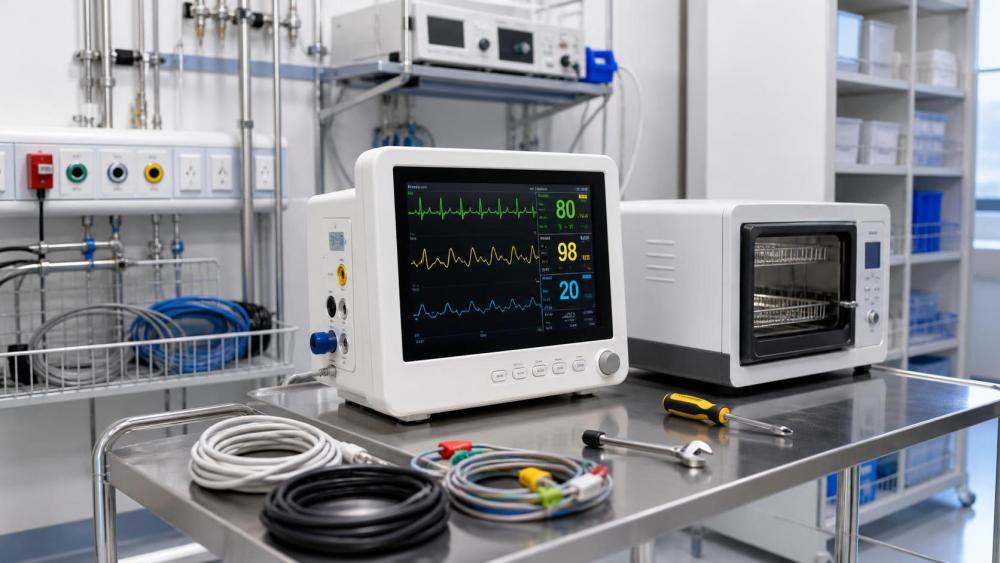
A common budgeting mistake is approving the device before confirming the site can support it. This happens when equipment dimensions, power load, ventilation, network access, shielding, cleanroom needs, or medical gas connections are reviewed too late. If the room requires changes after the order is placed, the project cost can rise quickly and delay installation.
This is where early coordination between finance, clinical engineering, procurement, and the end user matters. A small pre-budget review can prevent expensive rework. Even for standard equipment, it is worth confirming installation conditions, maintenance access, and who will own future service coordination. If the facility uses multiple product types, it helps to verify whether the same support team can manage the full upgrade or whether separate service arrangements are needed.
Build the request around questions approvers actually need answered
Financial approvers usually need a clear explanation of necessity, timing, scope, and risk. A strong request does not overload them with technical detail, but it should answer the basic budget questions plainly. What problem does the upgrade solve? What happens if the facility delays it? Which costs are one-time and which are ongoing? What parts of the project depend on external work? What alternatives were considered?
When the request is tied to a healthcare facility equipment upgrade, it also helps to show how the upgrade supports workflow and compliance readiness. That does not mean promising a transformation. It means showing that the equipment fits the clinical task, can be maintained properly, and will not create hidden operational costs after approval.
For purchasing teams and financial reviewers, structured medical equipment information is useful because it reduces guesswork. They can compare imaging systems, laboratory analyzers, monitoring devices, or sterilization equipment using the same questions: performance, installation conditions, service terms, consumables, and operating burden. That is often more helpful than reading vendor material in isolation.
Keep the budget flexible enough for staged implementation
Not every upgrade has to happen in one round. If the full project is too large, the budget can be staged by clinical priority. For example, critical replacement may come first, followed by supporting infrastructure, then non-urgent expansion. This approach is especially useful when departments need to keep services running while the upgrade is underway.
A staged plan also makes it easier to control capital spending without losing momentum. It gives finance a clearer view of timing and allows procurement to verify each phase before moving to the next. The key is to avoid splitting the project so much that each piece becomes disconnected. The budget still needs one logic: the facility is replacing or modernizing equipment in a way that supports safe operation and predictable cost.
If you are reviewing an equipment upgrade now, the most reliable budget is the one that makes hidden costs visible early, ranks replacement by operational need, and checks readiness before approval. That kind of planning does not eliminate uncertainty, but it does reduce the chance that the project becomes more expensive after the order is already placed.
Have questions about the global trade trends discussed here, or planning your expansion and supply chain strategy? Leave a message below and let the trade experts at MTHH guide you.
We respect your privacy. Your information is strictly confidential.
Related News
- Hong Kong Outlines Medical Device Legislation and Plans for Statutory RegulatorNov 14, 2026Hong Kong medical device legislation could reshape regulatory oversight. Explore the proposed regulator and what businesses should monitor.
- AAMI Issues TIR115 Guidance on Public Cloud Use in Medical DevicesNov 13, 2026AAMI TIR115:2026 guides public cloud use in medical devices. Explore its focus on risk management, supplier assessment and device boundaries.
- How are critical care devices regulated in the United States?Nov 12, 2026Critical care devices face FDA requirements based on intended use and risk. Explore classifications, marketing pathways, and practical compliance checks.
- Hong Kong Drafts Medical Device Bill to Establish Statutory OversightNov 12, 2026Hong Kong's Medical Devices Bill could introduce risk-based statutory oversight. Discover what the proposed framework may mean for suppliers.