
How to Verify CE Certified Gauze Products for EU Market Access
Why does CE verification for gauze products need a deeper review?
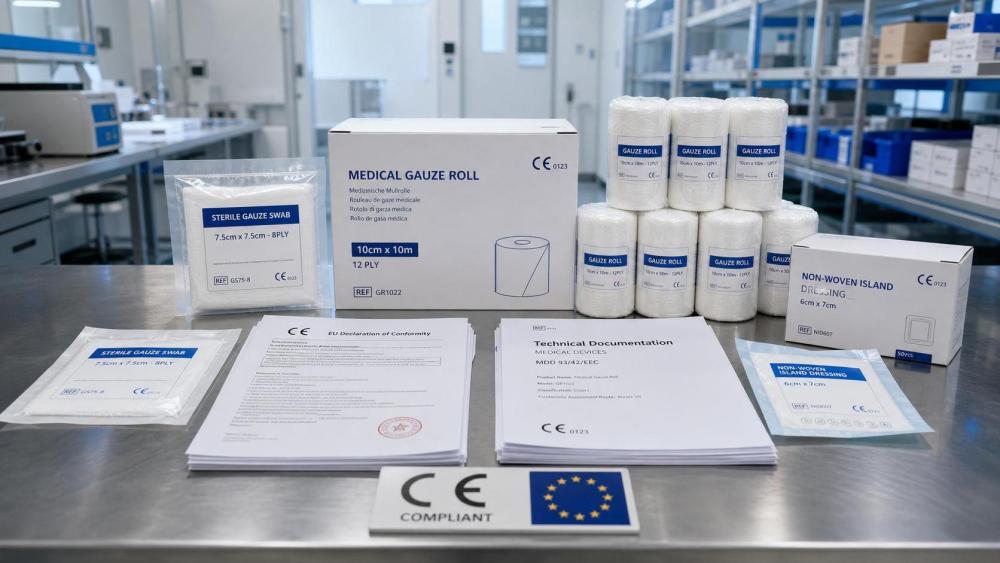
A CE mark on gauze looks simple, but the real compliance picture is not. For EU market access, gauze products CE certified status must be supported by evidence.
That evidence usually includes classification logic, technical files, labeling, risk controls, and a valid conformity route under the EU medical device framework.
In practice, the biggest mistake is treating gauze like an ordinary textile product. Medical gauze can fall under stricter review because intended use changes everything.
For example, sterile wound dressings, absorbent swabs, and procedure packs may involve different obligations from non-sterile general-use materials.
That is why verification should begin with purpose, not packaging. Is the product for wound contact, absorption, protection, cleaning, or surgical use?
Platforms such as MTHH often frame compliance in the same practical way used for other medical consumables. Documentation, operating context, and long-term supply reliability matter together.
A low-price offer may still create risk if the supplier cannot maintain sterilization records, traceability, or updated declarations for the EU market.
What should be checked first when a supplier claims gauze products CE certified?
Start with the legal identity of the product. The name on the label, declaration, packaging, and technical file should match without unexplained variations.
Then check the intended use statement. If that statement is vague, the rest of the compliance review becomes unreliable.
A useful first-pass review usually includes these points:
- EU Declaration of Conformity with product identifiers and manufacturer details.
- Device classification rationale under the applicable EU rules.
- Sterility status, if claimed, with validated process information.
- Labeling, instructions for use, and language readiness for target markets.
- Batch traceability and complaint handling procedures.
- Authorized Representative details when the manufacturer is outside the EU.
If any of those items are missing, the claim of gauze products CE certified should be treated as incomplete until clarified.
Needle-moving detail often sits in the declaration itself. Check dates, signatures, standard references, and whether the device family description is overly broad.
How can you tell whether the CE documents are credible?
A credible document set is consistent across sources. The declaration, label artwork, packaging specs, and supplier statements should describe the same product configuration.
Look for signs of document recycling. Reused certificates, generic standard lists, or declarations covering unrelated wound products are common warning signals.
The table below helps separate a routine file from one that needs escalation.
This kind of review matters because gauze is a high-volume consumable. Small compliance defects can scale into large recall or detention issues.
When MTHH discusses procurement readiness for medical consumables, the emphasis is similar: technical legitimacy and operational reliability should be checked together.
Does every gauze product follow the same CE pathway?
No, and this is where many reviews become too superficial. Different gauze products CE certified claims may sit on different compliance foundations.
Non-sterile gauze for limited medical use may follow a simpler route than sterile gauze intended for direct wound management.
If the product has medicinal substances, antimicrobial treatment, or a special wound healing claim, the file may require more scrutiny.
The practical question is not only “Is there a CE mark?” but “Which conformity path supports this exact use case?”
More specifically, review whether the product is:
- Non-sterile and sold as a basic dressing material.
- Sterile and intended for direct wound contact.
- Part of a kit or procedure pack.
- Promoted with enhanced performance claims.
Those differences affect not only market access, but also internal approval timing, supplier qualification depth, and import documentation checks.
Where do the biggest verification risks usually appear?
The most common risk is overreliance on certificates without reviewing the underlying product file. A certificate alone does not prove full market readiness.
Another risk is assuming packaging text equals regulatory approval. Labels can be printed quickly. Technical compliance takes far more work.
In actual sourcing projects, risk often shows up in these areas:
- Expired or outdated declarations after design or packaging changes.
- Sterile claims without process validation summaries.
- Missing economic operator information for EU distribution.
- Confusion between cosmetic, consumer, and medical positioning.
- Insufficient traceability for batch complaints or field action.
There is also a commercial risk. If the file is weak, distribution can stall even after shipment planning, which increases storage cost and contract pressure.
That is why gauze products CE certified verification should happen before final pricing decisions, not after goods are already committed.
What is a workable review process before approval or import?
A workable process is structured but not heavy. It should confirm regulatory validity, supply consistency, and documentation readiness in one sequence.
A practical review path often looks like this:
- Confirm intended use, sterility status, and product family boundaries.
- Match the declaration with labels, pack sizes, and item codes.
- Review conformity route, standards, and any notified body involvement.
- Check technical support records for sterilization, biocompatibility, and shelf life.
- Verify economic operator details, language readiness, and complaint traceability.
- Approve only after discrepancies are closed in writing.
This process fits broad healthcare sourcing logic as well. MTHH frequently highlights that procurement quality depends on more than specifications or unit cost.
For consumables, long-term control depends on document discipline, supplier response speed, and stable post-market support.
If a supplier answers technical questions slowly, or avoids document-level detail, that usually signals future service friction.
So how should gauze products CE certified status be judged before a final decision?
A sound decision comes from joining three views: regulatory evidence, product suitability, and operational reliability.
The best gauge is not the presence of a CE logo alone. It is whether the product can withstand document review, traceability review, and practical use review.
For gauze products CE certified claims, the most reliable path is to build a short approval checklist around intended use, declaration accuracy, sterility support, and labeling consistency.
That approach reduces avoidable delays and supports cleaner EU market entry decisions.
The next step is straightforward: map the exact gauze category, request the full document set, compare every identifier, and flag any mismatch before commercial release.
When the review standard is clear from the beginning, compliance checks become faster, supplier discussions become sharper, and market access becomes easier to defend.
Have questions about the global trade trends discussed here, or planning your expansion and supply chain strategy? Leave a message below and let the trade experts at MTHH guide you.
We respect your privacy. Your information is strictly confidential.
Related News
- Hong Kong Outlines Medical Device Legislation and Plans for Statutory RegulatorNov 14, 2026Hong Kong medical device legislation could reshape regulatory oversight. Explore the proposed regulator and what businesses should monitor.
- AAMI Issues TIR115 Guidance on Public Cloud Use in Medical DevicesNov 13, 2026AAMI TIR115:2026 guides public cloud use in medical devices. Explore its focus on risk management, supplier assessment and device boundaries.
- How are critical care devices regulated in the United States?Nov 12, 2026Critical care devices face FDA requirements based on intended use and risk. Explore classifications, marketing pathways, and practical compliance checks.
- Hong Kong Drafts Medical Device Bill to Establish Statutory OversightNov 12, 2026Hong Kong's Medical Devices Bill could introduce risk-based statutory oversight. Discover what the proposed framework may mean for suppliers.