
Ethiopia Poultry Farm Planning: Assessing Cage Systems and Equipment Costs
Planning a Poultry House Begins With the Production System
For a poultry project in Ethiopia, the cage system is rarely a stand-alone purchase. It affects the building layout, electrical load, water distribution, manure handling, staffing pattern, spare-parts strategy, and the amount of working capital needed before birds begin producing. A low initial equipment quote can become expensive if the house requires structural changes, replacement parts are difficult to obtain, or daily operation depends on utilities that are not consistently available.
Project managers should begin by defining the farm’s operating model rather than asking only for cage prices. The required answer may differ for a small commercial layer unit supplying local traders, a larger egg farm serving institutional buyers, or a phased project intended to expand over several production cycles. Stocking density, egg collection method, target flock size, labour availability, climate conditions, access roads, and local maintenance capability all shape the appropriate level of automation.
In many projects, the most practical system is not the one with the highest automation level. It is the one that can maintain water supply, feed delivery, ventilation, egg handling, and manure removal with predictable daily routines under the site’s actual conditions.
Comparing Cage System Options Before Requesting Quotations
Layer farms commonly assess three broad equipment approaches: conventional or manual cage rows, semi-automatic cage systems, and more automated multi-tier arrangements. These categories overlap in the market, so procurement documents should define functions rather than rely only on a supplier’s system label.
The comparison should not be framed as “basic versus advanced.” Each option transfers risk to a different part of the operation. Manual systems transfer more responsibility to labour supervision. Automated systems transfer more responsibility to installation accuracy, power management, preventive maintenance, and supplier support. A project with limited technical staffing may operate a well-designed semi-automatic installation more reliably than a complex system that cannot be maintained locally.
Cage geometry affects both welfare management and operating costs
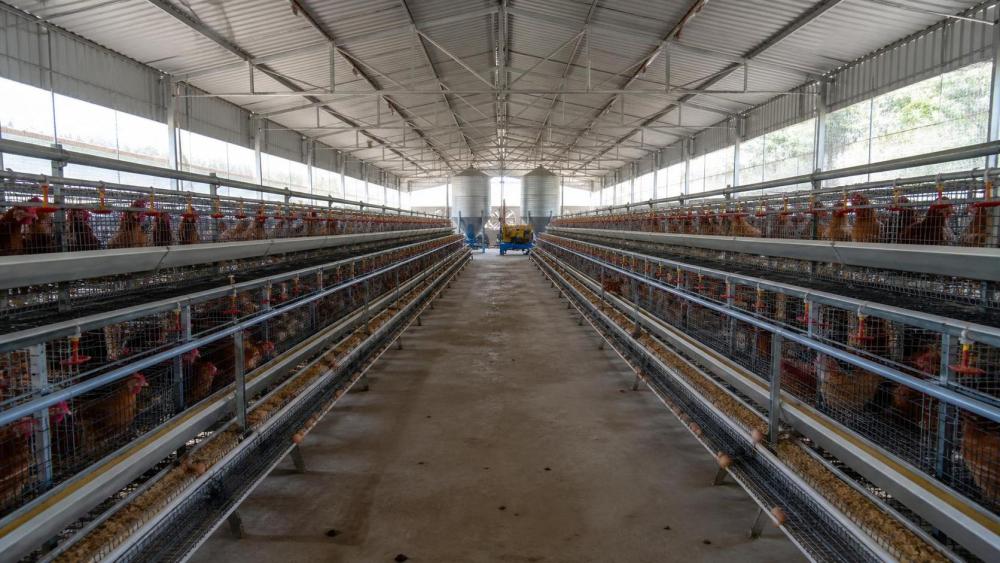
Procurement teams should review the dimensions of each cage compartment, the number of birds intended per compartment, floor slope, door design, feed trough access, and the arrangement of nipple drinkers. These details influence feed access, egg roll-out, bird inspection, breakage risk, and the time needed to remove birds at the end of a cycle.
Wire quality deserves close attention. Cage panels are exposed to moisture, manure gases, drinker leakage, cleaning activity, and daily abrasion. Galvanised wire is commonly used, but the procurement review should clarify whether galvanising occurs before or after welding, how joints are protected, and whether visible weld points show weak coating coverage. Corrosion at tray supports, cage legs, and lower panels can create a gradual safety and maintenance problem rather than an immediate failure.
Equipment Cost Is Wider Than the Cage Price
A cage quotation may appear to represent the farm’s equipment budget, yet it commonly excludes several items that determine whether the system can operate. Project budgets should separate the cage package from enabling infrastructure and site-specific works. This distinction helps managers compare supplier offers that use different scopes.
For example, a cage line may include frames, wire cages, feed troughs, water pipes, nipple drinkers, and tanks, while excluding pumps, filters, electrical panels, generators, ventilation equipment, foundations, drainage, installation labour, and transportation to the site. Another quotation may bundle some of these components but use different material specifications. Comparing only the headline total can lead to an inaccurate procurement decision.
Build a cost schedule around operating functions
Instead of placing every item under “equipment,” a project schedule can use functional packages:
- Bird housing and structure: building shell, roof insulation where needed, floor finish, drainage, foundations, access doors, and service corridors.
- Cage and feeding package: cage frames, feed troughs or feed lines, hoppers, drive motors, feed storage interface, and guards.
- Water package: source connection, storage tanks, pumping, filtration, pressure regulation, medicator provisions, nipple lines, and flushing points.
- Climate and air-management package: natural ventilation openings, curtains, fans, inlets, cooling arrangements where justified, and temperature monitoring.
- Egg and manure handling: collection tables or belts, packing area equipment, manure scrapers or belts, manure storage, and vehicle access for removal.
- Electrical resilience: distribution boards, cable protection, backup generation or other contingency arrangements, lighting, alarms, and control hardware.
This structure also improves change control. If costs rise during construction, managers can identify whether the increase is associated with the cage supplier, civil works, utility requirements, or logistics, rather than treating the entire project as one undifferentiated equipment expense.
Site Conditions in Ethiopia Can Change the Preferred Specification
Farm plans should be adjusted to the chosen location, not copied from a generic layout. Altitude, temperature range, rainfall pattern, road conditions, water availability, and power reliability can alter both design needs and operating risk. A building that relies on natural ventilation requires careful orientation, sidewall design, ridge ventilation, and sufficient clearance around the house. Restricting airflow with poorly positioned storage buildings, vegetation, or boundary walls can reduce the value of an otherwise sound cage layout.
Water quality is another early-stage concern. Nipple drinker systems can perform consistently when pressure is controlled and water is filtered appropriately, but sediment or mineral deposits may cause leakage or restricted flow. Leakage is not a minor issue in a caged layer house: it can wet manure, increase odour, accelerate corrosion, and complicate manure removal. A site water test and a clearly specified filtration arrangement are often more useful than simply ordering additional drinker lines.
Electrical planning should distinguish between essential and non-essential loads. Pumps, feed motors, lighting, ventilation equipment, egg belts, and manure belts may not all require the same backup priority. Where supply interruptions are possible, the project team should determine which functions must continue immediately, which can pause briefly, and what manual fallback procedure is realistic. Backup power capacity should be based on these actual operating scenarios rather than on an arbitrary percentage of installed load.
Using a Business Plan as a Procurement Control Document
A business plan is often treated as a financing document, but it should also work as a technical control document. It links the flock plan to the house capacity, sets the assumptions behind feed and water demand, identifies staffing roles, and records the sequence in which buildings and equipment must be delivered. Without these links, a cage selection can be approved before the project has confirmed whether feed storage, manure management, egg packing space, and utility systems are adequate.
For teams developing a structured budget and equipment checklist, this poultry farm business plan pdf in ethiopia resource is relevant because it connects cage pricing and farm equipment considerations with the broader planning process. The useful question is not whether a document supplies a universal cost figure; prices, freight, exchange conditions, and site works vary. The useful question is whether the plan exposes all the assumptions that must be validated before a purchase order is released.
A working plan should identify the production start date, lead time for imported or locally fabricated components, installation sequence, commissioning period, bird placement date, and cash needs before egg revenue begins. It should also state who is responsible for equipment acceptance, utility testing, staff training, and spare-parts inventory. Those responsibilities are easy to overlook when construction and poultry procurement are managed by separate teams.
What to Request From Equipment Suppliers
A reliable supplier comparison requires more than a brochure and a total price. Request a bill of quantities that identifies cage rows, tier count, compartment configuration, wire treatment, support-leg spacing, feed system type, drinker components, motors, control equipment, and all included accessories. If the supplier proposes a house layout, ask for the design assumptions behind aisle widths, service access, floor loading, ventilation openings, and maintenance clearance.
Transport and packing details matter for remote project sites. Long structural members, delicate plastic fittings, motors, and electrical controls may need different packaging and inspection procedures. The project team should define when responsibility transfers, whether installation tools are included, and how missing parts will be documented. A container or truck arriving with an incomplete cage package can delay civil work, bird placement, and the entire revenue schedule.
Acceptance should be staged, not left to final handover
Quality control is more effective when it begins before shipment and continues through installation. At minimum, acceptance records can cover:
- Verification that delivered quantities match the approved bill of quantities.
- Inspection of wire panels, welds, sharp edges, fasteners, supports, and corrosion protection.
- Confirmation that cage rows are level and securely anchored after installation.
- Pressure testing of water lines and inspection for leakage at nipples, joints, and regulators.
- Dry testing of feed distribution, egg collection, manure removal, and emergency shut-off functions where installed.
- Verification that operators receive manuals, wiring diagrams, lubrication points, and recommended spare-parts lists.
Commissioning should include operation under realistic load where possible. Equipment that turns correctly when empty may behave differently once feed is present, belts are loaded, or water pressure reaches normal operating levels. A short observation period before bird placement gives the team time to correct alignment, leaks, electrical faults, and unsafe access points.
Common Planning Errors That Inflate Lifetime Cost
One recurring error is selecting cage capacity before confirming the required support space. High-density layouts may leave too little room for feed handling, egg trays, worker movement, inspection, and removal of manure. Another is treating manure as an afterthought. Whether manure is scraped, collected by belt, or removed manually, the route from cage to storage area should not cross egg-handling traffic or create wet, obstructed corridors.
Projects also underestimate spare parts. The appropriate stock depends on system complexity and supplier lead time, but basic consumables and vulnerable components should be identified before startup. A low-cost replacement part can cause prolonged disruption if it is unavailable during a production cycle. Pumps, regulators, nipples, drive belts, switches, fuses, bearings, and selected motor components may warrant attention based on the installed system.
Finally, equipment decisions should not be separated from management capacity. A sophisticated cage system may reduce routine labour in some areas, but it demands more disciplined inspections, records, cleaning procedures, and mechanical maintenance. The selected system should match the farm’s ability to supervise those tasks every day, including during staff turnover or utility interruptions.
A Decision Framework for Project Managers
The strongest poultry house plan connects technical scope, cost control, and operational resilience. Begin with a confirmed production model and flock capacity. Translate that model into a building layout, utility requirements, manure route, feed-storage arrangement, and egg-handling workflow. Then compare cage options using their installed cost, operating demands, expected maintenance exposure, and consequences if a critical component fails.
For Ethiopian poultry projects, the decision is rarely about finding the cheapest cage system. It is about selecting a system whose materials, installation requirements, utility demands, labour needs, and maintenance profile can be supported at the planned site. When those conditions are defined before procurement, equipment pricing becomes a useful planning input rather than a source of late-stage surprises.
Have questions about the global trade trends discussed here, or planning your expansion and supply chain strategy? Leave a message below and let the trade experts at MTHH guide you.
We respect your privacy. Your information is strictly confidential.
Related News
- Hong Kong Outlines Medical Device Legislation and Plans for Statutory RegulatorNov 14, 2026Hong Kong medical device legislation could reshape regulatory oversight. Explore the proposed regulator and what businesses should monitor.
- AAMI Issues TIR115 Guidance on Public Cloud Use in Medical DevicesNov 13, 2026AAMI TIR115:2026 guides public cloud use in medical devices. Explore its focus on risk management, supplier assessment and device boundaries.
- How are critical care devices regulated in the United States?Nov 12, 2026Critical care devices face FDA requirements based on intended use and risk. Explore classifications, marketing pathways, and practical compliance checks.
- Hong Kong Drafts Medical Device Bill to Establish Statutory OversightNov 12, 2026Hong Kong's Medical Devices Bill could introduce risk-based statutory oversight. Discover what the proposed framework may mean for suppliers.