
CE Certified Anesthesia Delivery Systems: Safety Checks That Matter
Selecting anesthesia delivery systems CE certified for operating room use is only part of the safety equation. Daily confidence comes from checks that confirm gas delivery, ventilation, alarms, scavenging, and records before anesthesia begins.
That point matters across healthcare procurement, clinical engineering, and compliance review. A certified device may meet market requirements, yet real-world risk remains if routine verification is inconsistent, undocumented, or poorly aligned with clinical workflow.
For platforms such as MTHH, this is where technical information becomes practical. Buyers, service teams, and hospital planners need a clear view of which checks actually reduce preventable incidents and support reliable operating room performance.
Why CE certification is a starting point, not the finish line
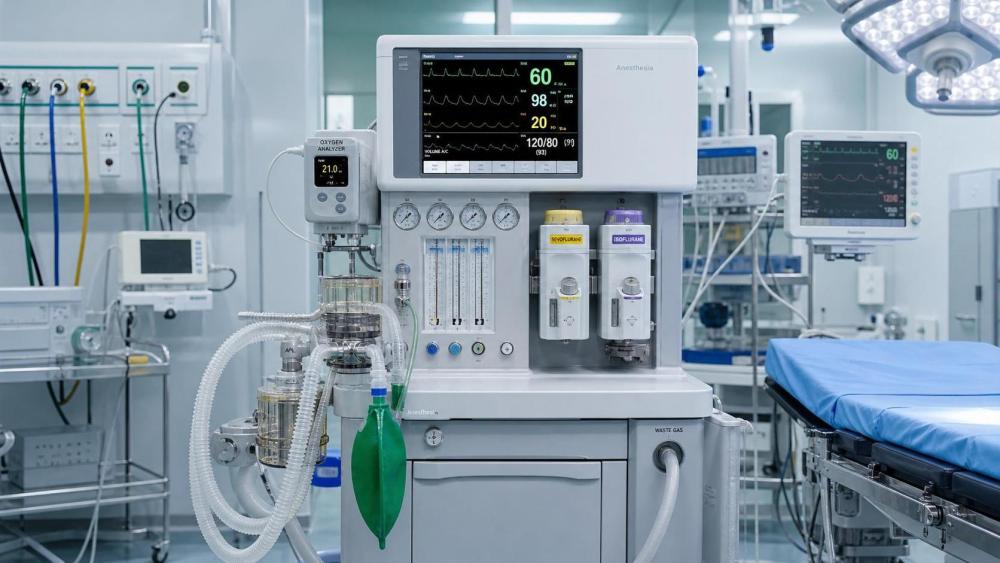
CE marking shows that a device has been assessed against applicable European regulatory requirements. In anesthesia workstations, that usually relates to safety, performance, risk management, labeling, and technical documentation.
Still, anesthesia delivery systems CE certified are not self-validating in daily practice. Installation conditions, gas pipeline quality, accessory compatibility, software settings, and user habits all influence how safely the system performs.
In other words, certification supports market access and baseline conformity. Routine safety checks support patient protection at the point of use.
This distinction is important in procurement decisions. Lower acquisition cost can look attractive, but long-term value depends on alarm reliability, service response, spare parts availability, preventive maintenance, and documentation discipline.
What safety teams should really be checking
The most useful checks are the ones that catch failures before induction. They focus on functions that can directly affect oxygenation, ventilation, agent delivery, and hazard detection.
Gas supply and pressure integrity
Start with pipeline connections and cylinder backup status. Incorrect hose connection, unstable pressure, or depleted reserve supply can turn a certified machine into a critical failure point.
Pressure gauges should sit within expected ranges. Quick verification of oxygen source priority and backup readiness is especially important during room turnover and planned maintenance periods.
Leak testing across the breathing system
Leak checks remain one of the highest-value routines. Small leaks can distort tidal volume delivery, reduce fresh gas efficiency, and create agent exposure concerns in busy surgical settings.
Breathing circuits, absorber canisters, reservoir bags, vaporizers, and connectors all deserve attention. Systems may pass one day and fail the next after cleaning, transport, or accessory replacement.
Ventilator performance and mode verification
Anesthesia delivery systems CE certified often include multiple ventilation modes and compensation features. Those functions are valuable only when settings, sensors, and bellows or piston behavior are confirmed before use.
Pre-use checks should confirm tidal volume accuracy, pressure limit behavior, apnea backup logic, and visible response to setting changes. A machine that powers on normally can still ventilate poorly.
Alarm audibility and response logic
Alarm systems are often trusted too casually. Volume settings, muted states, sensor faults, or weak configuration control can reduce the value of even advanced alarm architectures.
Checks should include oxygen concentration alarms, airway pressure alarms, disconnection alerts, low agent alerts where applicable, and power-related alarms. The issue is not only whether an alarm exists, but whether staff can hear and interpret it quickly.
The checks that most affect clinical risk
Not all checklist items carry the same weight. Some are administrative. Some are truly risk-controlling. The following priorities usually deserve closer review when evaluating anesthesia delivery systems CE certified for routine use.
From a risk perspective, oxygen analysis and leak testing usually deserve special discipline. They are simple in concept, but they sit close to the most serious preventable failures.
Where workflow and compliance often break down
Problems are rarely caused by a single technical fault. More often, they come from weak handoff routines, unclear ownership, incomplete service records, or assumptions that a previous team already checked the machine.
Anesthesia delivery systems CE certified may move between rooms, receive software updates, or operate with mixed accessories. Each change can create small inconsistencies that formal certification alone does not cover.
Documentation is another common weak point. A checklist that is signed but not specific offers limited protection during incident review, accreditation visits, or internal quality audits.
- Recorded checks should show date, device identity, operator, and exception notes.
- Any failed item should trigger a clear escalation path.
- Temporary workarounds should be controlled and time-limited.
- Post-service return-to-use checks should be separated from routine daily checks.
This is where MTHH-style structured evaluation becomes useful. Safety is not just a product attribute. It is the result of equipment capability, service quality, user preparation, and documentation readiness working together.
How to evaluate systems before purchase or rollout
When comparing anesthesia delivery systems CE certified, the better question is not only which unit has more features. It is which unit supports dependable checks under real operating conditions.
Look beyond headline specifications
Auto-check functions can save time, but they should not be treated as black boxes. Ask what the self-test covers, what it excludes, and how faults are displayed when the room is under pressure.
Check service and parts support
A strong safety profile depends on calibration intervals, sensor replacement, software support, and field service access. Delayed parts supply can quietly reduce machine availability and encourage risky workaround behavior.
Review training burden
Some systems are technically capable but operationally demanding. If the check sequence is confusing, staff compliance may fall, especially across mixed fleets or sites with frequent rotation.
Match the system to the clinical setting
A tertiary surgical center, day surgery unit, and emergency operating room do not always need the same configuration. Gas source stability, case complexity, room turnover speed, and engineering support all shape the right choice.
A practical next step for stronger control
A useful review starts with the current checklist, not the brochure. Compare daily checks against actual device functions, service history, alarm events, and documentation gaps.
Then verify whether anesthesia delivery systems CE certified in use today are supported by clear acceptance testing, consistent pre-use routines, and traceable corrective action when something fails.
For organizations using MTHH as a reference point, the goal is simple: turn product information into an operational standard. That means defining what must be checked, who owns the check, and which findings require the machine to stay out of service.
The most reliable decisions usually come from combining certification status, technical performance, service support, and real checklist usability. That approach makes anesthesia delivery systems CE certified easier to assess, safer to operate, and more defensible in everyday practice.
Have questions about the global trade trends discussed here, or planning your expansion and supply chain strategy? Leave a message below and let the trade experts at MTHH guide you.
We respect your privacy. Your information is strictly confidential.
Related News
- Hong Kong Outlines Medical Device Legislation and Plans for Statutory RegulatorNov 14, 2026Hong Kong medical device legislation could reshape regulatory oversight. Explore the proposed regulator and what businesses should monitor.
- AAMI Issues TIR115 Guidance on Public Cloud Use in Medical DevicesNov 13, 2026AAMI TIR115:2026 guides public cloud use in medical devices. Explore its focus on risk management, supplier assessment and device boundaries.
- How are critical care devices regulated in the United States?Nov 12, 2026Critical care devices face FDA requirements based on intended use and risk. Explore classifications, marketing pathways, and practical compliance checks.
- Hong Kong Drafts Medical Device Bill to Establish Statutory OversightNov 12, 2026Hong Kong's Medical Devices Bill could introduce risk-based statutory oversight. Discover what the proposed framework may mean for suppliers.