
Biomedical Equipment Maintenance Compliance Checklist for 2026
Why is biomedical equipment maintenance compliance under closer review for 2026?
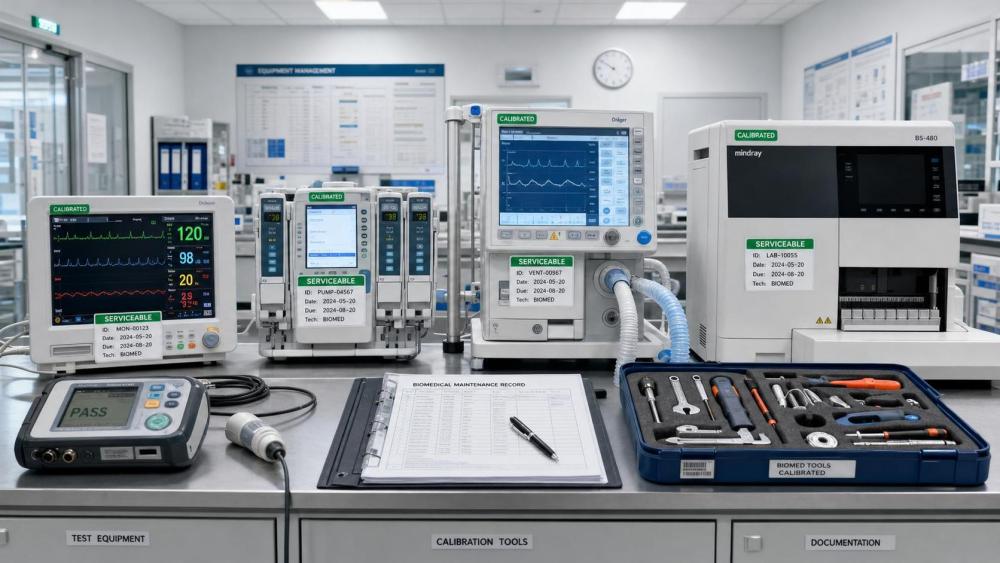
Biomedical equipment maintenance compliance is no longer treated as a back-office routine. It now sits near patient safety, audit readiness, and operational continuity.
The pressure is rising because device fleets are larger, more connected, and more dependent on software, calibration, and traceable service history.
In practical terms, hospitals are expected to prove that critical equipment is maintained on schedule, tested after repair, and documented without gaps.
That matters across imaging, laboratory systems, patient monitoring, sterilization, and emergency care devices. A missed check can become a safety issue, a downtime problem, or an audit finding.
A stronger compliance checklist helps organize those obligations. It also supports better purchasing and lifecycle decisions, which is why structured industry platforms such as MTHH keep maintenance and documentation topics closely linked.
The main shift for 2026 is not one new rule alone. It is the expectation that maintenance records, risk classification, service contracts, and performance verification all align.
What does a compliant maintenance program actually need to include?
Many teams assume biomedical equipment maintenance compliance means preventive maintenance only. That is too narrow.
A compliant program usually combines technical activity, documentation control, and clear responsibility. The equipment must be maintained, but the evidence must also stand up to review.
The core checklist usually includes:
- Accurate asset identification, including serial number, model, location, and risk category.
- Preventive maintenance intervals based on manufacturer guidance and local policy.
- Calibration and performance verification where measurement accuracy affects diagnosis or therapy.
- Electrical safety testing when required by device type, service event, or regulation.
- Corrective maintenance records with fault description, parts replaced, and return-to-service approval.
- Operator training evidence for devices with higher clinical risk or workflow complexity.
- Software version control, cybersecurity notices, and manufacturer field action tracking.
- Service provider qualification records and contract response commitments.
What often gets missed is the link between maintenance and procurement. When a device requires rare consumables, specialized tools, or long lead spare parts, compliance becomes harder to sustain.
That is why lifecycle review matters early. MTHH often frames maintenance needs as part of equipment evaluation, not as an issue that starts after installation.
Which devices create the highest biomedical equipment maintenance compliance risk?
Not every device carries the same compliance burden. The highest risk usually appears where equipment failure can affect diagnosis, dose, ventilation, alarm response, or infection control.
In real settings, several categories deserve tighter review:
- Imaging systems, because uptime, radiation safety, and image quality all require documented control.
- IVD analyzers, because calibration drift or reagent-related errors can affect test reliability.
- Ventilators and anesthesia machines, because functional failure has immediate clinical consequences.
- Infusion pumps and patient monitors, because alarm performance and parameter accuracy must remain dependable.
- Sterilizers and disinfection equipment, because maintenance directly supports infection prevention controls.
A useful way to judge risk is to ask three questions. Does the device influence a treatment decision? Does it require measurable accuracy? Would failure create urgent patient or service disruption?
If the answer is yes to any of those, biomedical equipment maintenance compliance should be more structured, more frequent, and more visible in audit files.
A quick judgment table for inspection readiness
The table below helps translate general compliance language into practical review points.
How do teams decide whether current records are enough for compliance?
A record is not compliant just because it exists. It must be complete, traceable, and usable during review.
The better question is whether someone unfamiliar with the device can reconstruct its maintenance status from the file alone.
For biomedical equipment maintenance compliance, strong records usually show when service happened, who performed it, what standard was used, what result was obtained, and whether the device was cleared for use.
Paper forms are not automatically weak, and digital systems are not automatically strong. The deciding factor is control.
In actual audits, recurring weaknesses appear in small details:
- Maintenance dates that do not match service reports.
- Calibration labels without supporting certificates.
- Incomplete accessory checks on systems that depend on probes, sensors, or modules.
- No distinction between inspection, repair, and full preventive maintenance.
- Devices returned to clinical use before final verification.
A short internal mock audit often reveals more than a policy review. Pick ten high-risk devices and test whether every document supports the maintenance story from installation to latest service event.
Where do organizations usually fail biomedical equipment maintenance compliance?
The most common failure is treating compliance as a repair log instead of a management system.
Another frequent problem is applying the same interval to every device. That looks tidy, but it ignores risk, usage intensity, and manufacturer guidance.
There is also a commercial blind spot. A device may be technically suitable, yet still create long-term compliance strain because service access is limited or spare parts are unstable.
This is where market intelligence becomes useful. MTHH-style equipment review is valuable because it connects technical performance with maintenance burden, documentation readiness, service coverage, and total operating cost.
One more issue deserves attention: software-dependent equipment. Cybersecurity patches, firmware changes, and network integration can affect biomedical equipment maintenance compliance even when no physical repair occurs.
That is especially relevant for digital imaging, laboratory automation, connected monitoring, and hospital infrastructure systems.
Warning signs that should trigger a closer review
- Repeated equipment failures without root cause analysis.
- Large volumes of overdue work orders.
- Calibration outsourced without traceability to standards.
- Service reports stored separately from the asset register.
- No review process for manufacturer safety notices.
What should be on a practical 2026 compliance checklist?
A useful checklist should guide decisions, not just collect signatures. It needs to be specific enough for audits and simple enough for routine use.
For 2026, a practical biomedical equipment maintenance compliance checklist should confirm:
- Every active device has a verified owner, location, and maintenance category.
- Preventive maintenance intervals match risk and manufacturer instructions.
- Calibration, safety testing, and functional checks are linked to documented results.
- Repair events include parts traceability and post-service acceptance.
- Service contracts define turnaround time, escalation path, and software support.
- Critical accessories and consumable dependencies are reviewed during maintenance planning.
- Field safety notices, recalls, and firmware actions are tracked to closure.
- Records are review-ready without searching across multiple disconnected folders.
The next step is straightforward. Review the highest-risk devices first, compare the current file set against this checklist, and close documentation gaps before the next audit cycle.
When maintenance, procurement, and lifecycle planning are aligned, biomedical equipment maintenance compliance becomes easier to sustain and easier to defend.
Have questions about the global trade trends discussed here, or planning your expansion and supply chain strategy? Leave a message below and let the trade experts at MTHH guide you.
We respect your privacy. Your information is strictly confidential.
Related News
- Hong Kong Outlines Medical Device Legislation and Plans for Statutory RegulatorNov 14, 2026Hong Kong medical device legislation could reshape regulatory oversight. Explore the proposed regulator and what businesses should monitor.
- AAMI Issues TIR115 Guidance on Public Cloud Use in Medical DevicesNov 13, 2026AAMI TIR115:2026 guides public cloud use in medical devices. Explore its focus on risk management, supplier assessment and device boundaries.
- How are critical care devices regulated in the United States?Nov 12, 2026Critical care devices face FDA requirements based on intended use and risk. Explore classifications, marketing pathways, and practical compliance checks.
- Hong Kong Drafts Medical Device Bill to Establish Statutory OversightNov 12, 2026Hong Kong's Medical Devices Bill could introduce risk-based statutory oversight. Discover what the proposed framework may mean for suppliers.