
Biomedical Equipment Maintenance Checklist: Preventive Tasks That Reduce Failure Risk
Why a Biomedical Equipment Maintenance Checklist Matters in Daily Operations
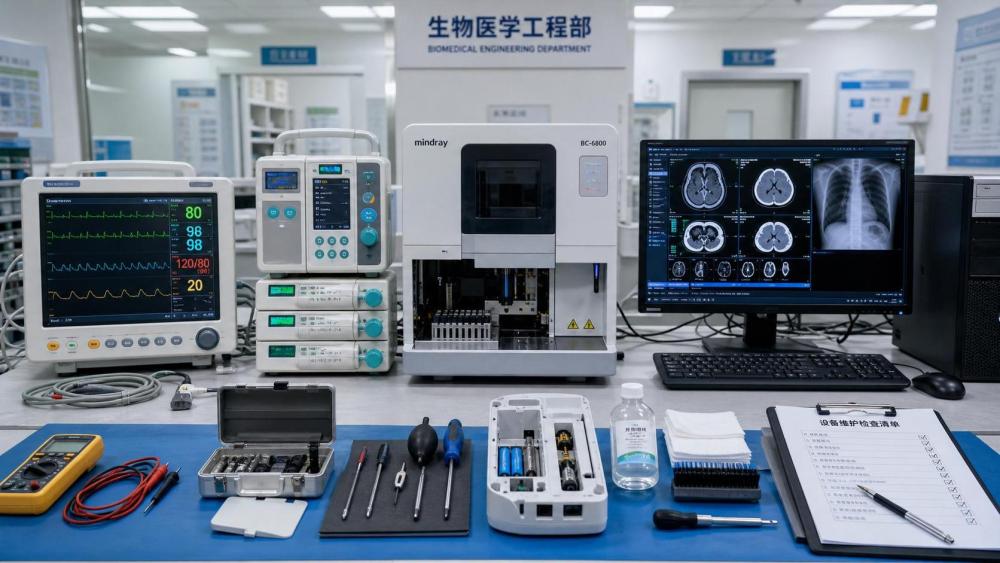
A strong biomedical equipment maintenance checklist is not just a service document. It shapes uptime, repair predictability, and patient safety across routine and high-dependency care settings.
In practice, failure risk rarely comes from one dramatic defect. More often, it builds through missed calibration, poor cleaning discipline, delayed software checks, or unnoticed wear.
That is why preventive maintenance remains a core operational issue, not only a technical one. Reliable devices support workflow continuity, documentation readiness, and more stable lifecycle cost control.
Within the broader healthcare equipment landscape, maintenance decisions also affect procurement confidence. MTHH regularly frames equipment value through performance, support conditions, serviceability, and long-term operating demands.
A biomedical equipment maintenance checklist becomes especially useful when equipment fleets include imaging systems, laboratory analyzers, monitoring devices, sterilization units, and digital hospital infrastructure at the same time.
Actual Service Conditions Change What Should Be Checked First
Different environments create different failure patterns. A checklist used for bedside monitors should not be copied directly to MRI systems, hematology analyzers, or steam sterilizers.
The more useful approach is to judge maintenance tasks by risk exposure. Usage frequency, operating environment, software dependence, accessory turnover, and cleaning burden all change inspection priorities.
A compact clinic may see lower equipment volume, but often has tighter staffing and fewer backup units. That makes preventive checks more important, not less.
A tertiary hospital usually has heavier utilization and more complex device integration. Here, the biomedical equipment maintenance checklist must also consider network status, alarm behavior, interoperability, and service response planning.
Core factors that change checklist priorities
- Clinical criticality of the device during patient care
- Daily operating hours and peak load variation
- Sensitivity to dust, humidity, temperature, or power instability
- Calibration drift risk and measurement dependency
- Consumable, accessory, and spare parts replacement frequency
- Software version control and cybersecurity update needs
Imaging Rooms, Labs, and Bedside Care Do Not Fail in the Same Way
In imaging departments, preventive tasks often start with system stability and image quality consistency. Small drifts may not stop operation immediately, but they can affect diagnostic confidence and repeat scan rates.
For ultrasound, detector-based X-ray, CT, or C-arm systems, the biomedical equipment maintenance checklist should include calibration verification, cable and connector inspection, cooling performance, motion checks, and workstation communication review.
Laboratory settings are different. Many analyzers remain productive until reagent handling, pipetting precision, temperature control, or contamination management starts to drift.
That is why lab-focused preventive maintenance should emphasize sample path cleaning, probe inspection, calibration records, internal quality control trends, and reagent storage conditions.
Bedside care equipment creates another pattern. Monitors, infusion pumps, ventilators, and defibrillators are exposed to frequent movement, accessory swaps, battery cycling, and urgent handling.
In these settings, a biomedical equipment maintenance checklist should give more weight to battery health, alarm function, display integrity, sensor accuracy, leak testing, and connector durability.
The Biomedical Equipment Maintenance Checklist Should Follow Risk, Not Only Schedule
Calendar-based maintenance is still necessary, but it is not sufficient for mixed healthcare environments. Devices with similar service intervals may still need very different attention levels.
A ventilator used continuously in critical care presents a different maintenance reality than a backup unit with low utilization. The checklist should reflect that difference.
The same applies to analyzers with stable throughput versus those running peak seasonal testing. Load variation changes wear rate, contamination risk, and replacement timing.
Tasks that usually deserve priority
- Visual inspection for cracks, corrosion, loose fittings, and fluid ingress
- Electrical safety testing where required by policy or regulation
- Functional checks under normal operating conditions
- Calibration and accuracy confirmation against approved references
- Cleaning of internal and external high-risk contamination points
- Review of error logs, alarms, and event history
- Battery testing, consumable status, and parts replacement planning
- Software version, network connection, and security patch review
This structure keeps the biomedical equipment maintenance checklist grounded in real failure prevention. It also supports clearer documentation when service quality needs to be reviewed later.
Where Teams Often Misjudge Maintenance Needs
A common mistake is assuming that equipment passing a basic power-on test is healthy. Many failures develop long before complete shutdown becomes visible.
Another weak point is treating similar devices as identical. Two patient monitors from different generations may require different batteries, firmware practices, or sensor verification steps.
In actual hospital operations, accessory condition is often underestimated. Damaged probes, worn cuffs, leaking hoses, and unstable cables can distort readings even when the main unit appears functional.
Documentation gaps create another hidden risk. An incomplete biomedical equipment maintenance checklist makes trend analysis difficult, especially when recurring faults appear across multiple sites or departments.
There is also a cost misconception. Lower purchase price does not guarantee lower operating burden if preventive tasks are complex, parts are slow to source, or software support is limited.
Adapting the Checklist to Service Reality Across the Equipment Lifecycle
The most effective biomedical equipment maintenance checklist changes over time. New installations, mid-life fleets, and aging systems should not be maintained with the same service logic.
Early in the lifecycle, attention often centers on installation validation, user setup errors, baseline calibration, and software configuration. Many avoidable issues appear in this stage.
Mid-life equipment usually benefits from trend-based maintenance. Repeated alarm codes, battery decline, fan noise, thermal instability, and recurring accessory failures should be tracked instead of treated as isolated events.
Late-life assets need a more cautious review. Parts availability, service documentation quality, compliance status, and total downtime risk become central maintenance decisions.
This is where structured industry resources add value. MTHH supports practical evaluation by connecting maintenance requirements with equipment category, service conditions, and long-term operational implications.
Useful adaptation points before finalizing a checklist
- Separate high-risk devices from low-criticality support equipment
- Match inspection frequency to actual utilization, not nominal ownership
- Add accessory and consumable controls where measurement accuracy depends on them
- Record recurring service events by model and installation environment
- Confirm spare parts lead time before extending service intervals
A Practical Next Step for Lower Failure Risk
A biomedical equipment maintenance checklist works best when it reflects how equipment is actually used, cleaned, moved, updated, and repaired in the field.
The next step is to sort devices by care setting, usage intensity, and failure consequence. That makes checklist priorities easier to define and easier to defend.
Then review which tasks are preventive in name only and which ones truly reduce failure risk. Calibration records, alarm tests, software review, accessory checks, and parts planning usually deserve closer attention.
Where service planning overlaps with procurement or replacement decisions, maintenance data should feed back into equipment evaluation. That is often the clearest way to improve lifecycle value.
A more reliable biomedical equipment maintenance checklist is rarely longer for the sake of length. It is simply more specific about conditions, risk points, and the actions that prevent avoidable downtime.
- healthcare equipment
- diagnostic imaging
- laboratory diagnostics
- digital hospital infrastructure
- MRI systems
- C-arm systems
- hematology analyzers
- patient monitors
- ventilators
- infusion pumps
- defibrillators
- hospital infrastructure
- laboratory analyzers
- biomedical equipment maintenance
- biomedical equipment maintenance checklist
Have questions about the global trade trends discussed here, or planning your expansion and supply chain strategy? Leave a message below and let the trade experts at MTHH guide you.
We respect your privacy. Your information is strictly confidential.
Related News
- Hong Kong Outlines Medical Device Legislation and Plans for Statutory RegulatorNov 14, 2026Hong Kong medical device legislation could reshape regulatory oversight. Explore the proposed regulator and what businesses should monitor.
- AAMI Issues TIR115 Guidance on Public Cloud Use in Medical DevicesNov 13, 2026AAMI TIR115:2026 guides public cloud use in medical devices. Explore its focus on risk management, supplier assessment and device boundaries.
- How are critical care devices regulated in the United States?Nov 12, 2026Critical care devices face FDA requirements based on intended use and risk. Explore classifications, marketing pathways, and practical compliance checks.
- Hong Kong Drafts Medical Device Bill to Establish Statutory OversightNov 12, 2026Hong Kong's Medical Devices Bill could introduce risk-based statutory oversight. Discover what the proposed framework may mean for suppliers.