
How to Evaluate Dental Surgical Instruments for Precision, Durability, and Reprocessing
How to Evaluate Dental Surgical Instruments for Precision, Durability, and Reprocessing
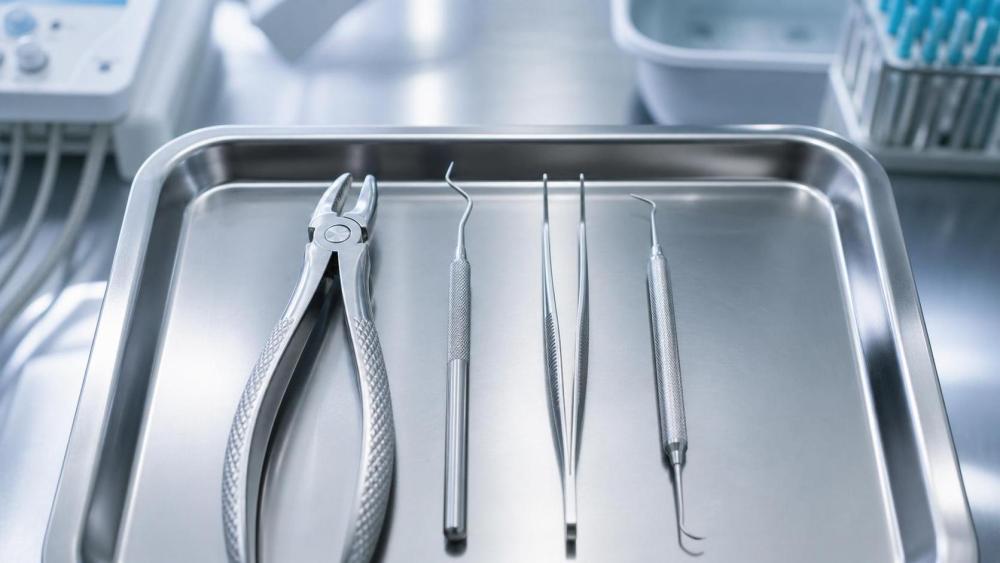
Selecting dental surgical instruments requires more than comparing price or appearance.
Buyers need to review clinical precision, material stability, and long-term handling costs.
That matters even more when instruments face repeated sterilization and heavy daily use.
In practice, poor instrument selection can create workflow delays, surgeon dissatisfaction, and earlier replacement cycles.
A structured evaluation process helps reduce those risks before procurement decisions are finalized.
This guide explains how to evaluate dental surgical instruments for precision, durability, and reprocessing performance.
Why evaluation standards matter in dental surgery
Dental surgical instruments are used in extraction, implantology, periodontal procedures, and soft tissue management.
These procedures depend on fine control, tactile feedback, and reliable edge or tip performance.
A forceps hinge with play, or a scaler with uneven finishing, can affect clinical consistency.
From a procurement view, the problem is rarely visible during first inspection.
The real test comes after cycles of cleaning, autoclaving, packaging, transport, and repeated handling.
This is why dental surgical instruments should be judged by life-cycle value, not unit price alone.
Start with the clinical use case
The first step is matching the instrument to the intended procedure and user preference.
Not every dental surgical instrument works equally well across oral surgery, implant placement, or periodontal applications.
A broad catalog can look complete, yet still fail in procedure-specific handling.
Review the expected workload before comparing brands or product lines.
- Which procedures are most frequent?
- Are instruments used by specialists, general dentists, or mixed teams?
- Is the facility high-volume, multi-chair, or surgery-center based?
- Are single sets enough, or are parallel tray setups required?
These questions shape the right selection criteria for dental surgical instruments from the start.
How to assess precision and functional performance
Precision is one of the most important buying factors for dental surgical instruments.
Still, precision should be broken into measurable details, not left as a supplier claim.
Key points to inspect
- Tip alignment: working ends should meet accurately without offset.
- Edge geometry: cutting surfaces should be even and consistently finished.
- Grip control: handles should support stable movement without slip.
- Joint movement: hinges and locks should move smoothly without looseness.
- Surface finishing: rough transitions may trap debris and reduce control.
Sample evaluation is useful here.
If possible, compare several dental surgical instruments side by side under magnification and simulated use.
More clearly than a product sheet, this shows consistency between units and across batches.
Material quality and corrosion resistance
Material selection has a direct effect on instrument life, safety, and maintenance burden.
Most dental surgical instruments use stainless steel, but not all stainless steel performs equally.
The grade, hardening process, passivation quality, and finishing method all matter.
Corrosion often begins at joints, serrations, welds, and hidden contact points.
That also means buyers should ask for evidence, not broad marketing wording.
Useful supplier questions
- What steel grade is used for each instrument category?
- Is passivation documented?
- How is hardness controlled for cutting or gripping instruments?
- What corrosion testing has been completed?
- Are there limitations for cleaning agents or water quality?
Well-made dental surgical instruments should tolerate realistic hospital or clinic reprocessing conditions without premature staining or pitting.
Ergonomics and operator handling
Ergonomics are often underestimated during procurement review.
Yet in dental surgery, poor balance or uncomfortable handles can reduce precision over time.
This becomes more noticeable during long implant sessions or repeated extraction cases.
Look at handle diameter, weight distribution, texture, and finger support areas.
Dental surgical instruments should feel stable in wet-glove conditions and remain easy to orient visually.
A quick user trial can reveal problems that technical catalogs never mention.
Reprocessing compatibility is part of performance
For reusable dental surgical instruments, reprocessing is not a secondary issue.
It directly affects infection control, instrument lifespan, and operating cost.
In real operations, difficult-to-clean designs create delays and higher compliance risk.
Pay attention to hinges, box locks, lumens, serrated zones, and coated surfaces.
These areas can retain debris if design and finishing are weak.
What to verify
- Cleaning instructions are clear and match local workflow.
- Steam sterilization parameters are fully documented.
- Instrument markings remain legible after repeated cycles.
- Joint lubrication requirements are realistic for the facility.
- No design feature interferes with washer-disinfector loading.
When dental surgical instruments are easy to reprocess, the benefit extends far beyond sterilization staff.
It supports tray readiness, predictable turnover, and fewer avoidable replacements.
Evaluate documentation, traceability, and supplier support
Reliable dental surgical instruments should come with complete technical and commercial documentation.
This includes product specifications, reprocessing instructions, warranty terms, and batch traceability.
If a problem appears later, traceable records make corrective action much easier.
Support quality also matters.
Can the supplier replace defective units quickly?
Do they offer sets, spare components, or usage guidance for dental surgical instruments in high-turnover environments?
In procurement decisions, service responsiveness can protect value as much as material quality.
A practical comparison framework
A simple scorecard makes supplier comparison more objective.
It also helps align clinical users, sterile processing teams, and procurement reviewers.
Using a framework like this keeps dental surgical instruments under structured review instead of subjective preference alone.
Common buying mistakes to avoid
Several risks appear repeatedly when dental surgical instruments are sourced too quickly.
- Choosing by price without sample review.
- Ignoring reprocessing complexity.
- Assuming all stainless instruments perform the same.
- Overlooking user handling feedback.
- Accepting incomplete technical documentation.
Each mistake can turn a low initial price into a higher long-term cost.
That is especially true for dental surgical instruments used across multiple trays and repeated sterilization cycles.
Final decision: focus on total operating value
The best dental surgical instruments are not simply the cheapest or the most polished at first glance.
They are the ones that stay precise, resist wear, and move smoothly through cleaning and sterilization.
When evaluation includes clinical use, material quality, ergonomics, and reprocessing evidence, decisions become much stronger.
For procurement planning, that approach reduces uncertainty and supports more dependable long-term performance.
Before placing the next order, review dental surgical instruments with a structured checklist, sample testing, and supplier documentation in the same process.
Have questions about the global trade trends discussed here, or planning your expansion and supply chain strategy? Leave a message below and let the trade experts at MTHH guide you.
We respect your privacy. Your information is strictly confidential.
Related News
- How to choose dental radiography for clinic that fits your workflowAug 16, 2026Dental radiography for clinic selection starts with workflow, not specs. Learn how to compare intraoral, panoramic, and CBCT options for better efficiency, fit, and ROI.
- What FDA Cleared Dental Imaging Systems Mean for Daily PracticeJul 16, 2026Dental imaging systems FDA cleared: learn what clearance really means for workflow, compliance, training, and long-term value before choosing the right system for your practice.
- ANVISA Tightens AI Filing Path for Dental ImagingJul 15, 2026ANVISA tightens AI filing path for dental imaging in Brazil. Learn how the new Clinical Equivalence Report rule affects compliance, registrations, shipments, and market access.
- ANVISA Tightens AI Filing Rules for Dental ImagingJul 14, 2026ANVISA tightens AI filing rules for dental imaging in Brazil. Learn how the new requirements affect CBCT, intraoral X-ray, and panoramic system approvals, timelines, and market entry.